Website articles  (17) Courtesy: Nayanima Basu
19 May 2025

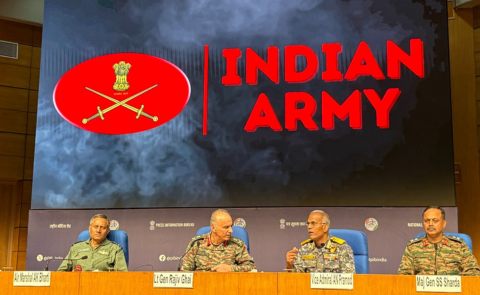
India’s three-pronged war strategy

Operation Sindoor has established a “new normal” in India-Pakistan relations. It has also given the world a glimpse into the Narendra Modi government’s future strategy in countering terrorism supported by the Pakistani Army and ISI, and how New Delhi will manage the Kashmir dispute.
Getty (1) Courtesy: Gateway House
15 May 2025

The New Geopolitics and South Asia’s Trade Architecture – What Next?

Geopolitics is increasingly intertwined with the economic destiny of South Asia. Even before the U.S. tariffs were rolled out, growing polycrises had hit the global economy, which has been struggling since the pandemic. South Asia seems a relatively bright spark of regional trade and growth. This paper analyses South Asia’s trade architecture in the backdrop of a sluggish world economy in the 2020s, and makes recommendations for closer regional economic integration.

Website articles  (12) Courtesy: Gateway House
15 May 2025

U.S., global emperor of sanctions

Over two centuries, the U.S. has amassed vast economic powers across the globe during and after the two World Wars , and sanctions slowly became an effective tool it used to achieve its foreign policy goals, becoming the global emperor of sanctions.

Pahalgam-attack-1024x679 Courtesy: Khyber News
24 April 2025

Post Pahalgam, India’s choices

The horrific attack on April 22 on tourists in Kashmir has exposed its stark and violent reality. Kashmir remains tumultuous even after the abrogation of Article 370 in 2019. Before confronting Pakistan, India must first address its internal challenges and deliver on its election promises to achieve enduring progress.

Bandung conference  (3) Courtesy: PTI
24 April 2025

Bandung Principles and the path ahead

Amid polycrises, from pandemics to wars and trade wars, the global order is in flux, with the contours of the new order still unclear. As the world marks the 70th anniversary of the historic Bandung Conference, this article analyses how its Ten Principles still resonate in today's fractured geopolitical landscape and offer a roadmap for equity, inclusivity, and balance.

World Leaders Courtesy: East Asia Forum
17 April 2025

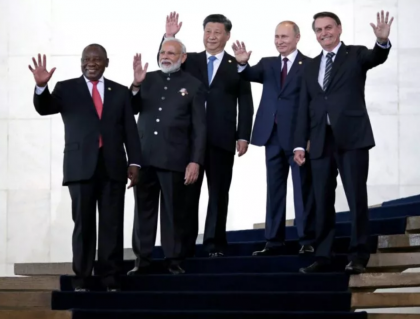
Multipolarity is gaining ground

The traditional power structures of ‘unipolarity’ or ‘bipolarity’ prevalent over the past 80 years are no longer appropriate to describe the current global order, with more countries increasingly supporting the evolving multipolar world. With the old ‘rules-based’ order becoming less relevant, emerging powers like India have an opportunity to draft more equitable rules to match their multipolar intentions.

Report Courtesy: Körber-Stiftung
17 April 2025

Momentum for Middle Powers: Emerging Middle Powers Report

The world is undergoing profound transformations that are not being driven only by the United States, China or Russia. Small and medium-sized States are carving out a legitimate place for themselves in the emerging new order. This second edition of our annual Emerging Middle Powers Report is a reminder that the signs of the times are showing a new momentum for middle powers.

NarendraModi_JD-Vance Courtesy: Narendra Modi on X
17 April 2025

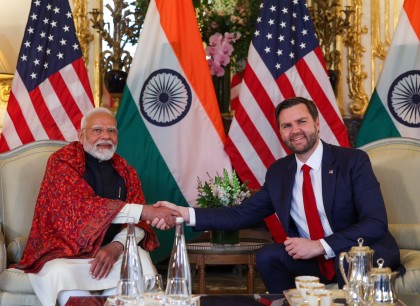
Stepping up the trade talk with Vance

U.S. President Donald Trump is determined that India lower tariffs on American imports. He is sending his top representatives to communicate with officials in New Delhi before his own arrival in the Indian capital, aiming to finalize the proposed bilateral trade agreement.

Agnipath Courtesy: India Today
10 April 2025

Assessing India’s Agnipath Scheme

India’s new Agnipath scheme was launched in 2022, which offered young Indians a chance to qualify for four-year military service with 25% possibly being retained for a full service job. How have the ‘Agniveers’ fared now? In this time of multiple wars, how does the Agnipath scheme compare to ones offered globally?