Badi Soch: Pakistan’s next government
This daily column includes Gateway House’s Badi Soch – big thought – of the day’s foreign policy events. Today’s focus is on the elections and new government in Pakistan.


This daily column includes Gateway House’s Badi Soch – big thought – of the day’s foreign policy events. Today’s focus is on the elections and new government in Pakistan.
 Courtesy: rwoan/Flickr
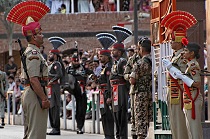
Pakistan’s national elections will take place in the backdrop of a troubled economy, severe energy crisis, and frequent terrorist attacks. Can these problems be solved if the next leadership agrees to open its territories for trade and transit purposes between India and Afghanistan?
 Courtesy: Dude1248/WikimediaCommons
This daily column includes Gateway House’s Badi soch – big thought – of the day’s foreign policy events. Today’s focus is on the election process, viewed through the Karnataka election in India, and the general elections in Pakistan and Iceland.
 Courtesy: Xavier de Jauréguiberry/flickr
The proposed immigration reform bill, currently being debated in the U.S. Congress, contains provisions to penalize Indian IT companies for allegedly misusing the H1-B and L1 visas. How can New Delhi tackle this rising U.S. sentiment against Indian companies?
 Courtesy: Prime Minister's Office
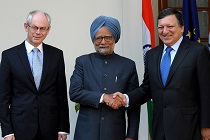
Negotiations for the India-EU Free Trade Agreement, which began in 2007, have yet to conclude. Deepak Rao blogs about the factors delaying the process, and the implications of the agreement on different sectors of the economy.
 Courtesy: Peter Fuchs/Flickr
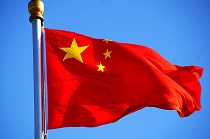
The similarities between China’s ascent in the global arena and India’s rise in 2003 are striking. Manjeet Kripalani blogs about why despite their remarkable rise, it is in Beijing’s interest to take notes from the stagnation that followed India’s growth.
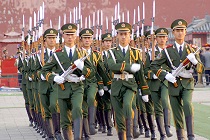 Courtesy: Steve Webel/Flickr
The Chinese army’s trespassing of the Sino-Indian Line of Actual Control near Ladakh has fuelled serious security concerns in India. This signals a sharper policy from Beijing towards India; it is also why its response must be firm, and the Chinese must be seen to back off.
 Courtesy: Foreign Affairs
The fear that a growing India might have to take on responsibilities commensurate with its power has made New Delhi uneasy about the international discourse on India’s rise. How can the West, then, convince India to play a larger international role?
 Courtesy: Leoboudv/WikimediaCommons
Often, many vital inventions are left incomplete or do not reach the market as information is locked up by numerous patent holders. How does this hamper innovation, and why is it necessary to overcome the attitude of ‘anti-commons’ and foster cross-fertilization of knowledge?
 Courtesy:
The ‘Lady Hughes incident’, as a confrontation between British and Chinese authorities in 1784 came to be called, perhaps holds lessons for the ongoing dispute between India and Italy. Aniruddha Bose blogs