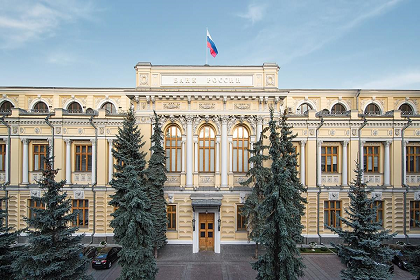
SCO Goa meet unveils ‘big gulf of distrust’ between India and Pakistan
Our Distinguished Fellow for Foreign Policy Studies, Amb. Rajiv Bhatia, was quoted by WIONews on the SCO Foreign Ministers Meeting. Read the full report here.

 Courtesy: WION
Our Distinguished Fellow for Foreign Policy Studies, Amb. Rajiv Bhatia, was quoted by WIONews on the SCO Foreign Ministers Meeting. Read the full report here.
 Courtesy: Mappr
India is rapidly increasing its economic engagement with Russia, and other former Soviet countries. This means it must look at old friends in Central Asia with new eyes. Uzbekistan is one of them. India is one of a quartet of geopolitical powers playing to the strategic interests of this nation which sits at the crossroads of South, East, West and Central Asia and Russia.
 Courtesy: Sputnik News
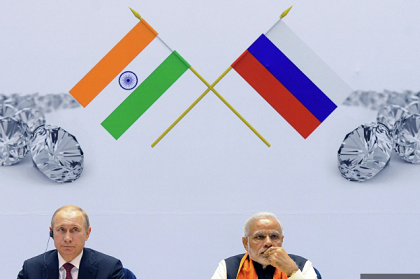
India’s G20 and SCO presidencies have both promise and complexity, for itself and for Moscow. India need not involve itself in crisis settlement, but focus on economic issues, food and energy security, innovation and terrorism. Moscow can help itself by aligning its interests with India’s especially at multilaterals and the global south outreach, and potentially rebuild bridges with the developed north.
 Courtesy: HarperCollins Publishers India
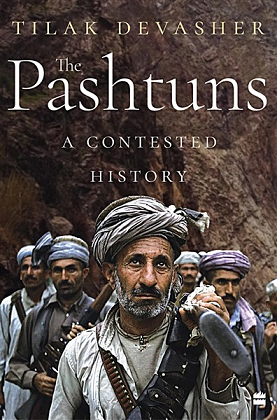
Tilak Devasher's book The Pashtuns: A Contested History delves into the Pashtun tribe, highlighting its geopolitical significance and far-reaching consequences in the South Asian region. Reviewer Tim Willasey-Wilsey says the book brilliantly explains how the Pashtuns were strong-armed into joining Pakistan and why the prospect of Pashtun unity poses a threat to security in Pakistan and the entire region.
 Courtesy: Reuters
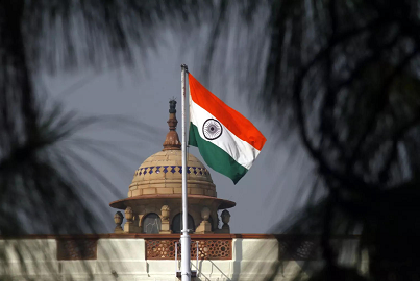
2023 brings responsibility and opportunity for India. As the host of the G20 and the Shanghai Cooperation Organization, the world will be watching closely. With this authority, comes challenges encapsulated by five C’s: Covid, Contraction, Climate crisis, Conflict and China. If India is able to use its opportunity, the year could end with India viewed as a near-great power, an international bridge-builder, and a successful democracy.
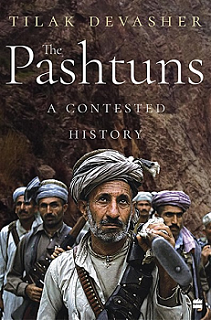 Courtesy: HarperCollins Publishers India
Tilak Devasher’s book on the Pashtuns brings out the dynamics of the Pashtun, their code, their relationship with Islam and with Pakistan. It contextualizes the current geo-political challenges in South Asia, making it required reading for those who want to understand not only the Pashtuns but regional strategic and security dynamics.
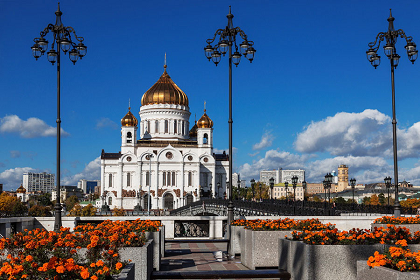 Courtesy: Advantour
The last week of September was eventful for Russia. The partial-mobilisation was underway, the referendum of Russian-speaking regions in Ukraine took place, President Putin made a significant speech and the Nord Stream pipelines were damaged. Amit Bhandari, Energy Fellow, Gateway House, was in Moscow during this time. In this podcast, he offers his impressions of Moscow after the sanctions, compared with the city he saw before the Russia-Ukraine conflict
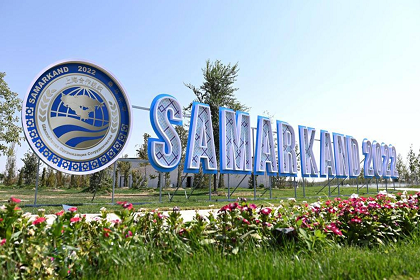 Courtesy: Embassy of Uzbekistan in Beijing
The upcoming SCO Summit led by Uzbekistan seeks to ignite a ‘Samarkand Spirit’ where nations are indivisible and not fragmented, and connected by trade and investment. This is a welcome positive note in the backdrop of the Ukraine-Russia conflict, where Central Asia is now being impacted by diminishing essential commodities, depreciation of local currencies, and reduced remittances from its migrant workers in Russia.
Russia, the founding member of the Shanghai Cooperation Organisation (SCO), has been hit by Western sanctions on its energy exports and financial system. Still, Ivan Timofeev, Director of Programs at the Russian International Affairs Council, sees new opportunities to be seized. Deepening India-Russia business engagement is one, and the SCO as a constructive and accommodating force is another. K.A. Dhananjay from Gateway House spoke to Timofeev who visited Mumbai recently.
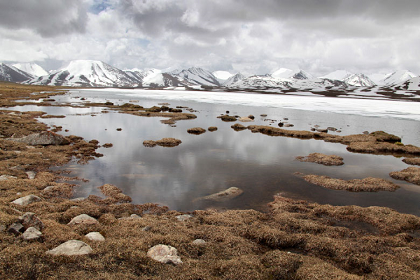 Courtesy: Erkin Bolzhurov/World Bank
The SCO climate change initiatives to mitigate soaring temperatures, recurring droughts, and floods, glacial melts, and desiccation of the Aral Sea, are inadequate. Large swathes of Central Asia are hotspots for human migration due to a lack of freshwater resulting in pressure in a few habitable regions.