Big FinTech is here!
The future is likely to see ‘Big FinTech’ replace ‘Big Tech’. But this time around, India can be part of the story from the ground up. India has been ahead of the fintech game on the technology, regulatory and consumer fronts.

 Courtesy: Shutterstock
The future is likely to see ‘Big FinTech’ replace ‘Big Tech’. But this time around, India can be part of the story from the ground up. India has been ahead of the fintech game on the technology, regulatory and consumer fronts.
 Courtesy: Middle East Institute
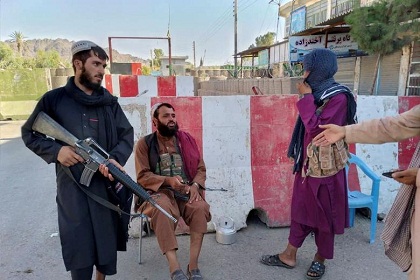
The American decision to withdraw troops from Afghanistan will strengthen the Afghan Taliban and possibly ensure its return to Kabul. This has implications for India’s security and economic interests in Afghanistan. India must step up its game by showing willingness to talk to the Taliban, while simultaneously expanding training assistance to the Afghan security forces.
 Courtesy:
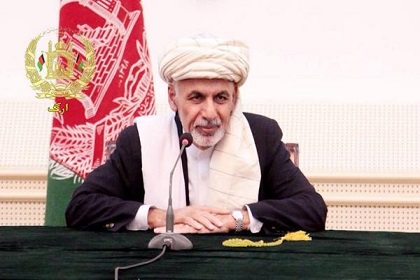
The Taliban should have been reintegrated into Afghan society several years ago. It is now probably too late to persuade them to accept anything less than a dominant role in Kabul. However, Turkey, Pakistan and the United States may have one last chance to pressure the antagonists into a negotiated settlement, perhaps along the following lines.
 Courtesy: European Union
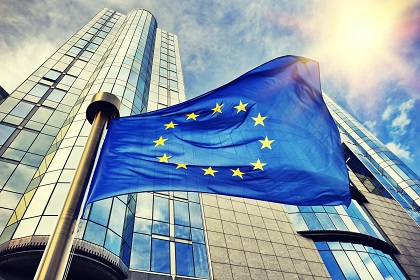
The EU’s Indo-Pacific strategy comes better late than never. But it has to step gingerly. It cannot antagonize China, wants to build on the legacy of its members’ colonial past, give the region the infrastructure it needs, and make the trade agreements that it wants. Is it achievable?
 Courtesy: Alvazarat
The Dawoodi Bohra diaspora is present in over 40 countries that are home to 500 sizeable communities. From a predominantly Indian Ocean merchant diaspora in the past, today, its young prefer to seek educational and professional opportunities in developed countries, like the United States. What remains unchanged is the Bohras' traditional way of life, as lived through its rich and composite cuisine and its unique, ever-evolving language – Lisan-ul-Dawat – both of which connect the community across continents.
 Courtesy: Wikimedia Commons
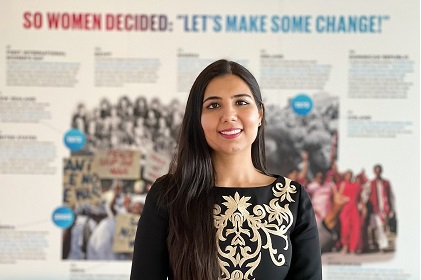
A new chief is due to occupy the chair of the UN Secretary General later this year. The lobbying for this prestigious global post has already begun. There is a rotation system that offers equal opportunities to regional blocs to promote their candidates. But this time, it's a toss between having the first woman to head the body, or continuing with the West-led bloc's candidate. Who will win? And where does India stand?
 Courtesy: Shutterstock
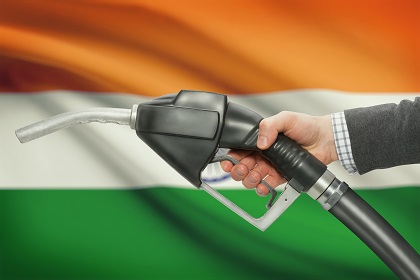
Retrospective taxes. Asking OPEC to reduce production. Raising oil prices at the pump. India’s perplexing actions on energy seem designed to defeat the Modi government’s declared goals of disinvestment of the public sector and welcoming foreign capital.
 Courtesy: Shutterstock
Individuals now generate copious amounts of personal data everyday – both online and offline. Devices and infrastructure extract data, which can be shared instantly across borders with diverse entities - without consent. It is imperative that countries come together to create regulations to protect individuals who are unable to control how their data is shared and processed. A model already exists in the Paris Climate Agreement.
 Courtesy: Shutterstock
Big Tech wields considerable influence over commerce, speech, media, and politics. Mergers and acquisitions have been key to their burgeoning growth. Now it is clear that their power is buttressed by anti-competitive and predatory practices. Governments across the world are moving to redress this through regulation, but the task is complex.
 Courtesy: Shutterstock
Social media platforms such as Twitter and Facebook have come under global scrutiny in recent months following their use to incite or misinform the public. For years, governments around the democratic world have not taken the responsibility to adequately regulate these platforms. Now that may be changing – and it won’t be easy.