28909667344_cad7ec10cc_k Courtesy: MEA/flickr
4 January 2017

Acting East: what does 2017 hold in store?

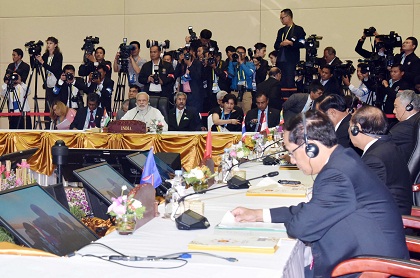
The year 2017 may change some equations in the East Asian region. Will the near parity that the U.S. and China currently share turn into a keener contest? Will strained relations between India and China persist? Donald Trump’s election as the next U.S. president casts the spotlight squarely on these inter-state relationships
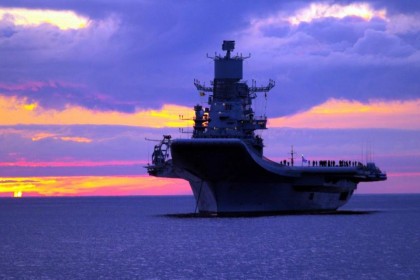
INS_Vikramaditya_in_Baltic_Sea Courtesy: Wikipedia
6 September 2016

India’s ocean strategy crystallises

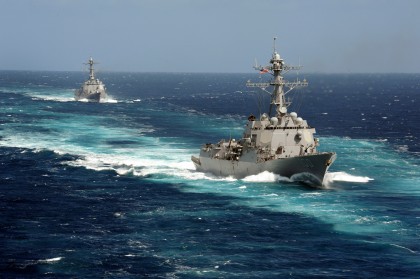
India's policy towards the Indian Ocean has begun to take a clear, coherent form with the signing of the Logistics Exchange Memorandum of Agreement with the United States, an important bilateral visit to Vietnam by Prime Minister Modi, and an ambitious future being laid out by Foreign Secretary Jaishankar

bank-getty-images-harold-cunningham Courtesy: Quartz
27 July 2016

Imperatives of regulatory diplomacy

Regulations are the new focus of economic statecraft. Their increasing importance is reflected in the negotiations on global financial standards, plurilateral trading rules, and regional economic unions.

maxresdefault Courtesy: Youtube
4 February 2016

The world in 2016

The world has witnessed a number of upheavals in the past few years, precipitating widespread global political turbulence stemming from geo-economic instability. Over the next couple of months, Gateway House experts will attempt to deconstruct these events and how India and its foreign policy can work to take advantage of these trends.

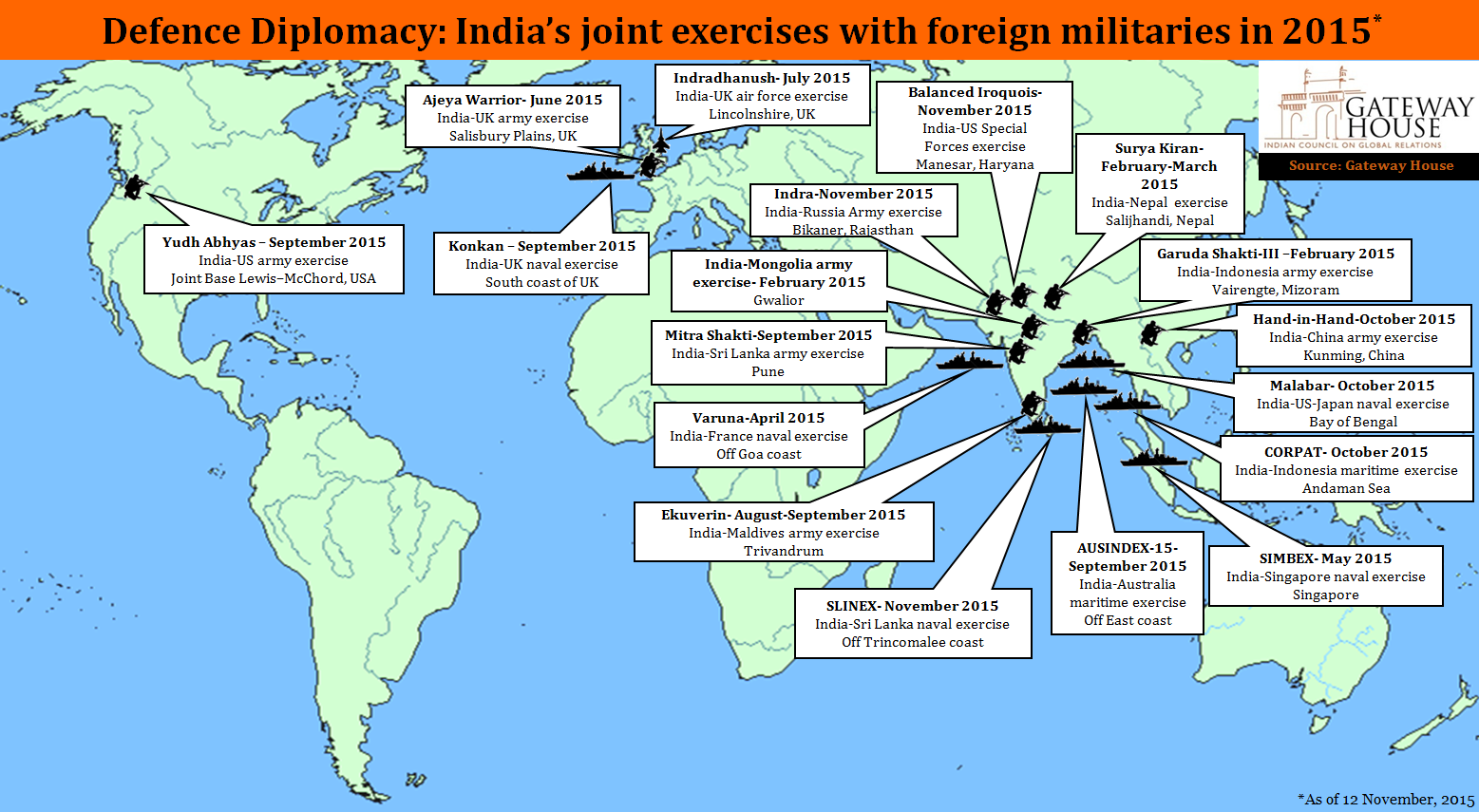
This year, India's defence diplomacy has ramped up. In 2015 alone there have been 18 military exercises- naval, army and air force- with 13 countries, among the largest engagements the country has had. Most significant is Japan joining the Malabar exercises in the Bay of Bengal and the first-ever maritime exercise with Australia. This is increasing India's presence from the Arabian Sea to the Bay of Bengal. As these exercises intensify India will be better positioned to handle regional security challenges. Courtesy:
12 November 2015

India’s defence diplomacy

This year, India's defence diplomacy has ramped up. In 2015 alone there have been 18 military exercises- naval, army and air force- with 13 countries, among the largest engagements the country has had. Most significant is Japan joining the Malabar exercises in the Bay of Bengal and the first-ever maritime exercise with Australia. This is increasing India's presence from the Arabian Sea to the Bay of Bengal. As these exercises intensify India will be better positioned to handle regional security challenges.

Backlit keyboard Courtesy: Wikipedia
21 October 2015

U.S.-China: no more spy games?

The recent U.S. and China agreement to contain cyber espionage will not only impact their bilateral relationship, it will also create norms in international cyberspace. But implementation remains a challenge, and businesses, including in India, that have faced cyber threats must proactively plug their vulnerabilities

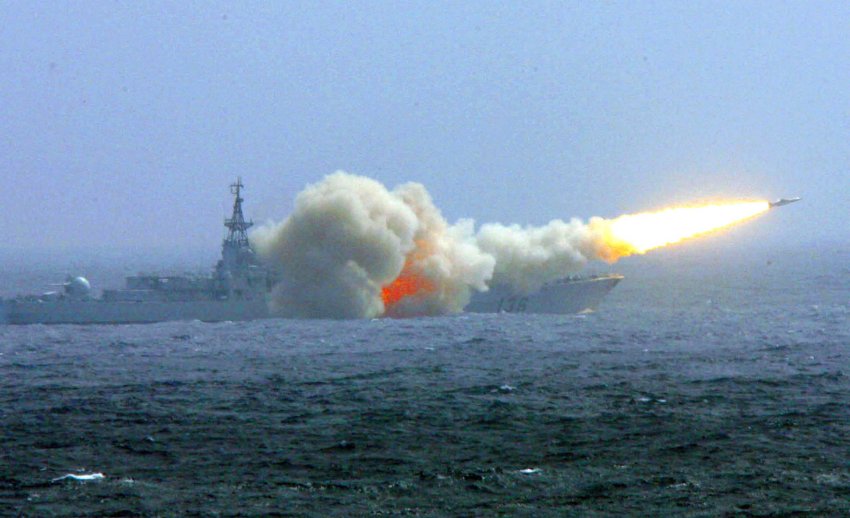
In this photo released by China's Xinhua news agency, a destroyer of the South China Sea Fleet of the Chinese Navy fire a missile during a traning in South China Sea on Saturday, Nov. 17, 2007. Dozen of warships of the South China Sea Fleet were deployed in the competitive training to improve combat capability of the fleet, Xinhua said.  (AP Photo/Xinhua, Zha Chunming) Courtesy: India Strategic
16 July 2015

Military strategies collide in the Asia-Pacific

The recent re-evaluation by the US, China, Japan, and Russia of their military strategies reflects new geopolitical equations in which the Asia Pacific is a major strategic intersection. Turmoil in this region can impact India’s trade and security interests, and to avoid this India must craft a balance between its relations with all the countries involved