BIMSTEC, bridge between South & South East Asia?
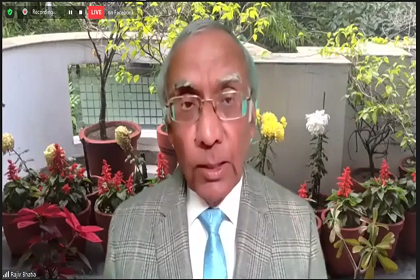
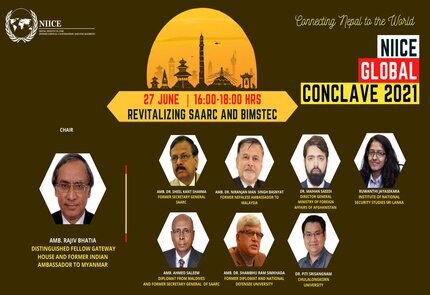
TIMES NOW featured our Distinguished Fellow in Foreign Policy Studies, Amb. Rajiv Bhatia on their show to discuss the fourth BIMSTEC Summit. Watch the full episode here.
Courtesy:
TIMES NOW featured our Distinguished Fellow in Foreign Policy Studies, Amb. Rajiv Bhatia on their show to discuss the fourth BIMSTEC Summit. Watch the full episode here.
Courtesy: Mea/ Flickr
The 21-year-old regional organisation, which will hold its fourth summit on August 30-31, was formed because of the opportunities to make headway in economic and social development through cooperation, but it has achieved modest success. It has a relevance independent of SAARC or ASEAN and goals of its own to pursue
Courtesy: Gateway House
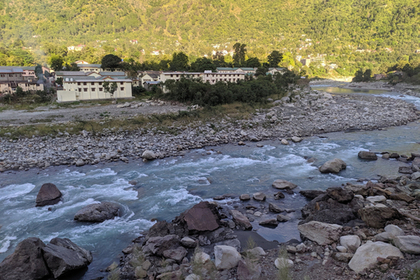
Border regions and communities, some of them far from the heartland, constitute India’s first line of defence, a critical link in its national security. India’s 15,000-km borders touch seven neighbouring countries: Afghanistan (abutting Gilgit), Pakistan, Nepal, Bhutan, China, Bangladesh, Myanmar. Border regions have their own local dynamics, often shaped by subnational and religious identities that do not necessarily align neatly with political borders. Some also serve as flourishing corridors for illegal smuggling of goods and humans. Technology plays an important role in better protecting borders, but in some cases it has made borders obsolete. Despite their importance, border regions do not receive the full attention of the Indian mainstream, except when border tensions arise.
India and the world have watched China’s growing investment in Asia and beyond with a mix of awe and apprehension. The unprecedented scale of these investments are reshaping political arrangements around South Asia.
Courtesy: Gateway House
China’s investment in Bangladesh’s stock exchange gives Beijing a chance to shape the financial architecture of the most vibrant economy in India’s neighbourhood
Courtesy: Sameer Patil & Shah Maieen
A recent trip to Cox’s Bazar showed that despite numerous health, social and security challenges, the Rohingya refugees are reluctant to return to Myanmar. India will have to walk a tightrope, keeping in mind humanitarian, security, and geopolitical priorities
Courtesy: Gateway House
China’s investment in Bangladesh’s stock exchange gives Beijing a chance to shape the financial architecture of the most vibrant economy in India’s neighbourhood
Courtesy: Flickr
No easy solutions to this refugee problem are emerging despite the considerable international attention it has drawn. India has taken a pragmatic stand despite anxiety about deepening China-Myanmar ties
Courtesy:
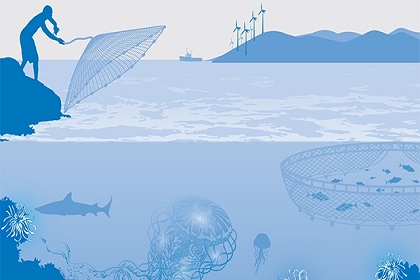
These are the opening remarks given by Ambassador Rajiv Bhatia at the Second International Blue Economy Dialogue, ‘Promoting Blue Economy: Making the best use of Opportunities from the Coasts, Seas and Oceans’ in Dhaka, Bangladesh. He discusses the economic endowment of the blue economy and the necessity to utilise its resources in a sustainable manner
Courtesy: to put
A conference in Doha on ‘Enriching the Middle East’s Economic Future’ offered many insights into the nature of geopolitical relations in the region and India’s significant role in it