India in a changing global order
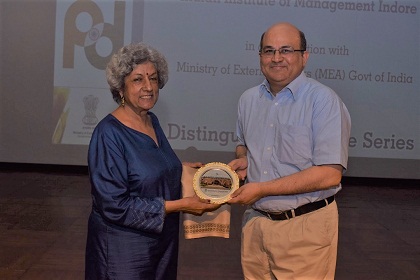
This speech was delivered at ‘Industry Meet 2018’, organised by the Indian Institute of Management, Indore, in collaboration with the Ministry of External Affairs, Government of India, on 7 July 2018

 Courtesy: IIM, Indore
This speech was delivered at ‘Industry Meet 2018’, organised by the Indian Institute of Management, Indore, in collaboration with the Ministry of External Affairs, Government of India, on 7 July 2018
 Courtesy: Caixin Global
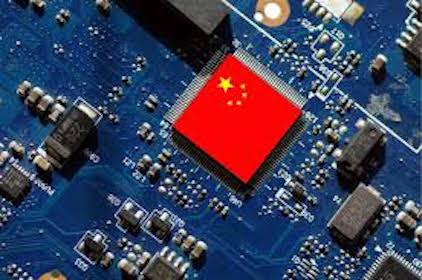
China’s foreign direct investment is shifting away from natural resources to high-tech areas, such as Artificial Intelligence and robotics. The scale of these acquisitions, along with questions about intellectual property and national security, are causing widespread concern in the West
 Courtesy: Wikimedia
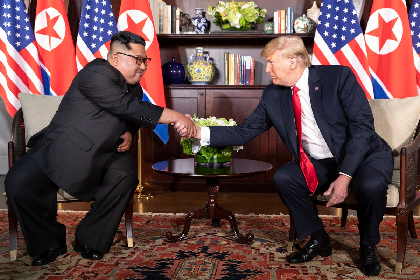
The June 12 summit was characterised by give-and-take as opposed to the one-way approach practised by earlier U.S. administrations. All countries welcomed the agreement and there is hope that this realism will enable the United States to address other contentious issues too
 Courtesy: GLOBSEC 2018
The GLOBSEC Bratislava Forum’s annual conference this year saw discussions on technology take precedence over geopolitics. Experts pointed out the gap between the adoption of digital technology and managing its risks
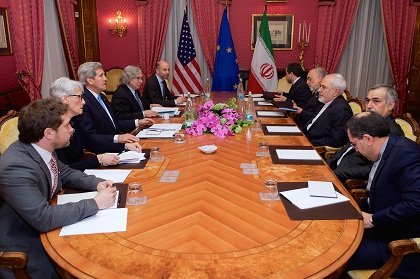 Courtesy: U.S. Department of State/ Flickr
Scrapping the JCPOA will badly bruise Iran’s economy, citizens and foreign relations; it will have an impact on the U.S.’ allies too
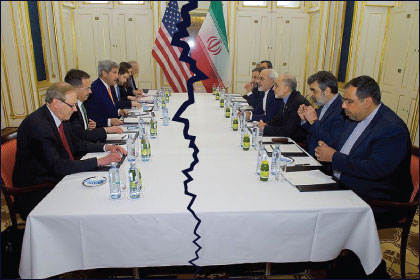 Courtesy: Gateway House
India may end up being the unintended victim of renewed U.S. sanctions on Iran. It will push up the price of oil and cost India billions of dollars annually
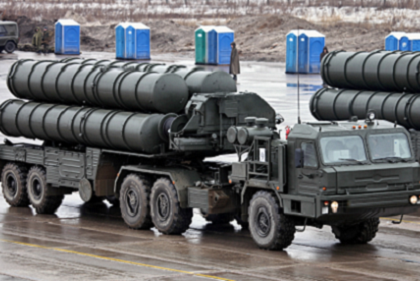 Courtesy: Wikimedia Commons
American sanctions on Russian defence companies may end up hurting an innocent bystander: India's defence sector. In particular, they could threaten Indian military procurement, and also may complicate India’s attempts to produce more of its own defence hardware. India needs to study the issue closely to prepare for what may come
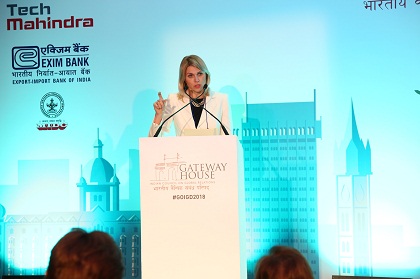 Courtesy: Gateway House
Digital development can bring significant economic gains – from a better business environment to job growth and improved public finances, said Urve Palo, Minister of Entrepreneurship and Information Technology, Republic of Estonia
 Courtesy: Gateway House
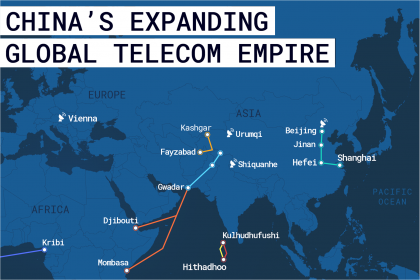
China is steadily deploying state-of-the-art communications systems to connect its strategic and economic assets in Asia. It is then linkingthe Asian mainland to Africa, and Africa to South America. The investment spree is rapidly making Beijing a major player in global telecommunications – and ‘informationisation warfare’.
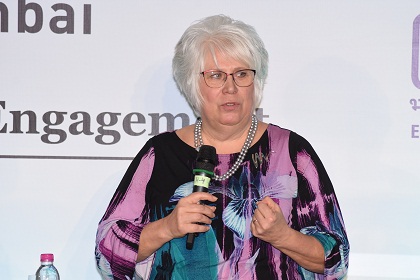
Marina Kaljurand, Chair, Global Commission on Stability of Cyberspace, Brussels, Belgium, said governments had to collaborate closely with lawyers, and the private sector, which is leading some major developments