Bubbling-Up vs. Trickling-Down
We need to deconstruct power and thus reconstruct India from the lower rungs of economy, of administration and of capability. It will heal the fissures of inequality and mitigate the evils of centralized power.

 Courtesy: TrilokRangan/Flickr
We need to deconstruct power and thus reconstruct India from the lower rungs of economy, of administration and of capability. It will heal the fissures of inequality and mitigate the evils of centralized power.
 Courtesy: PMO
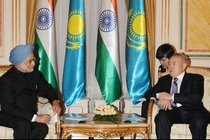
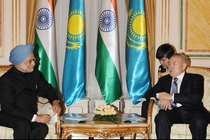
Indian Prime Minister Manmohan Singh met with Kazakh President Nazarbayev to strengthen ties and announced a Joint Action plan for 2011-14. Should the countries enhance their “arms-length transactional” relationship, a deeper alliance can be forged to include untapped sectors with immense potential
 Courtesy: Lear21,ThomasWolf/Wikipedia
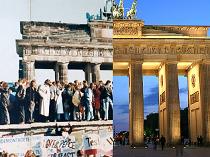
Germany’s abstention on the UN Resolution on Libya heralds the mellowing of a nation blamed for last century’s most catastrophic wars. This time, Berlin may determine the history of Europe by choosing to pursue its national interests peacefully rather than subjugating an entire populace.
 Courtesy: Katrina.Tuliao/Flickr
The 2008 financial collapse has economists pondering over the stability of global economies and the ability of those with financial power to maintain their wealth. If such a situation recurs, who will be held accountable?
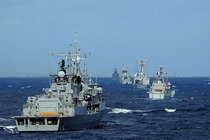
The Navy, Coast Guard, Police and maritime companies now encounter new threats, as piracy threatens the Indian seas and our trade routes. This calls for a united approach in combating threats and even more so, for a single governing body for maritime issues.
 Courtesy:
The India-Kazakhstan relationship is in need of a massive overhaul. Manmohan Singh’s visit to Astana is full of possibilities that can transform the relationship from a short-sighted association into a broad-based, strategic, long-term one focusing on energy, security, trade and technology.
 Courtesy: UNPhoto/MarcoCastro
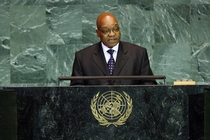
As the newest entrant of the BRICS group, South Africa's unpredictability in upholding the human rights dimension of its foreign policy agenda, by its stance to impose a ‘no fly zone’ over Libya, has brought about an incoherency between the BRIC countries and South Africa.
 Courtesy: UNPhoto/MarcoDormino
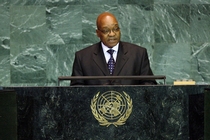
A new United Nations doctrine is revolutionising the manner in which Western powers achieve regime change. Under the pretext of “Responsibility to Protect” –as the doctrine is named –armed intervention does not depend on the aspirations of a populace but the facilitation of existing power equations
After the attacks of 26/11, economic growth and tourist spots take top priority for security while street ventures and the mass transit centers like Chhatrapati Shivaji Terminus -one of the targets of the attacks- are left unattended by the state.
 Courtesy: RahmEmanuael/Wikimedia
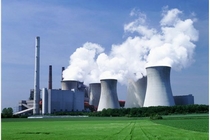
Japan’s Fukushima fallout puts the future of nuclear power in India in jeopardy. Our energy needs are so high that we will now need to consider all forms of energy - solar, wind, bio-mass, geo-thermal, oceanic energy, even energy through waves.