MEAIndia/Flickr Courtesy: MEAIndia/Flickr
17 January 2013

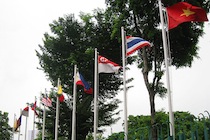
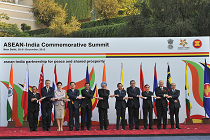
Promoting private players in ASEAN

The steps taken by the Indian government to enable private sector involvement in ASEAN have been hesitant. After the recent ASEAN summit in New Delhi, it is time for greater coordination of Indian private industry with government-to-government interaction, which will benefit all members, including India.
parliament Courtesy: Shwkyn231/Flickr
31 December 2012

India’s foreign policy: A year in review

The year 2012 has been a busy one for foreign policy: from escalating disputes in the South China Sea to alternate financial instruments from the emerging world. India’s foreign policy too has its shown strengths and weaknesses. We present our top foreign policy Hotspots, Sweet spots and Blind spots for 2012.

From China to ASEAN: Rebalancing India’s trade
14 December 2012

From China to ASEAN: Rebalancing India’s trade

New Delhi has actively worked with Beijing to address its massive bilateral trade deficit. However, it has another option. India can seek greater economic integration with ASEAN and substitute its imports from China with that of ASEAN. The India-ASEAN Summit on December 20 would be a good place to start.

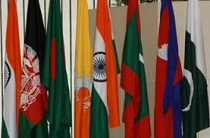
saarc-flags_5 Courtesy: doreview.blogspot.in
6 December 2012

The time for SAARC is now

Domestic politics are impacting overall SAARC relations. As the largest SAARC economy, we must strive to minimise differences with our neighbours by understanding how they perceive our policies, and uphold the promise of this regional bloc

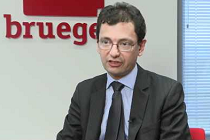
nicolas veron interview pic Courtesy: Nicolas Véron
20 November 2012

“Europe has lessons to learn from India”

The deterioration of growth prospects is at the core of the financial crisis in Europe. Can Europe successfully form a banking and monetary union? Gateway House interviews Nicolas Véron, a French economist, to discuss the repercussions of the financial crisis in Europe and the potential for Indo-EU cooperation.

Broken BRICs Courtesy: Foreign Affairs
30 October 2012

Broken BRICs

There’s been much talk about the “the rise of the rest,” with Brazil, Russia, India, and China leading the charge. However, few countries can sustain unusually fast growth for a decade, and even fewer, for more than that. As the boom years begin to end, the international order won’t change as much as expected.

green africa Courtesy: trendscout::/Flickr
4 October 2012

A Green Agenda for Africa

All the major economic forces in the world have come together in Africa in a new version of the Great Game. The competition for the continent’s resources will ultimately harm Africa unless Africa uses this opportunity to its advantage and to address its own serious problems.

Can BRICS swaps save the rupee copy Courtesy: Flickr/t3rmin4t0r
1 June 2012

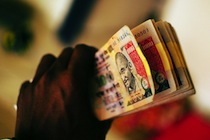
The case for BRICS swaps

Banks around the globe would be wise to take a second look at what now could be the most significant agreement in international finance since the Euro: the BRICS currency swap. Though certain geopolitical risks are involved, could this free India from unpredictable currency fluctuations?

Myanmar and the ASEAN Matrix copy Courtesy: Wikimedia Commons/Gunkarta
18 May 2012

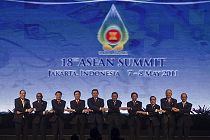
Myanmar in the ASEAN Matrix: An opportunity for India?

As India and the world welcome the recent democratization of Myanmar, this presents India an opportunity to increase its access to South East Asian countries as well, especially with members of ASEAN which still have catching up to do – particularly Cambodia, Laos, Myanmar and Vietnam.