China’s global proxy game
Afghanistan has become the first significant theatre of effective confrontation between the West and China. But with its deep-rooted economic ties, could the U.S. and NATO actually confront China?

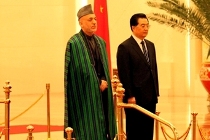 Courtesy: Afghanistan Goverment/WikimediaCommons
Afghanistan has become the first significant theatre of effective confrontation between the West and China. But with its deep-rooted economic ties, could the U.S. and NATO actually confront China?
India and Japan have designed their collaborations over the years to be a win-win for both sides. Now, they are willing to collaborate on long-term initiatives, based on intrinsic factors of inter-dependent competencies – rather than on the defence of an extrinsic threat of a common enemy.
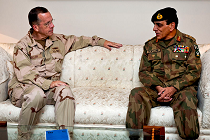 Courtesy: U.S.ArmedForces/WikimediaCommons
The 'memogate' fiasco in Pakistan highlights, yet again, the tensions that exist between the country’s political establishment and the Pakistan Army. While the final acts of this maneuvering are being played out, will the all-powerful Army continue to push the civilian government into a corner?
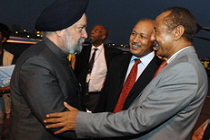 Courtesy: UN Photo/Paul Banks
After the crass misuse of Responsibility to Protect (R2P) in Libya, the broader question is: where is R2P headed? Do the events in Libya herald a more explicit assertion of this doctrine in other parts of the world? And should India rethink its viewpoint towards this ambiguous doctrine?
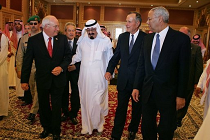 Courtesy: White House photo/WikimediaCommons
The Wahhabis, who now merit NATO backing, continue on their global mission of converting the Muslim Ummah to its relatively harsh and antediluvian ways of thinking and living. For NATO, this is a geopolitical miscalculation that will have tragic security consequences for the alliance within a decade.
 Courtesy: Gateway House
In this compendium of essays, Gateway House examines the terrorist attack carried out on Mumbai on 26 November 2008, and its aftermath.
 Courtesy: aloshbennett/Flickr
As events of the 26/11 attacks and similar others, retreat from the collective memory, they remain very much part of the lives of the victims and their families. How and why is it important to adopt a rights-based approach towards victims and perpetrators?
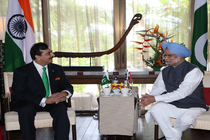 Courtesy: Ministry of External Affairs, Government of India
The U.S., post-9/11, has made large strides with their homeland security. In contrast, what has India done to counter terrorism? How have Indo-Pakistan relations unfolded?
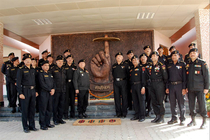 Courtesy: National Security GuardsGovernment of India
Three years after the attacks on Mumbai on 26/11, we have to ask ourselves: are we any better off ? What lessons did we learn ? Can we prevent an attack or cope with it better today ?
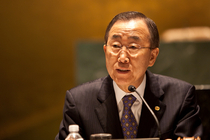 Courtesy: Broddi SigurðarsonFlickr
Today, at the national and regional level, large loopholes still exist in the security system. On the international front, however, there have been a lot more initiatives, yet the apex body of the UN remained silent post-26/11. Were they justified in holding back?