North East Asia: A pressing need for discreet diplomacy
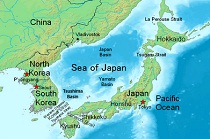
Political disputes and popular passions in North East Asia argue for discreet diplomacy and the provision of mutual assurances to prevent conflict and escalation.

 Courtesy: Phoenix7777/WikimediaCommons
Political disputes and popular passions in North East Asia argue for discreet diplomacy and the provision of mutual assurances to prevent conflict and escalation.
 Courtesy: Courtesy: Petersnoopy/Flickr
The new provocations from Pyongyang heighten the risk of a military showdown with the U.S., South Korea and Japan. China, the only power with sway over the regime, is exercising limited options for peace on the peninsula.
The military withdrawal of U.S. troops from Afghanistan in 2014 is likely impact both South and Central Asia. Gateway House interviews former U.S. envoy to Afghanistan Karl Eikenberry, who also served as a military officer in Afghanistan, to discuss the challenges and opportunities in post-2014 Afghanistan.
 Courtesy: Election Commission of Pakistan
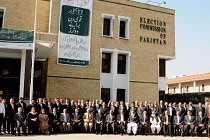
Pakistan’s Chief Election Commissioner, Fakhruddin G. Ebrahim, faces a host of challenges as he oversees the transition of the country’s first civilian government to complete its full five-year term. Will he be able to overcome the hurdles and ensure the free and fair polls Pakistan has so far been deprived of?
 Courtesy:
The Arab uprisings show no sign of closure, and have become amorphous. While New Delhi has so far been immunised from the political and religious dimensions of the uprisings, the rise of political Islam, Islamic governance, and continuing instability will impact India.
 Courtesy:
D. P. Satish in his review of Rahul Pandita’s latest book writes that it is a bold attempt at voicing despair about a nation that mouths lofty platitudes but does little to protect its persecuted communities.
 Courtesy: Chanakyathegreat/WikimediaCommons
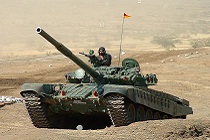
After each terror attack in india, there are strident demands for military action against Pakistan. ‘Surgical’ strikes and limited war in a bilateral nuclear age are not really options. What is needed is more decisive action on non-military fronts
 Courtesy: Matanya/WikimediaCommons
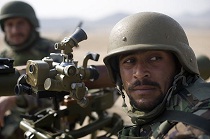
Since 2002, a large amount of U.S. funds flowing into Afghanistan has been diverted to the Taliban by local strongmen, resulting in a continued presence of the militia. The challenge post-2014 will be to reverse the West’s top-down strategy, creating a grassroots-driven incentive for peace and development.
 Courtesy:
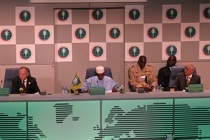
India’s relations with Islamic nations, many of which are members of the Organisation of Islamic Cooperation (OIC), have become even more prolific over the last decade. While India does not visualise becoming a member of a religious international body, many reasons militate against our formally joining the OIC.
 Courtesy: WikimediaCommons
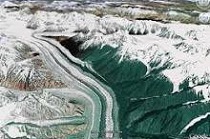
Pakistan’s recent violation of the ceasefire, by killing two Indian soldiers and beheading one of them, has triggered knee-jerk reactions by the government and armed forces, media frenzy, and public outcry. What makes this 60-year old problem tough to resolve, and how can those obstacles be overcome?