Badi Soch: Staying put in Afghanistan
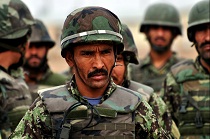
This daily column includes Gateway House’s Badi Soch – big thought – of the day’s foreign policy events. Today’s focus is on the recent terror attack near the Indian Consulate General building in Jalalabad

 Courtesy: Helmandblog/ Flickr
This daily column includes Gateway House’s Badi Soch – big thought – of the day’s foreign policy events. Today’s focus is on the recent terror attack near the Indian Consulate General building in Jalalabad
 Courtesy: Ministry of External Affairs, India
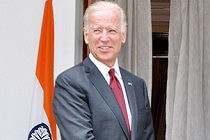
U.S. Vice President Joe Biden’s visit to India this week comes at a time when the India-U.S. bilateral relationship has gone seemingly adrift. Can this visit, which comes just months ahead of the Indian general elections, rejuvenate the relationship which is rooted in long-term common strategic interests?
 Courtesy: MEAphotogallery/ Flickr
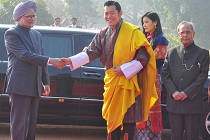
The opposition People’s Democratic Party in Bhutan won the National Assembly elections held on July 13 taking another large step towards democracy. However, India became the unwitting subject of campaign discourse after the government abruptly halted fuel subsidies to the country
 Courtesy: Senior Airman Sean Martin, U.S. Air Force/Wikimedia Commons
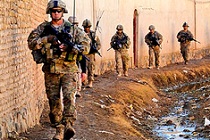
Kabul Diary is a compilation of experiences and observations by Gateway House’s Rajeshwari Krishnamurthy, who is visiting Afghanistan. In her fourth entry, she writes about the possible consequences for the country and its neighbours if the U.S. completely withdraws its troops in 2014
 Courtesy: 2winTradez/Flickr
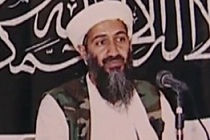
How did the Pakistani military fail to detect the raid in Abbottabad or the presence of Osama bin Laden? A report by a judicial commission in Pakistan, leaked by a TV channel on Monday, reveals the extent of the incompetence of civilian and military institutions, and the army’s complicity with the U.S.
 Courtesy: Gateway House
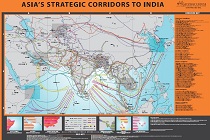
The map – Asia’s Strategic Corridors to India – has emerged from Gateway House’s study of India’s strategic links with other parts of Asia. It highlights the progress India has made in forging multiple links with six strategic regions – Central Asia, West Asia, East Africa, South-East Asia, East Asia, and our immediate neighbourhood
 Courtesy: Wikimedia Commons
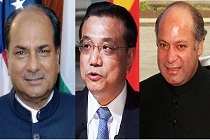
Both Indian Defence Minister A.K. Antony and Pakistani Prime Minister Nawaz Sharif visit China this week. However, their objectives are different. Antony visits China to bring up security issues in the aftermath of the Depsang incursion, while Sharif makes his visit in hope of bettering his flailing economy
 Courtesy: European External Action Service/ Flickr
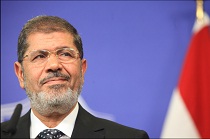
The downfall of Egyptian president Mohammad Morsi was partly contributed by those thousands of protesters who disagreed with his view of “Us” and “Them”. Leaders such as Morsi have focused on persecuting those who refuse to share their vision; continuing down this path would have had a negative impact on history
 Courtesy: MEAphotogallery/ Flickr
In 2012, Iraq emerged as India’s second largest crude oil supplier thereby shifting focus back on bilateral relations. However, India’s historical and cultural connection with Iraq, as well as common geopolitical concerns, reveal that relations have the potential to go beyond oil
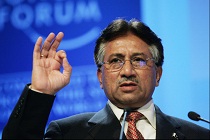 Courtesy: World Economic Forum/ Flickr
This daily column includes Gateway House’s Badi Soch – big thought – of the day’s foreign policy events. Today’s focus is on why prosecuting former President General Pervez Musharraf has serious implications for regional stability