India’s options post-Uri
In the aftermath of the terrorist attack on the Indian Army brigade headquarters in the town of Uri, Jammu and Kashmir, Gateway House has compiled potential policy options for India.

 Courtesy: Gateway House
In the aftermath of the terrorist attack on the Indian Army brigade headquarters in the town of Uri, Jammu and Kashmir, Gateway House has compiled potential policy options for India.
 Courtesy: Wikipedia
India's policy towards the Indian Ocean has begun to take a clear, coherent form with the signing of the Logistics Exchange Memorandum of Agreement with the United States, an important bilateral visit to Vietnam by Prime Minister Modi, and an ambitious future being laid out by Foreign Secretary Jaishankar
 Courtesy: http://nausena-bharti.nic.in/
With the 21st century being heralded as the 'century of the seas', there is much need for India to reclaim its historically dominant maritime position in civilian and military endeavours.
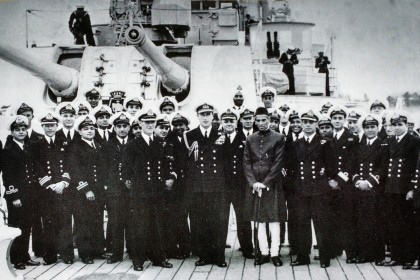 Courtesy: A Salute to the Sword Arm
15 August 1947 saw the division of more than a country. There were other spoils that were split: the Royal Indian Navy was one of them. This included not just a division of assets, but also of staff, whom the British Royal Navy had trained. This led to a piquant situation
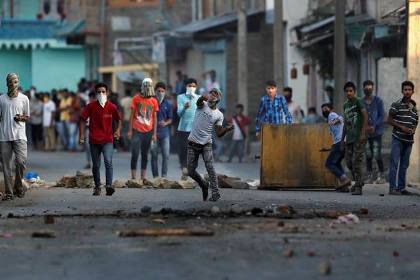 Courtesy: Indian Express
The recent unrest in Kashmir has once again vilified the Indian Army, be it the accusation of murder, or the imposition of the Armed Forces Special Powers Act, all of it seems to be the fault of the Army. It's time for a reality check.
 Courtesy:
Gateway House: Indian Council on Global Relations, in partnership with Istituto Affari Internazionali (IAI) – one of Italy’s leading think tanks on international affairs, participated in the European Union- India Think Tanks Twinning Initiative for the year 2016. Titled: ‘Moving forward the EU-India Read more
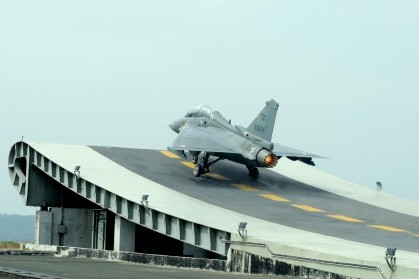 Courtesy: Wikipedia
‘Make in India’ in defence production does not imply stopping arms imports altogether. Rather, it means importing only those components that cannot be produced locally, while strategically utilising offsets and building domestic capabilities that will enable India to export complete systems and sub-systems as an active participant of the global supply chain.
 Courtesy: Sputnik News
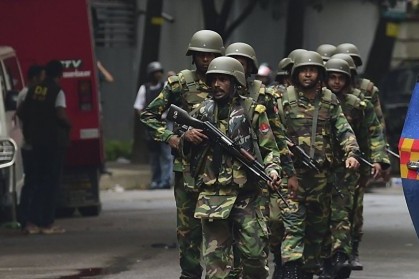
The recent terror attacks in Dhaka, the capital of Bangladesh, turned the spotlight on the country’s increasingly violent and volatile political situation. The interplay of deep political divisions, the rise of radicalised student politics, religious extremism, which the government has failed to rein in, and the spread of trans-national terror networks has created a toxic cocktail in Bangladesh with dangerous implications for India.
 Courtesy: Sameer Patil
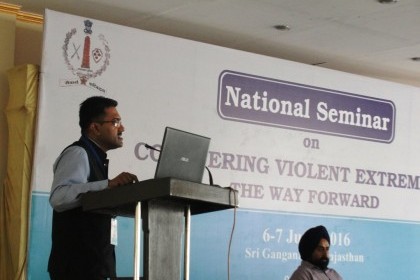
A recent seminar on ‘Countering Violent Extremism’ (CVE) offered a platform for law enforcement agencies to understand technological, social media and other propaganda strategies used by cross-border terrorist groups. The seminar’s location in Sri Ganganagar, the northern-most town of Rajasthan, served as a gentle reminder of challenges specific to security agencies on the India-Pakistan border.
 Courtesy: Gateway House
Kiren Rijiju, Minister of State for Home Affairs, delivered the keynote speech during the Evening Dialogue on Cybersecurity and Terrorism at the Gateway of India Dialogue held in Mumbai last June, organised in cooperation with the Ministry of External Affairs. The speech outlined the relationship between cybersecurity and terrorism, counter-measures already put in place by the Indian Government, and areas for improvement and progress in the future.