The strategic impact of technology
Every country has strategic goals to pursue and technology ecosystems play a vital role in achieving them

 Courtesy: Dantri.com
Every country has strategic goals to pursue and technology ecosystems play a vital role in achieving them
 Courtesy: Global Environment Facility
Since Independence, India has been consumed by its domestic priorities. Now, with increasing integration with the world and a huge stake in global stability, it is time to focus on the global commons. India has a seat on the hightable to design and shape the rules for the governance of the global commons. In this special Independence Day Briefing, Gateway House examines India’s engagement with four global commons – technology, outer space, cyber and the oceans – and makes recommendations on how best they can be governed for our collective future.
 Courtesy: Wikimedia Commons
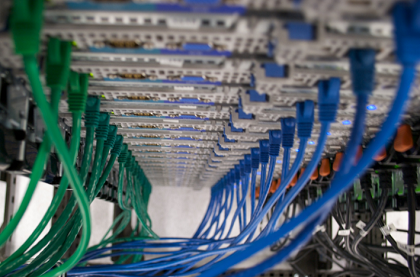
Cyber space is a new global common that defies formal governance. Its interconnectedness makes it full of opportunity, yet vulnerable. Attempts to regulate it have seen setback due to the differing visions of major powers and developing countries. India, an emerging economy with a sophisticated technology industry, is well positioned to shape the governance of this global common
 Courtesy: Gateway House
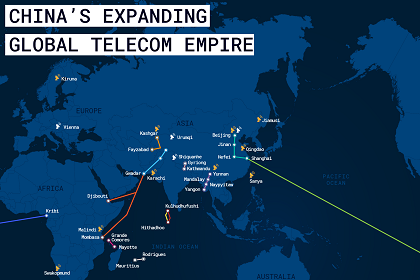
This version of the Gateway House Map on China’s Expanding Global Telecom Empire identifies some more telecommunication assets -- optic-fibre and satellite ground stations -- that Beijing is working on in South and Central America, Africa, Myanmar, the Indian Ocean Region and mainland China besides the existing ones, such as the Pakistan East Africa Cable Express (PEACE). It shows the direction China’s investment is taking, its diplomatic overtures and the larger geopolitical implications of its growing telecom empire
 Courtesy:
Gateway House is represented at the Nepal-India Think Tank Summit by our Fellow, National Security Studies and Director, Centre for International Security, Sameer Patil. The summit received wide coverage by the local press including a mention of Gateway House in Read more
 Courtesy: Rajya Sabha TV
Religious parties, some of them founded by anti-India terrorist groups, have dramatically risen to the fore in the Pakistan elections held this week. The 2018 polls mark a milestone as the military has enabled their entry into the political mainstream
 Courtesy:
Our security expert, Sameer Patil, was quoted in Al-Jazeera on this year’s Amarnath Yatra taking place with an enhanced threat perception and robust security measures. Read the full article here.
 Courtesy: Gateway House
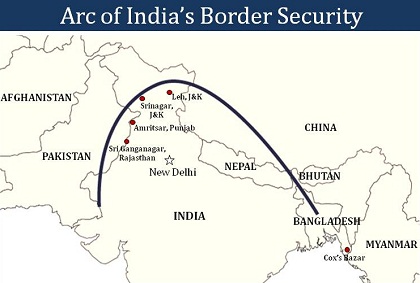
Border regions and communities, some of them far from the heartland, constitute India’s first line of defence, a critical link in its national security. India’s 15,000-km borders touch seven neighbouring countries: Afghanistan (abutting Gilgit), Pakistan, Nepal, Bhutan, China, Bangladesh, Myanmar. Border regions have their own local dynamics, often shaped by subnational and religious identities that do not necessarily align neatly with political borders. Some also serve as flourishing corridors for illegal smuggling of goods and humans. Technology plays an important role in better protecting borders, but in some cases it has made borders obsolete. Despite their importance, border regions do not receive the full attention of the Indian mainstream, except when border tensions arise.
 Courtesy: Sameer Patil
With India distracted in the Kashmir Valley, the critical border region of Ladakh has become a target of Chinese attention. Beijing appears to be exploiting Buddhist sectarian rivalries as it did in Tibet
 Courtesy: Wikimedia
The June 12 summit was characterised by give-and-take as opposed to the one-way approach practised by earlier U.S. administrations. All countries welcomed the agreement and there is hope that this realism will enable the United States to address other contentious issues too