Maritime India’s Global Destiny
With the 21st century being heralded as the 'century of the seas', there is much need for India to reclaim its historically dominant maritime position in civilian and military endeavours.

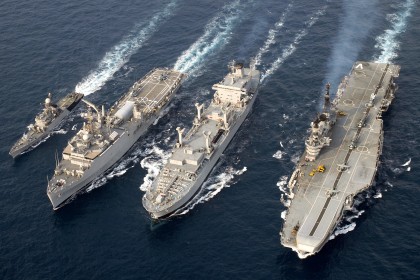 Courtesy: http://nausena-bharti.nic.in/
With the 21st century being heralded as the 'century of the seas', there is much need for India to reclaim its historically dominant maritime position in civilian and military endeavours.
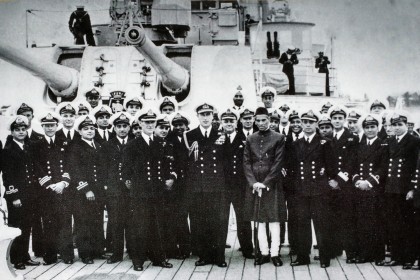 Courtesy: A Salute to the Sword Arm
15 August 1947 saw the division of more than a country. There were other spoils that were split: the Royal Indian Navy was one of them. This included not just a division of assets, but also of staff, whom the British Royal Navy had trained. This led to a piquant situation
 Courtesy: Wikipedia
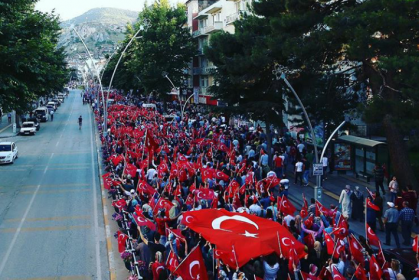
The attempted coup on July 15 in Turkey as well as its aftermath have irreparably dented President Erdogan’s international image and impacted Turkey's standing as a democratic state, a military power, a NATO member, an EU aspirant, and an emerging economy. This downtrend is unlikely to be reversed in the near future and the country is in for an extended period of instability
 Courtesy: Flickr/Times Asi
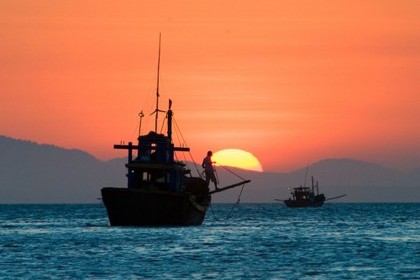
China's refusal to accept the ruling of The Hague greatly harms its international reputation and will fuel regional concerns about China's rise. Nationalist sentiments stirred up by a sustained media campaign heighten the risk of a confrontation, but there is also a possibility for the Philippines to use its new leverage to its advantage through new negotiations.
 Courtesy: The Independent/AP
France's state policy of 'laïcité' (secularism) and its military interventions in Islamic countries has made it the prime target of IS in the West. The hardline French response to step up bombing campaigns against jihadis in Syria, Iraq, and Mali will likely continue, but conversely feeds IS strategy, which is to foment anti-Muslim sentiment among the non-Muslim French population.
 Courtesy: Wikipedia
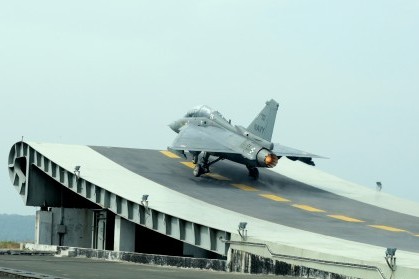
‘Make in India’ in defence production does not imply stopping arms imports altogether. Rather, it means importing only those components that cannot be produced locally, while strategically utilising offsets and building domestic capabilities that will enable India to export complete systems and sub-systems as an active participant of the global supply chain.
 Courtesy: Sputnik News
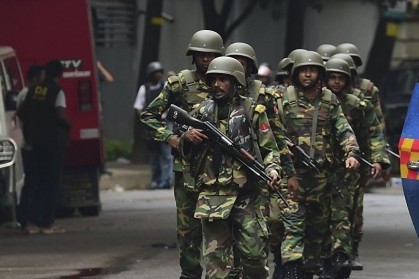
The recent terror attacks in Dhaka, the capital of Bangladesh, turned the spotlight on the country’s increasingly violent and volatile political situation. The interplay of deep political divisions, the rise of radicalised student politics, religious extremism, which the government has failed to rein in, and the spread of trans-national terror networks has created a toxic cocktail in Bangladesh with dangerous implications for India.
 Courtesy: Wikipedia
Does India plan to remodel its Andaman & Nicobar Islands as a launching pad for future security operations to check growing Chinese inroads in the Indian Ocean Region? Development of the islands has long been ignored to India’s detriment, and their strategic position in the Indian Ocean, underutilised.
 Courtesy: Indian Navy
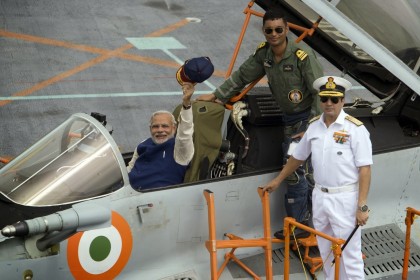
Speedy clearances to long-pending equipment demands of the Indian military and a push for local defence production have been the hallmarks of two years of the Modi government. The next three years must create that defence industrial base, encourage private sector participation and focus on R&D.
 Courtesy: Wikipedia
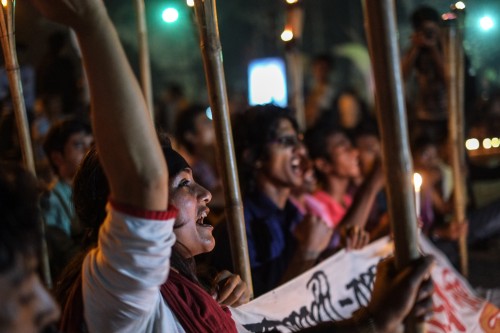
With the possibility of the Jamaat-e-Islami being officially banned through a resolution in the Bangladesh parliament, what will happen to its followers and activists? Will it cease to exist as a political and ideological force or, in the absence of a political platform, will its ideological followers strive to find alternate ways to make their existence felt?