INF Treaty: China behind U.S. exit
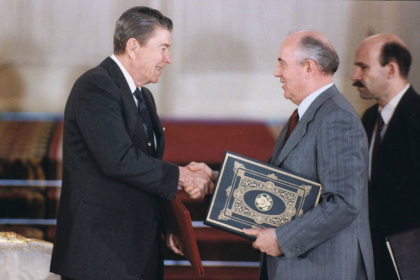
America’s withdrawal from a Cold War arms control agreement seems to be dictated by China’s development and deployment of thousands of short and medium range ballistic missiles.

 Courtesy: Wikimedia Commons
America’s withdrawal from a Cold War arms control agreement seems to be dictated by China’s development and deployment of thousands of short and medium range ballistic missiles.
 Courtesy: Foreign Affairs
The immediate threat is more corrosive than explosive. States are using the tools of cyberwarfare to undermine the very foundation of the Internet: trust. The result is that an arena that the world relies on for economic and informational exchange has turned into an active battlefield.
 Courtesy: Indian Ocean Conference
If India wants to become a serious Indo-Pacific player, it has to prioritise implementation of the SAGAR initiative, look beyond the Quad to partner with smaller littoral states and provide alternatives to China’s investment strategies. This was the message from the recent Indian Ocean Conference in Hanoi, Vietnam
 Courtesy: Dantri.com
Every country has strategic goals to pursue and technology ecosystems play a vital role in achieving them
 Courtesy: Gateway House
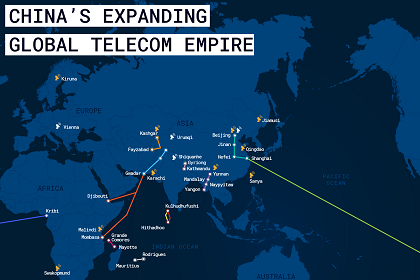
This version of the Gateway House Map on China’s Expanding Global Telecom Empire identifies some more telecommunication assets -- optic-fibre and satellite ground stations -- that Beijing is working on in South and Central America, Africa, Myanmar, the Indian Ocean Region and mainland China besides the existing ones, such as the Pakistan East Africa Cable Express (PEACE). It shows the direction China’s investment is taking, its diplomatic overtures and the larger geopolitical implications of its growing telecom empire
 Courtesy:
Our Fellow for National Security Studies, Sameer Patil, was mentioned and quoted in a write-up on his most recent article on China’s increasing influence in Ladakh. Read the full article here.
 Courtesy: Gateway House
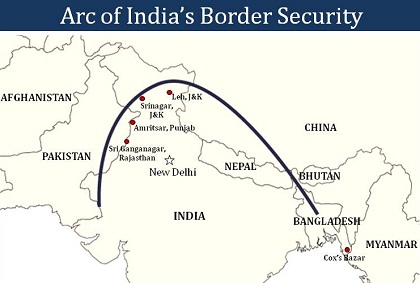
Border regions and communities, some of them far from the heartland, constitute India’s first line of defence, a critical link in its national security. India’s 15,000-km borders touch seven neighbouring countries: Afghanistan (abutting Gilgit), Pakistan, Nepal, Bhutan, China, Bangladesh, Myanmar. Border regions have their own local dynamics, often shaped by subnational and religious identities that do not necessarily align neatly with political borders. Some also serve as flourishing corridors for illegal smuggling of goods and humans. Technology plays an important role in better protecting borders, but in some cases it has made borders obsolete. Despite their importance, border regions do not receive the full attention of the Indian mainstream, except when border tensions arise.
 Courtesy: Sameer Patil
With India distracted in the Kashmir Valley, the critical border region of Ladakh has become a target of Chinese attention. Beijing appears to be exploiting Buddhist sectarian rivalries as it did in Tibet
 Courtesy: Wikimedia
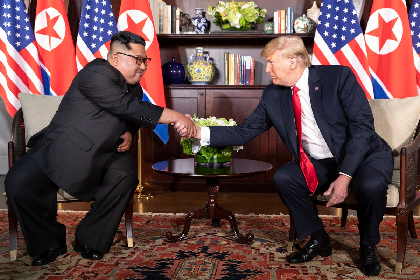
The June 12 summit was characterised by give-and-take as opposed to the one-way approach practised by earlier U.S. administrations. All countries welcomed the agreement and there is hope that this realism will enable the United States to address other contentious issues too
 Courtesy: MEA Flickr
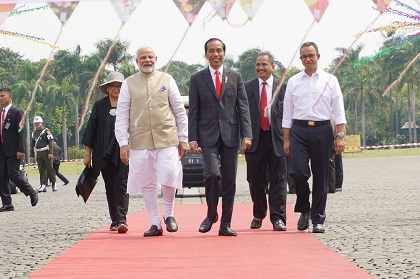
Prime Minister Modi’s visits to South East Asia last week were major steps in furthering the goals of India’s Act East Policy even as major power rivalries unfolded in the region. Most significant was the visit to Indonesia, a low key Asian power but one that India can partner to enhance its regional stature.