shutterstock_1043745040 Courtesy: Shutterstock
27 June 2019

An amplified India-Australia security

The U.S.-China trade dispute and Australia’s concerns about China’s growing influence in its internal affairs and the neighbourhood present an opportunity for New Delhi and Canberra to step up their security engagement, bilaterally, and in the Indo-Pacific
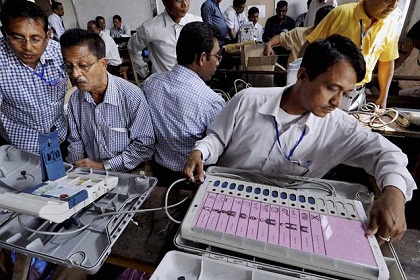

Jorhat :Polling officer checking electronic voting machine (EVM) and documents after collecting from the respective center  on the eve of the 1st phase of Assam State Assembly election 2016 at Jorhat in Assam on Sunday. PTI Photo(PTI4_3_2016_000067A) Courtesy: PTI
18 April 2019

The cyber security imperative for India’s elections

The growing use of technology in the election process has made cyber security a crucial issue. Instances of the spread of fake news, manipulation of voter behaviour and hacking show how digital technology can be misused. These issues need to be addressed in the long term

Canada 2 Courtesy: Gateway House & CIGI
8 February 2019

Partnering for Prosperity: India-Canada Collaboration to Curb Digital Black Markets

The virtual computer world holds tremendous potential for harm infliction, and cybercrime is a growing concern for India and Canada. Both countries have cracked down on digital black markets, where transactions for contraband and illegal services take place, but such cooperation can be further deepened through advanced use of technology and informal collaboration, for example, thereby also contributing to international security at the multilateral level

Canada1 Courtesy: Gateway House & CIGI
8 February 2019

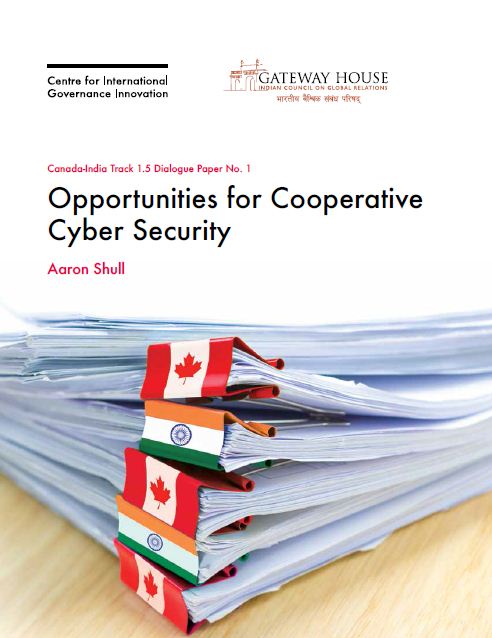
Opportunities for Cooperative Cyber Security

India and Canada share the same vulnerabilities when it comes to cyber security. They have been victims of suspected Chinese hackers and have mutual concerns about terrorism and election manipulation. This paper makes four recommendations on how the two countries can cooperate to build trust and further their strategic and economic interests

nd18_cover_large Courtesy: Foreign Affairs
3 December 2018

Beijing’s Nuclear Option

Experts estimate the likelihood of a U.S.-Chinese nuclear crisis as “somewhere between nil and zero.” This assurance is misguided. The United States' signature approach to conventional warfare would be a potential recipe for nuclear escalation.

so18_cover_large_0 Courtesy: Foreign Affairs
1 October 2018

Battlefield Internet

The immediate threat is more corrosive than explosive. States are using the tools of cyberwarfare to undermine the very foundation of the Internet: trust. The result is that an arena that the world relies on for economic and informational exchange has turned into an active battlefield.

global-commons-870_0 Courtesy: Global Environment Facility
15 August 2018

India in the Global Commons

Since Independence, India has been consumed by its domestic priorities. Now, with increasing integration with the world and a huge stake in global stability, it is time to focus on the global commons. India has a seat on the hightable to design and shape the rules for the governance of the global commons. In this special Independence Day Briefing, Gateway House examines India’s engagement with four global commons – technology, outer space, cyber and the oceans – and makes recommendations on how best they can be governed for our collective future.

Cyber-paper-cover-709x1024 Courtesy: Wikimedia Commons
15 August 2018

India’s lead on cyber space governance

Cyber space is a new global common that defies formal governance. Its interconnectedness makes it full of opportunity, yet vulnerable. Attempts to regulate it have seen setback due to the differing visions of major powers and developing countries. India, an emerging economy with a sophisticated technology industry, is well positioned to shape the governance of this global common