Canada1 Courtesy: Gateway House & CIGI
8 February 2019

Opportunities for Cooperative Cyber Security

India and Canada share the same vulnerabilities when it comes to cyber security. They have been victims of suspected Chinese hackers and have mutual concerns about terrorism and election manipulation. This paper makes four recommendations on how the two countries can cooperate to build trust and further their strategic and economic interests
nd18_cover_large Courtesy: Foreign Affairs
3 December 2018

Beijing’s Nuclear Option

Experts estimate the likelihood of a U.S.-Chinese nuclear crisis as “somewhere between nil and zero.” This assurance is misguided. The United States' signature approach to conventional warfare would be a potential recipe for nuclear escalation.

so18_cover_large_0 Courtesy: Foreign Affairs
1 October 2018

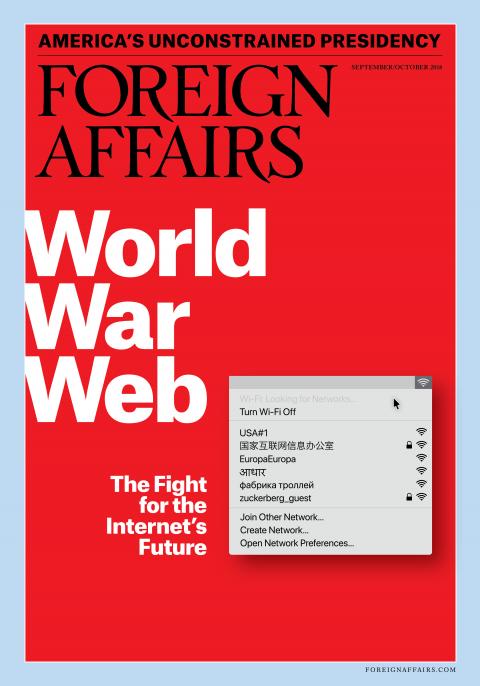
Battlefield Internet

The immediate threat is more corrosive than explosive. States are using the tools of cyberwarfare to undermine the very foundation of the Internet: trust. The result is that an arena that the world relies on for economic and informational exchange has turned into an active battlefield.

3W7A1026 Courtesy: Gateway House
14 February 2017

“We will work with India to accommodate India’s desires”

Gateway House interviewed U.S. Vice Admiral Barry McCullough on defense partnerships between Lockheed Martin and India, including cybersecurity, transfer of technology and India’s need for tactical aircrafts such as the F-16. He also voiced Lockheed Martin’s interest in investing in India while ensuring India’s development needs are met.

CyberAttacks_Samir Courtesy: Christiaan Colen / Flickr
18 February 2016

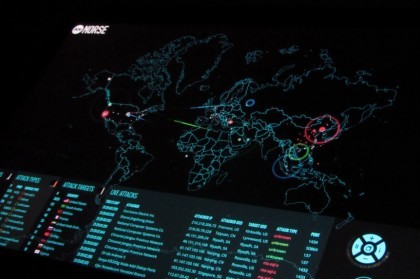
Geopolitical rivalries in cyberspace

The recent cyber attack on Ukraine’s power grids is indicative of the cyber space becoming the most useful tool for perpetuating geopolitical rivalries. Many countries are rapidly expanding their offensive cyber capabilities, and it appears the militarisation of cyber space is complete.

Backlit keyboard Courtesy: Wikipedia
21 October 2015

U.S.-China: no more spy games?

The recent U.S. and China agreement to contain cyber espionage will not only impact their bilateral relationship, it will also create norms in international cyberspace. But implementation remains a challenge, and businesses, including in India, that have faced cyber threats must proactively plug their vulnerabilities

Darknet Courtesy: psychotropicon.info
6 January 2015

The ‘deep web’: new threat to business

Cyber crime has transcended hacking and other online illegal activities—the black markets of the “hidden” internet are now a potent threat. This “darknet” is used by illicit traders, saboteurs and terrorist groups—with serious financial and security implications for the Indian government and business sector

devcybersecurity Courtesy: danxoneil / Flickr
15 November 2013

Controlling cyberspace

Across the globe, governments trying to control the internet are violating the privacy and rights of internet users. China’s censorship model is limited to its borders, the U.S.’ surveillance affects everyone internationally. A multilaterally-acceptable mandate for cyber governance is now an imperative.

dilma Courtesy: Ministério da Saúde/Flickr
17 October 2013

Brazil’s new global agenda for the internet

After revelations that the U.S.’s NSA spied on her, Brazilian President Dilma Rousseff has ordered a series of measures to ensure online independence and called for an equitable global internet infrastructure. India can follow Brazil’s lead and make its communication systems less vulnerable