China in Latin America
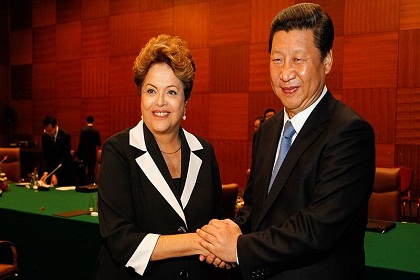
China's influence and presence in Latin America has grown rapidly in the form of trade and investment. China's growing presence is both a concern for Latin America and the U.S., which creates a window of opportunity for India

 Courtesy:
China's influence and presence in Latin America has grown rapidly in the form of trade and investment. China's growing presence is both a concern for Latin America and the U.S., which creates a window of opportunity for India
 Courtesy:
The nature of the sweeping victory of AAP and Kejriwal may be unprecedented in India but not in Latin America. In Brazil, Mexico and Colombia, there are lessons for AAP and Arvind Kejriwal as they assume power in New Delhi – and also for the Congress Party as well as the BJP
 Courtesy: globalsherpa.org
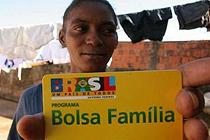
The Indian government has undertaken a massive financial inclusion scheme to bring bank accounts to the poor. But poverty alleviation needs to be addressed at multiple levels for which the Latin American example of using targeted and customised conditional cash transfer programmes can help India
 Courtesy: Newscom.com
The reelection of President Dilma Rousseff means continuation of the slow growth of the Brazilian economy and a lower likelihood of much-needed, major political and economic reforms. India should lower its expectations on a global partnership with Brazil
 Courtesy: wikimedia commons
Brazilian president Dilma Rouseff's bid for re-election has been ambushed in just two weeks by activist Marina Silva who is now predicted to win the October elections. If elected, Marina is likely to continue with the pro-poor policies of the current government, and she has already shown a keen interest in foreign policy. PM Modi will find Marina more proactive and forthcoming than Rouseff
 Courtesy: fcpamericas.com
The credit for significant poverty reduction achieved in the last decade in Latin America goes to the pro-poor policies of the leftist governments. The Left is expected to be voted back to power in the October elections to be held in Brazil, Uruguay and Bolivia. The increase in affordability power is good news for the Indian companies who are exporting goods to the region
 Courtesy: wikimedia
The Argentines blame the 'Washington Consensus' for the default in 2001, and the New York judiciary and vulture funds for the 'artificial default' in July this year. These are challenges not just for Argentina; they endanger the global debt restructuring system and contradict U.S. domestic laws
 Courtesy: wikimedia\commons
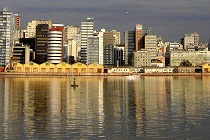
Brazil follows a more decentralised form of federalism and gives special importance to the municipalities. Porto Alegre’s successful 'participatory budgeting' is a role model for the world. India can learn from both the positive and negative aspects of the Brazilian system
 Courtesy: durdaneta/Wikimedia
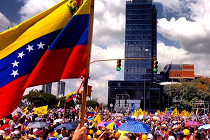
Latin America’s economic growth has slowed down in 2014. But the region’s fundamentals are relatively strong, and have the resilience to absorb external shocks and increase growth in the coming years. However, Argentina and Venezuela face continuing uncertainty and deterioration.
 Courtesy: news.yahoo.com
The sharp Latin American response to the Israeli bombings in Gaza, on the back of solid support from the U.S., is attributable to the memory of the atrocities committed by past Latin American military dictators with similar U.S. backing. Their strong response is also a sign of the increasingly independent and assertive Latin American voice on the global stage