A futuristic agenda for India & Canada
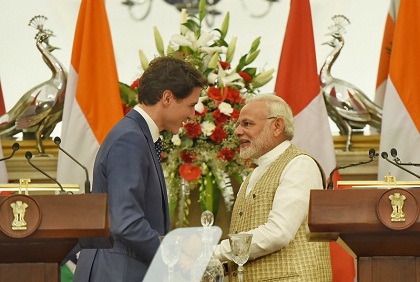
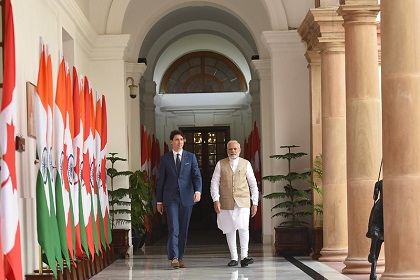
India can draw Canada in a new direction – away from its trans-Atlantic fixation, into the Indo-Pacific and a tech and resources partnership that will benefit both democracies
Courtesy: Financial Express
India can draw Canada in a new direction – away from its trans-Atlantic fixation, into the Indo-Pacific and a tech and resources partnership that will benefit both democracies
Courtesy: Wikimedia Commons
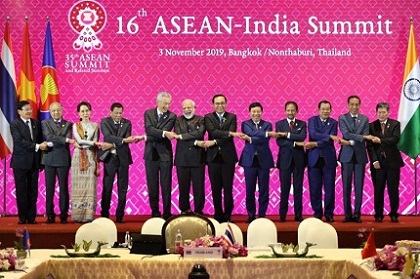
The United States, Europe and the Asia Pacific today form Canada’s tripartite foreign policy priorities. The ASEAN is its sixth largest partner, which was not so 20 years ago, but economic engagement with India – still small, compared to China and Japan – has scope to grow
Courtesy: Ministry of Foreign Affairs, China
In Cambodia, democracy exists only in form. Liberal values, inculcated by the West, take second place to poverty alleviation and employment. Such priorities have affected its diplomatic allegiances while bilateral relations with India have not expanded
Courtesy: Getty Images
The romance of the Sky Train—which runs 3,757 km and connects Lhasa to Beijing—lies in the stark beauty of the Roof of the World, an ancient land long closed to the public and foreign gaze as also in the modern engineering of the railroad and the train
Courtesy: Deccan Chronicle
A major upcoming international conference on the Blue Economy in Nairobi in November will focus on the impracticalities of pursuing any one goal – such as sustainability – to the exclusion of business. In fact, the many interests at stake need not be in conflict with one another, to realize the goal of a true blue economy, in which business must have a significant stake.
Courtesy: Indian Ocean Conference
If India wants to become a serious Indo-Pacific player, it has to prioritise implementation of the SAGAR initiative, look beyond the Quad to partner with smaller littoral states and provide alternatives to China’s investment strategies. This was the message from the recent Indian Ocean Conference in Hanoi, Vietnam
Courtesy:
TIMES NOW featured our Distinguished Fellow in Foreign Policy Studies, Amb. Rajiv Bhatia on their show to discuss the fourth BIMSTEC Summit. Watch the full episode here.
Economist Surjit S. Bhalla, who sits on the Prime Minister’s Economic Advisory Council, says all currencies, not just the rupee, have fallen against the U.S. dollar. Speaking to Gateway House’s Manjeet Kripalani, he elaborates on some diplomatic and domestic tools to stem the fall, even in an election year
Courtesy: MEA/ Flickr
India and Brunei have a 34-year-old diplomatic relationship; but as yet no Indian president or prime minister has paid the country a bilateral visit to strengthen these ties. The strategically-located nation is rich in its history, with a unique political system. Its foreign policy approach is non-controversial, yet noticeably pragmatic.
Courtesy: Gateway House
America is increasingly using sanctions as a geopolitical tool against its rivals, Russia, Iran and Venezuela. These countries are important partners for India, which needs to find ways around unilateral American sanctions.