Badi Soch: Pakistan’s next government
This daily column includes Gateway House’s Badi Soch – big thought – of the day’s foreign policy events. Today’s focus is on the elections and new government in Pakistan.


This daily column includes Gateway House’s Badi Soch – big thought – of the day’s foreign policy events. Today’s focus is on the elections and new government in Pakistan.
 Courtesy: rwoan/Flickr
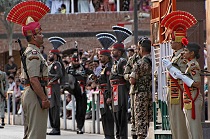
Pakistan’s national elections will take place in the backdrop of a troubled economy, severe energy crisis, and frequent terrorist attacks. Can these problems be solved if the next leadership agrees to open its territories for trade and transit purposes between India and Afghanistan?
 Courtesy: United States Navy
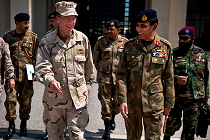
Gateway House’s Ambassador Neelam Deo, in a debate, titled ‘The civil-military equation in Pakistan has begun to tilt in favour of civilians,’ argues in her closing remarks that Pakistan will need sympathy and support as it confronts the complex choices that the democratisation process continually throws up.
 Courtesy: Pakistan97/WikimediaCommons
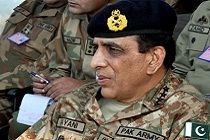
Gateway House’s Ambassador Neelam Deo, in a debate, titled ‘The civil-military equation in Pakistan has begun to tilt in favour of civilians,’ argues in her rebuttal that the changes in Pakistan resemble a one-step-forward-and-two-steps-backwards process rather than a move up to the next level.
 Courtesy: U.S. Army/WikimediaCommons
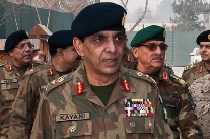
With Pakistan geared for a defining general election scheduled for May 11, Gateway House’s Ambassador Neelam Deo in a debate, titled ‘The civil-military equation in Pakistan has begun to tilt in favour of civilians,’ argues against the motion.
 Courtesy: Xavier de Jauréguiberry/flickr
The proposed immigration reform bill, currently being debated in the U.S. Congress, contains provisions to penalize Indian IT companies for allegedly misusing the H1-B and L1 visas. How can New Delhi tackle this rising U.S. sentiment against Indian companies?
 Courtesy: Prime Minister's Office
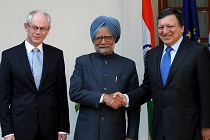
Negotiations for the India-EU Free Trade Agreement, which began in 2007, have yet to conclude. Deepak Rao blogs about the factors delaying the process, and the implications of the agreement on different sectors of the economy.
 Courtesy: Peter Fuchs/Flickr
The similarities between China’s ascent in the global arena and India’s rise in 2003 are striking. Manjeet Kripalani blogs about why despite their remarkable rise, it is in Beijing’s interest to take notes from the stagnation that followed India’s growth.
 Courtesy: Steve Webel/Flickr
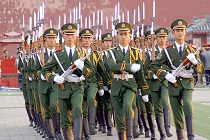
The Chinese army’s trespassing of the Sino-Indian Line of Actual Control near Ladakh has fuelled serious security concerns in India. This signals a sharper policy from Beijing towards India; it is also why its response must be firm, and the Chinese must be seen to back off.
 Courtesy:
The ‘Lady Hughes incident’, as a confrontation between British and Chinese authorities in 1784 came to be called, perhaps holds lessons for the ongoing dispute between India and Italy. Aniruddha Bose blogs