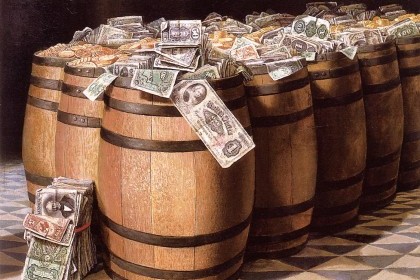
Victor_Dubreuil_-_'Money_to_Burn',_oil_on_canvas,_1893 Courtesy: Victor Dubreuil / Wikipedia
15 December 2015

The Gulf storm ahead

The GCC finds itself engulfed by a perfect storm – due to the oil price fall and the re-emergence of Iran on the world scene. While the GCC is forced to undertake politically challenging reforms and confront the regional challenge of Iran, there lies a great opportunity for India to strengthen their economic as well as security ties.
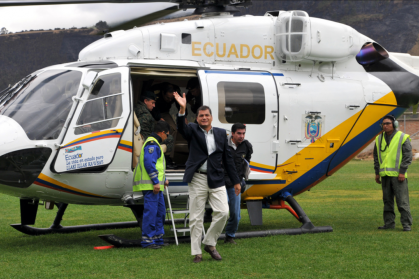
Ecuador Dhruv Courtesy: Presidencia Ecuador / Flickr
26 November 2015

India-Ecuador: growing past defence

The Ecuadorian president’s first-ever state visit to India this month was cancelled, possibly because four of seven helicopters supplied by HAL to Ecuador have crashed. But this hurdle can be overcome, and ties between the two countries can expand beyond defence and oil to sectors such as pharma, IT, and agribusiness.

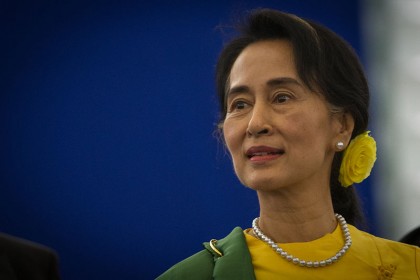
Remise_du_Prix_Sakharov_à_Aung_San_Suu_Kyi_Strasbourg_22_octobre_2013-04 Courtesy: Claude TRUONG-NGOC
13 November 2015

Myanmar after elections: what next?

The elections in Myanmar finally come to a close with Suu Kyi-led NLD’s landslide victory. The military establishment has accepted defeat. Suu Kyi, who can't be the president, has made it clear that she would be 'above the president'. How should India read Myanmar now and act to safeguard its interests?

narendra modi Courtesy: Narendra Modi official
12 November 2015

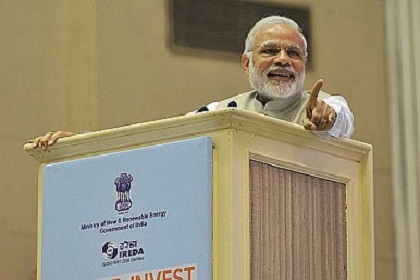
An agenda for India’s G20 success

Prime Minister Narendra Modi’s initiatives like the Make in India campaign, Digital India, Skill India, Smart Cities, et al, are all designed to attract much needed foreign capital into the country. However, a lot of global investors are still sitting on the fence. PM Modi, thus, must use the G20 Summit to assure investors and countries that India is open for business.

reset africa strategy Courtesy: MEA / Flickr
5 November 2015

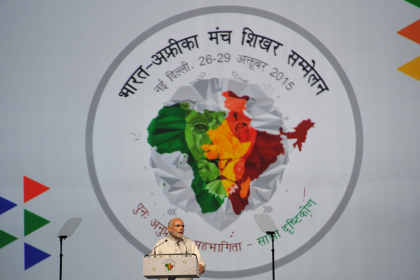
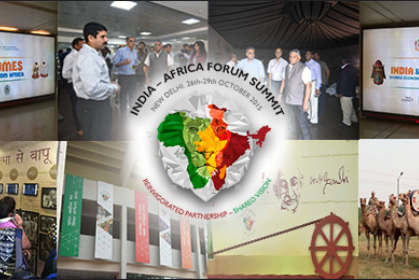
India resets Africa strategy

Changes in how India plans to approach its relationship with Africa were evident at the recent India-Africa Forum Summit, including the wider representation of African countries, and Modi’s push to forge a united front with Africa at multilateral institutions on trade and other issues. But beyond these, gaps in the India-Africa alliance remain to be addressed.

Modi Obama Wiki Courtesy: Wikipedia
21 October 2015

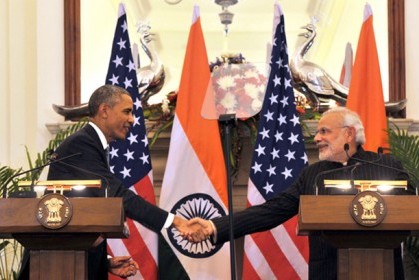
Building on India-U.S. meeting points

Modi’s second visit to the U.S. in September indicates a growing partnership in such areas as business, technology, and climate change. Though gaps too remain—for example, India is not part of the TPP and its bid for a UNSC seat is on hold—for now, it is time to consolidate bilateral meeting points, and India can start by simplifying its trade policy and tariff structure

Merkel Modi Courtesy: MEA / Flickr
15 October 2015

Moving ahead after Merkel’s visit

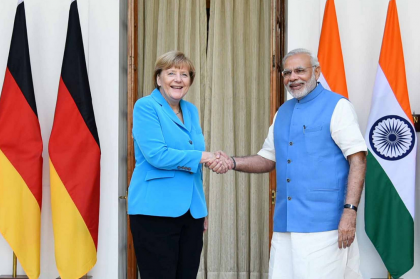
German Chancellor Merkel’s recent visit to India with a high-powered entourage showed the weight attached to this bilateral relationship. German companies want to gain more access to the Indian market and be part of Prime Minister Modi’s high-tech initiatives—and it is up to India to surmount political hurdles and tap into this potential.

India_fields_and_wind_turbines Courtesy: Wikipedia
8 October 2015

India’s climate change leadership

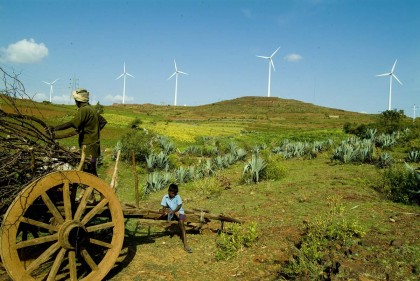
On 1 October 2015, India submitted its INDCs to the UN. The ambitious goals set by the Narendra Modi government have no doubt silenced its critics. However, to achieve these lofty goals, India needs a paradigm shift in the kinds of business and development models it encourages.