A more robust Asia policy expected?
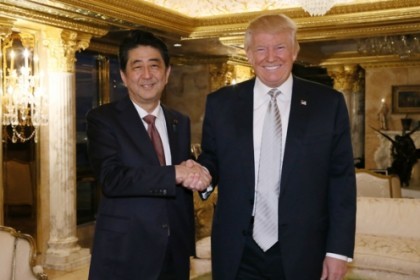
Trump’s cabinet has a preponderance of China hardliners, which has wider implications for the Asia Pacific region while some of its members view Narendra Modi as Reaganesque and a man of the times

 Courtesy: Wikipedia
Trump’s cabinet has a preponderance of China hardliners, which has wider implications for the Asia Pacific region while some of its members view Narendra Modi as Reaganesque and a man of the times
 Courtesy: MEA/flickr
The year 2017 may change some equations in the East Asian region. Will the near parity that the U.S. and China currently share turn into a keener contest? Will strained relations between India and China persist? Donald Trump’s election as the next U.S. president casts the spotlight squarely on these inter-state relationships
 Courtesy: Gateway House
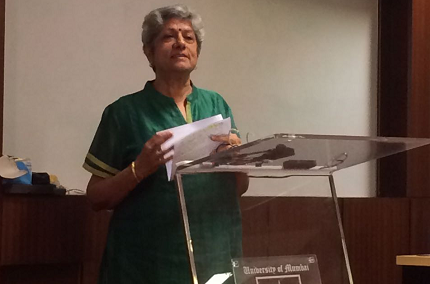
Security studies provides the framework for anticipating and analysing threats. While foreign policy offers fitting strategies to respond to these threats and address potential issues. Both contribute fundamentally to the other, making it important for both fields to be developed and studied.
 Courtesy: Russian Government
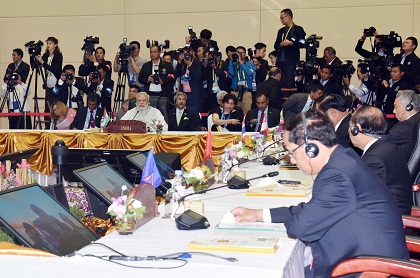
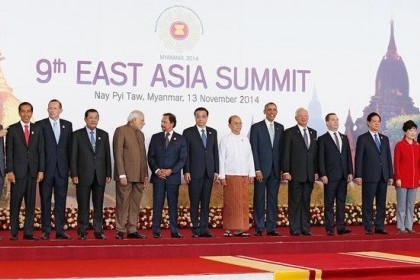
At a time when New Delhi is beginning to not just ‘Look East’ but also ‘Act East’, and when parallel integrative processes are underway globally, including the ASEAN-led process, the incipient China-led process and the U.S.-led TTP, India and ASEAN could together produce a brilliant new era of Asian integration
 Courtesy: Flickr/U.S. Army Africa
New Delhi now has the capacity to move beyond the basics of economic diplomacy by using the strengths of India's private sector in healthcare. Africa would welcome such an initiative, which will improve the health and development capabilities of African countries. This will also serve India’s geopolitical objectives and can precede a similar healthcare rollout to other regions
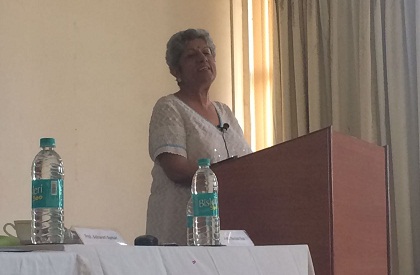 Courtesy: Gateway House
In the last seven decades since independence, successive prime ministers have ushered in changes in India’s foreign policy in response to shifting global geopolitical dynamics, aggregating transformation in bilateral relations. This overview places the past against the changes being brought in by Prime Minister Narendra Modi, a more forceful foreign policy practitioner than his predecessors
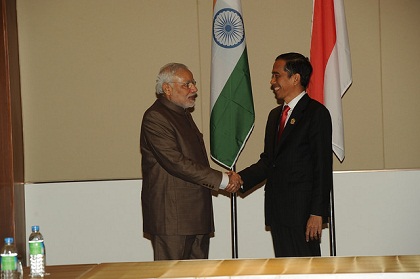 Courtesy: MEA/Flickr
Indonesian President Joko Widodo is visiting India next week two years after assuming office, but Prime Minister Narendra Modi, who is now in the second half of his five-year tenure, is yet to extend the gesture. A ‘Look West-Act East’ policy will benefit both nations respectively
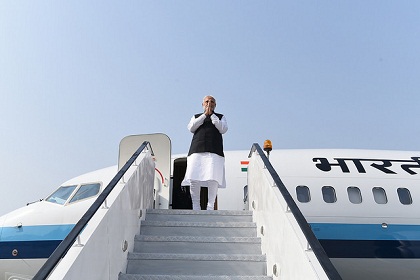 Courtesy: MEA/flickr
In Modi’s worldview, bolder than that of his predecessors, India has a bigger place than envisaged before. Consonant with this, the prime minister’s foreign policy mirrors the Arthashastra’s emphasis on pragmatic and intelligent use of power, informed by knowledge and the larger cause of the people. Has it been successful so far?
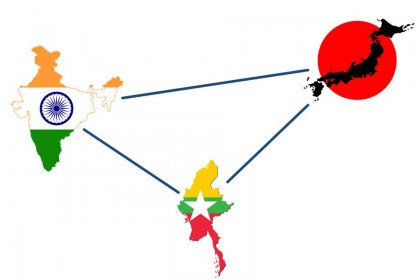 Courtesy: Gateway House
Aung San Suu Kyi paid high-profile visits to both Japan and India recently; economic cooperation would have been high on her agenda. But what could also emerge from such overtures is a diplomatic threesome
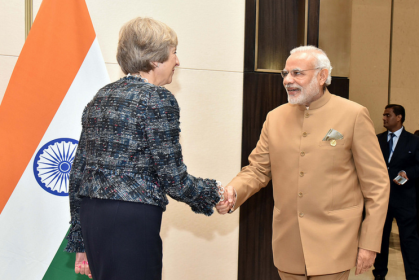 Courtesy: MEA/Flickr
Brexit has put Prime Minister Modi in the driving seat for negotiating a better trade deal for India with the UK--and the EU