A world of uncertainties & unease
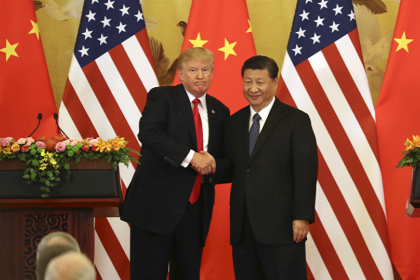
Speakers at the seventh Atlantic Dialogues, held in Morocco earlier this month, discussed what the challenge to western dominance and China’s expansionism meant for their political and economic future

 Courtesy: Sputnik News
Speakers at the seventh Atlantic Dialogues, held in Morocco earlier this month, discussed what the challenge to western dominance and China’s expansionism meant for their political and economic future
 Courtesy:
Our Director, Amb. Neelam Deo, was interviewed by Energy Intelligence for an article “India: Walking a U.S.-Iran tightrope”. “By cutting imports, India has demonstrated that it is willing to work with the US, but it can’t completely stop buying from Iran,” Neelam Deo, director Read more
 Courtesy:
Our Director, Amb. Neelam Deo, and our energy expert, Amit Bhandari, were interviewed by UAE-based The National on the geopolitical and energy implications of Chinese Premier Xi Jingping’s visit to UAE, and India’s place in the oil and gas supply chain. Read more
 Courtesy: IIM, Indore
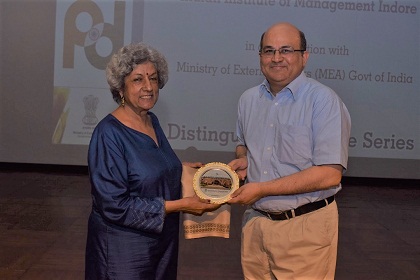
The world order that came about in the aftermath of World War II was a western-oriented construct that has become obsolete in many ways. The changes underway offer India an opportunity to participate in the crafting of political and economic institutions that are more pertinent to the emerging geopolitical equations
Courtesy: IIM, Indore
This speech was delivered at ‘Industry Meet 2018’, organised by the Indian Institute of Management, Indore, in collaboration with the Ministry of External Affairs, Government of India, on 7 July 2018
 Courtesy: U.S. Department of State/ Flickr
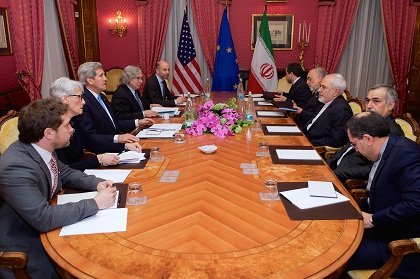
Scrapping the JCPOA will badly bruise Iran’s economy, citizens and foreign relations; it will have an impact on the U.S.’ allies too
 Courtesy: Gateway House
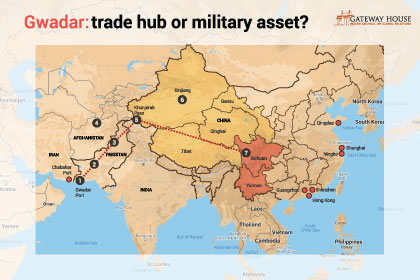
China’s ostensible intentions are to turn Gwadar port into a focal point of the China Pakistan Economic Corridor. But the geography of the region is a major stumbling block in the realisation of these ambitions and raises questions about the project’s underlying motives
 Courtesy: Israel Prime Minister/ Flickr
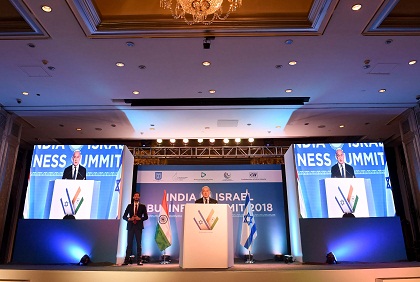
Israel’s Prime Minister Benjamin Netanyahu’s recent visit to India, which came as a fitting finale to the silver jubilee celebrations marking diplomatic relations between the two countries, showed a purposeful shift in focus from defence to business. The large Israeli trade delegation, accompanying the prime minister, was there to further robust business ties going back to 1972
 Courtesy: to put
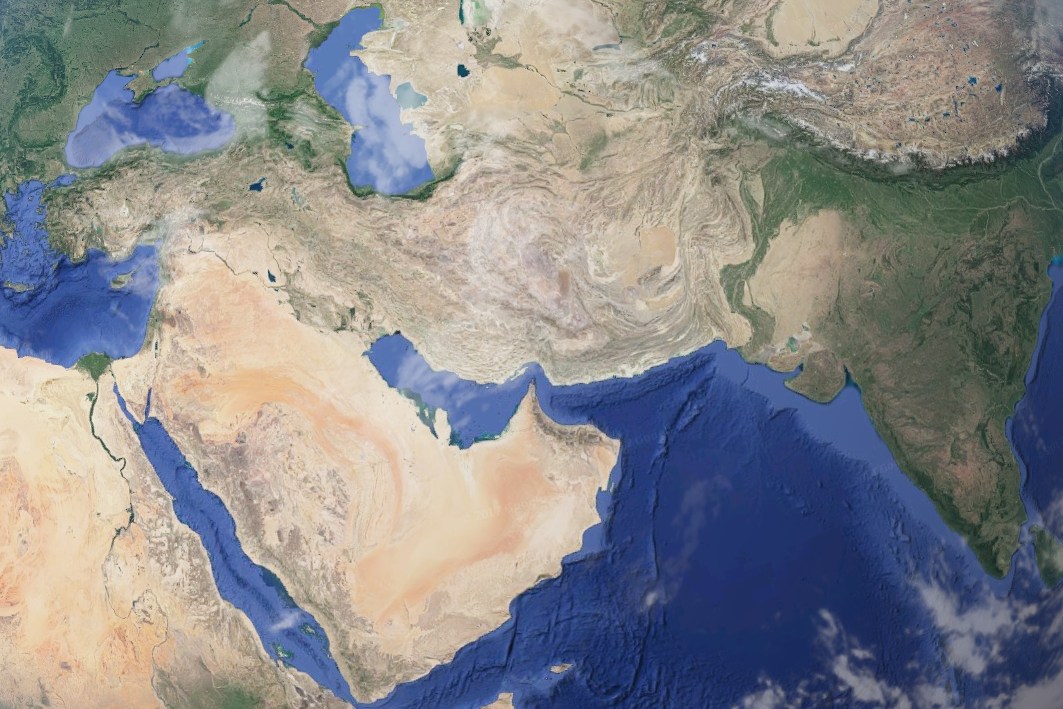
A conference in Doha on ‘Enriching the Middle East’s Economic Future’ offered many insights into the nature of geopolitical relations in the region and India’s significant role in it
 Courtesy:
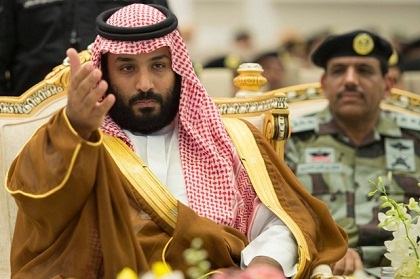
The removal of 11 top ministers in the Riyadh government last week by the young crown prince Mohammad bin Salman, is a geopolitical upheaval, the implications are serious. Domestically, the kingdom is seeking to liberalise its conservative society and move away from oil-dependency – evident from the expected listing of its crown jewel Aramco. For India, which imports oil largely from West Asia, instability could cause a spike in prices, leaving less for its ambitious reforms. Globally, there is now space for new alignments – in the Great Power plays, in the Shia-Sunni rivalry, and in the war on terrorism.