TH23-RAJIVBHATIA-XISMYANMARVISIT3 Courtesy: The Hindu/Handout
27 January 2020

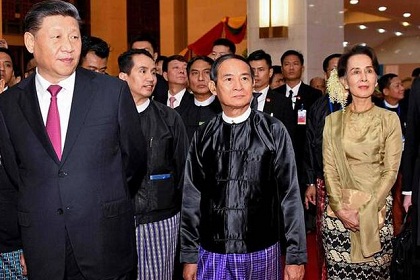
Myanmar’s growing dependence on China

Chinese president Xi Jinping’s visit to Myanmar on January 17 highlighted the economic aspect of the two countries’ bilateral relationship. China has been Myanmar’s top partner for years. But more than the 33 agreements signed, the visit threw light on the region’s changing geopolitics and Myanmar’s own compulsions in growing closer to China
OXAMK5XJUUI6RBCJD7ZGGYE2GE Courtesy: Washington Post
22 November 2018

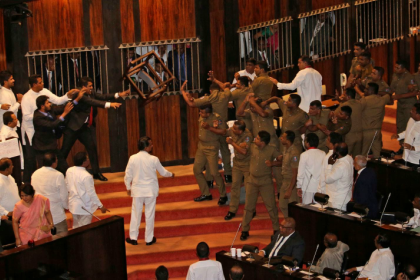
China is here to stay

China’s large investments in Sri Lanka, Pakistan and the Maldives and the economic dependence this creates make it impervious to the internal political upheavals in these countries. This blog explores how it will retain its influence in Sri Lanka regardless of how the turmoil is resolved

IMG_6681 - Copy Courtesy: Gateway House
12 July 2018

China’s focus on stability

Yuan Peng, Vice President, and Dr. HU Shisheng, director, respectively of the Institute of South & Southeast Asian and Oceanian Studies, China Institute of Contemporary International Relations, Beijing, spoke to Gateway House about working towards ‘the final goal of denuclearisation’, India-China relations since the Doklam stand-off and addressing security concerns raised by the Belt and Road Initiative

_MG_8960 Courtesy: Western Naval Command
28 September 2017

China in IOR: ‘peaceful rise’ no more

China has expanded its presence in the Indian Ocean Region. President Xi Jinping has abandoned Deng Xiaoping’s conciliatory posture for an aggressive, money-fuelled search for super power status

China-SriLanka-Title Card Courtesy: Gateway House
1 December 2016

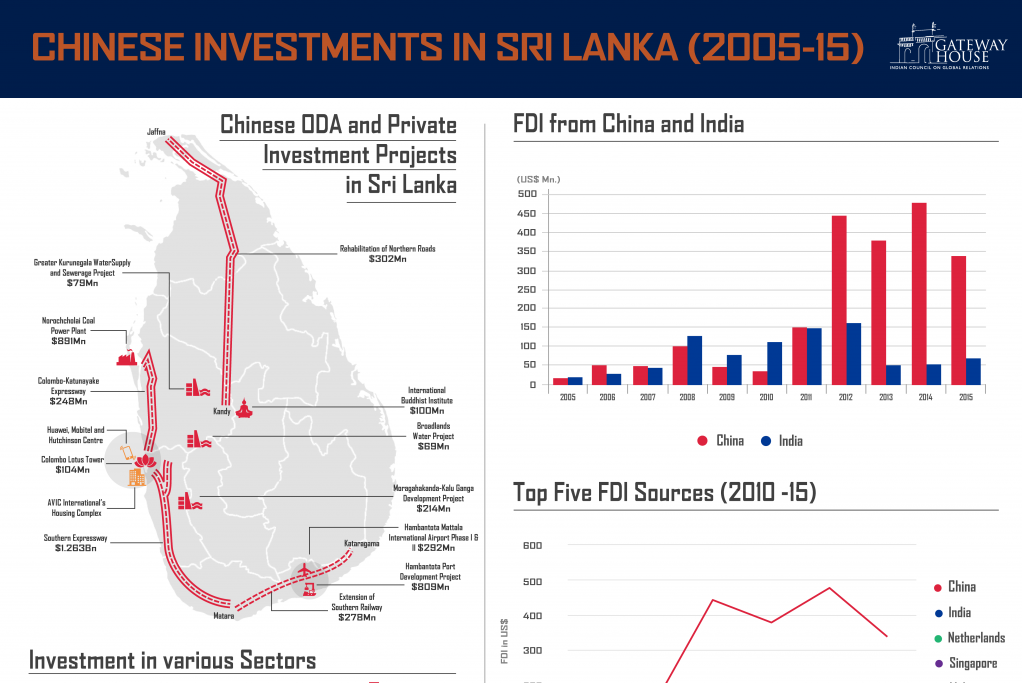
Chinese investments in Sri Lanka

China is the largest investor in Sri Lanka today, with funding and investment of nearly $15 billion. Gateway House tracks the Chinese money trail to Sri Lanka-- where it lands, where it stays--and assesses its depth. This is the second in the Gateway House Series on Chinese investments in South Asia.

rajapaksa Courtesy: Sudath Silva/Flickr
12 August 2015

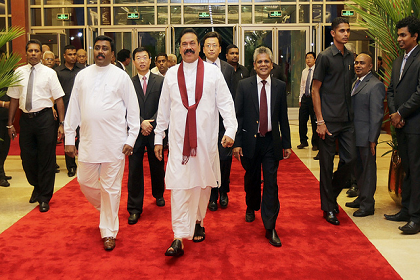
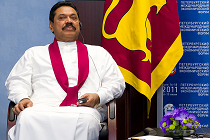
Will Rajapaksa return?

After losing power in January, Mahinda Rajapaksa, former president of Sri Lanka, is trying to re-enter politics by contesting for the prime minister’s seat in the elections on August 17. If he wins, it could destabilise Sri Lanka’s politics and impact relations with India, which had been hit under Rajapaksa’s rule. The future scenario will become clearer by next week.

Rajapaksa Courtesy: Wikipedia.org
15 January 2015

Mahinda Rajapaksa: down but not out

Incumbent Sri Lankan president Mahinda Rajapaksa lost to his opponent Maithripala Sirisena in the recent elections. The reasons have been attributed to nepotism and dwindling support from the Sinhala community. With considerable challenges awaiting the new government, it would be wise to not rule out a return of Mahinda

Bodu Bal Sena head Courtesy:
15 July 2014

Lanka’s anti-Muslim violence

The rising number of anti-Muslim attacks in Sri Lanka has grave security implications for South Asia, including India. The Mahinda Rajapaksa government must take steps to address the situation immediately, even if it comes at the cost of losing votes

rajapaksa Courtesy: Alexander Nikiforov/Wikimedia Commons
9 April 2014

Sri Lanka’s UNHRC challenge

India abstained from voting on the recent UNHRC resolution on Sri Lanka calling for an international probe into the alleged war crimes committed by the Sri Lankan government. Sri Lanka has the option of rejecting the resolution, but it will have to evolve a strategy keeping in mind India’s concerns

parliament Courtesy: Shwkyn231/Flickr
31 December 2012

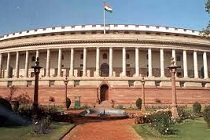
India’s foreign policy: A year in review

The year 2012 has been a busy one for foreign policy: from escalating disputes in the South China Sea to alternate financial instruments from the emerging world. India’s foreign policy too has its shown strengths and weaknesses. We present our top foreign policy Hotspots, Sweet spots and Blind spots for 2012.