India in a changing global order
This speech was delivered at ‘Industry Meet 2018’, organised by the Indian Institute of Management, Indore, in collaboration with the Ministry of External Affairs, Government of India, on 7 July 2018

 Courtesy: IIM, Indore
This speech was delivered at ‘Industry Meet 2018’, organised by the Indian Institute of Management, Indore, in collaboration with the Ministry of External Affairs, Government of India, on 7 July 2018
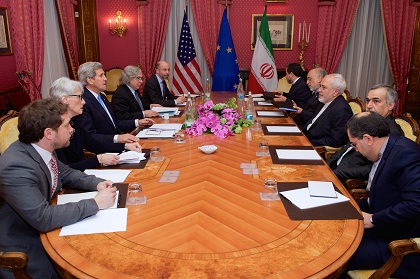 Courtesy: U.S. Department of State/ Flickr
Scrapping the JCPOA will badly bruise Iran’s economy, citizens and foreign relations; it will have an impact on the U.S.’ allies too
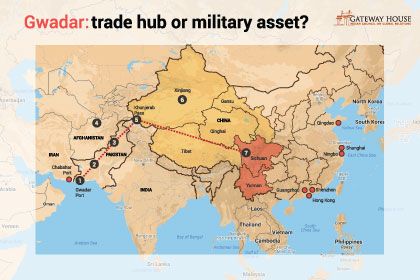 Courtesy: Gateway House
China’s ostensible intentions are to turn Gwadar port into a focal point of the China Pakistan Economic Corridor. But the geography of the region is a major stumbling block in the realisation of these ambitions and raises questions about the project’s underlying motives
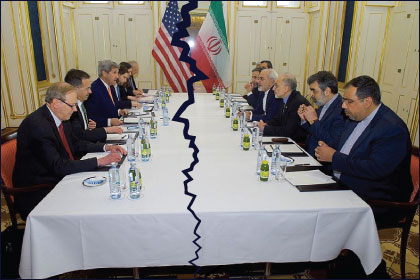 Courtesy: Gateway House
India may end up being the unintended victim of renewed U.S. sanctions on Iran. It will push up the price of oil and cost India billions of dollars annually
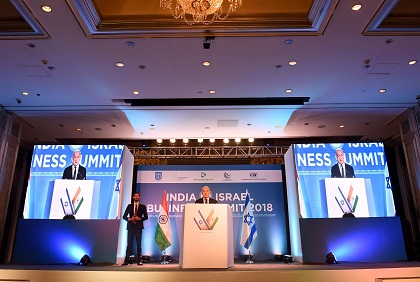 Courtesy: Israel Prime Minister/ Flickr
Israel’s Prime Minister Benjamin Netanyahu’s recent visit to India, which came as a fitting finale to the silver jubilee celebrations marking diplomatic relations between the two countries, showed a purposeful shift in focus from defence to business. The large Israeli trade delegation, accompanying the prime minister, was there to further robust business ties going back to 1972
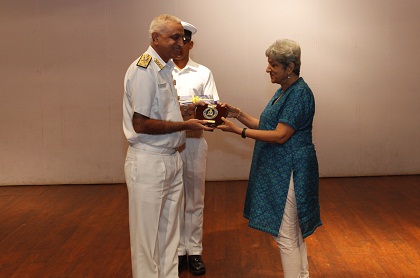 Courtesy: Western Naval Command
China has expanded its presence in the Indian Ocean Region. President Xi Jinping has abandoned Deng Xiaoping’s conciliatory posture for an aggressive, money-fuelled search for super power status
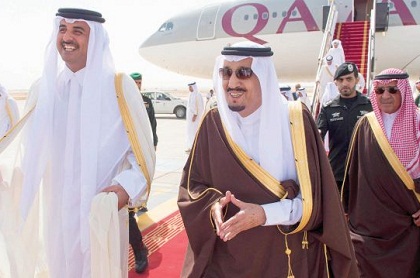 Courtesy: Asharq Al-Awsat
Saudi Arabia and its allies have broken off diplomatic ties with Qatar, but Iran may be their real target, a possibility reinforced by some recently leaked emails from a UAE diplomat
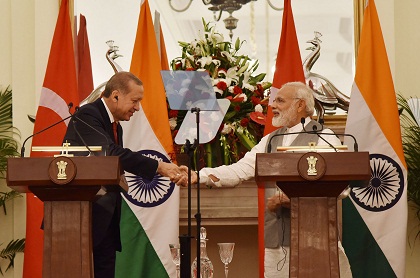 Courtesy: MEA/ Flickr
The newly powerful Turkish president’s visit led to both sides committing to a stronger economic relationship and boosting people-to-people contact, but it had its unacceptable moments, and India had prepared for its unpredictability of outcome
 Courtesy: MEA/Flickr
The West Asian monarchies are being forced to ‘look East’ due to a range of factors: the rise of the Islamic State, their need to boost falling oil revenues and doubts about the United States continuing to remain a guarantor of regional stability. Quite coterminously, India is looking towards the Gulf for energy security besides fulfilling other geostrategic goals: this is an ‘East’ and ‘West’ where the ‘twain will meet
 Courtesy: MEA flickr
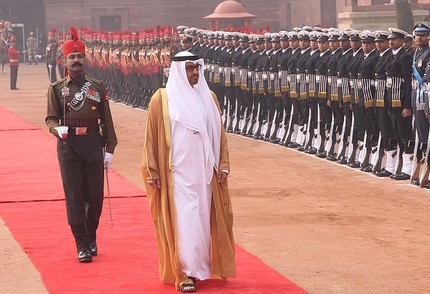
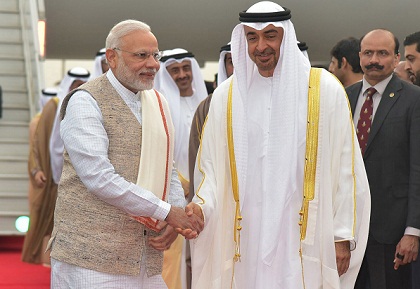
The choice of the Crown Prince of the United Arab Emirates (UAE) to be the chief guest at India’s 2017 Republic Day celebrations is an indication of the enhanced attention that the Indian government is according the Gulf countries. Many trade interests ally India to the UAE, but a deeper engagement is called for even as instability grows in the region