india sanctions pak Courtesy: Gateway House
30 April 2020

Devising an Indian policy on Sanctions for Pakistan

India must consider new strategies that can be put in place to manage Pakistan's ongoing military aggression and security threat. One policy tool that has been used effectively by many countries but remains unexplored by India is the imposition of sanctions. This paper analyses the feasibility of imposing sanctions on Pakistan and the strategies India should consider to execute this effectively. It makes recommendations on how to establish a legal framework, amend existing laws, include Indian stakeholders with business interests in Pakistan, get government departments to collaborate on implementation, and considers diplomatic measures India can undertake.

shutterstock_716498572 Courtesy: Shutterstock
27 February 2020

The 2020 retreat from Kabul

The signing of an agreement between the U.S. and the Taliban on February 29 may result in the withdrawal of U.S. troops from Afghanistan, which is contingent upon the Taliban’s adherence to certain conditions. The end of the West’s 19-year-long Afghan campaign – if Pakistan does not turn spoiler – is of vital interest to India

34752548343_6bd510e0ac_c Courtesy: MEA/Flickr
20 February 2020

Trump’s visit: trade differences exaggerated

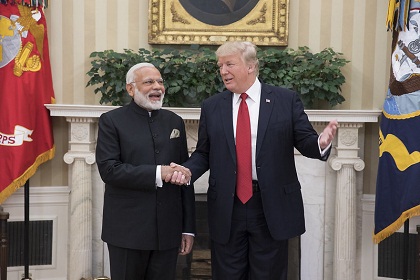
In the run-up to President Trump’s visit to India on 24-25 February 2020, Ambassador Neelam Deo, Director and Co-founder of Gateway House, discusses in this interview how he has made balanced trade a global issue, but given substance to the India-U.S. defence bilateral, sharpening the concept of the Indo-Pacific and the Quad’s profile

TH23-RAJIVBHATIA-XISMYANMARVISIT3 Courtesy: The Hindu/Handout
27 January 2020

Myanmar’s growing dependence on China

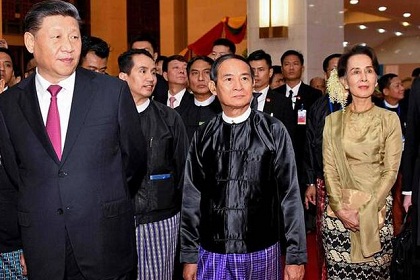
Chinese president Xi Jinping’s visit to Myanmar on January 17 highlighted the economic aspect of the two countries’ bilateral relationship. China has been Myanmar’s top partner for years. But more than the 33 agreements signed, the visit threw light on the region’s changing geopolitics and Myanmar’s own compulsions in growing closer to China

PHOTO-2019-12-11-14-25-49 Courtesy: Gateway House
12 December 2019

Kartarpur: a reunion of bliss

Kartarpur is an exemplary achievement of bilateral discussion over two decades. For the faithful, it is an emotional reconnection with the life of Guru Nanak, now made into a grand memorial. For others, on both sides of the border, it is a neutral place where they can renew contact with long-lost relatives. The author, who visited Kartarpur a month after its inauguration, was witness to the joy and aura of collective worship

Open Embrace Courtesy: Penguin
4 July 2019

Open Embrace: India-U.S. Ties in the Age of Modi and Trump

This book offers a ringside view of evolving Indo-U.S. ties under two conservative leaders, both engaged in mixing nationalism, religion and populism to advance the global capitalist order. The title points to an interesting departure from the more orthodox view of the bilateral relationship, which is usually from the prism of discord or estrangement

19THPULWAMA Courtesy: The Hindu
28 March 2019

Can India sanction Pakistan post-Pulwama?

India has used military and diplomatic offensives against Pakistan as a response to the February 14 terrorist attack in Pulwama, Jammu and Kashmir. There are two more options available - legal, through sanctions, and economic - to curb Pakistan's dangerous adventurism. Gateway House explores both in the infographic below

IndiaTimes Courtesy: India Times
6 December 2018

Kartarpur-Canada-India-China

The recent opening of the Kartarpur corridor in Punjab and the release of a Canadian parliamentary report on the security breach during Prime Minister Justin Trudeau’s India visit are important developments. They present a good opportunity for New Delhi to step up cooperation with Ottawa on countering terrorism and violent extremism