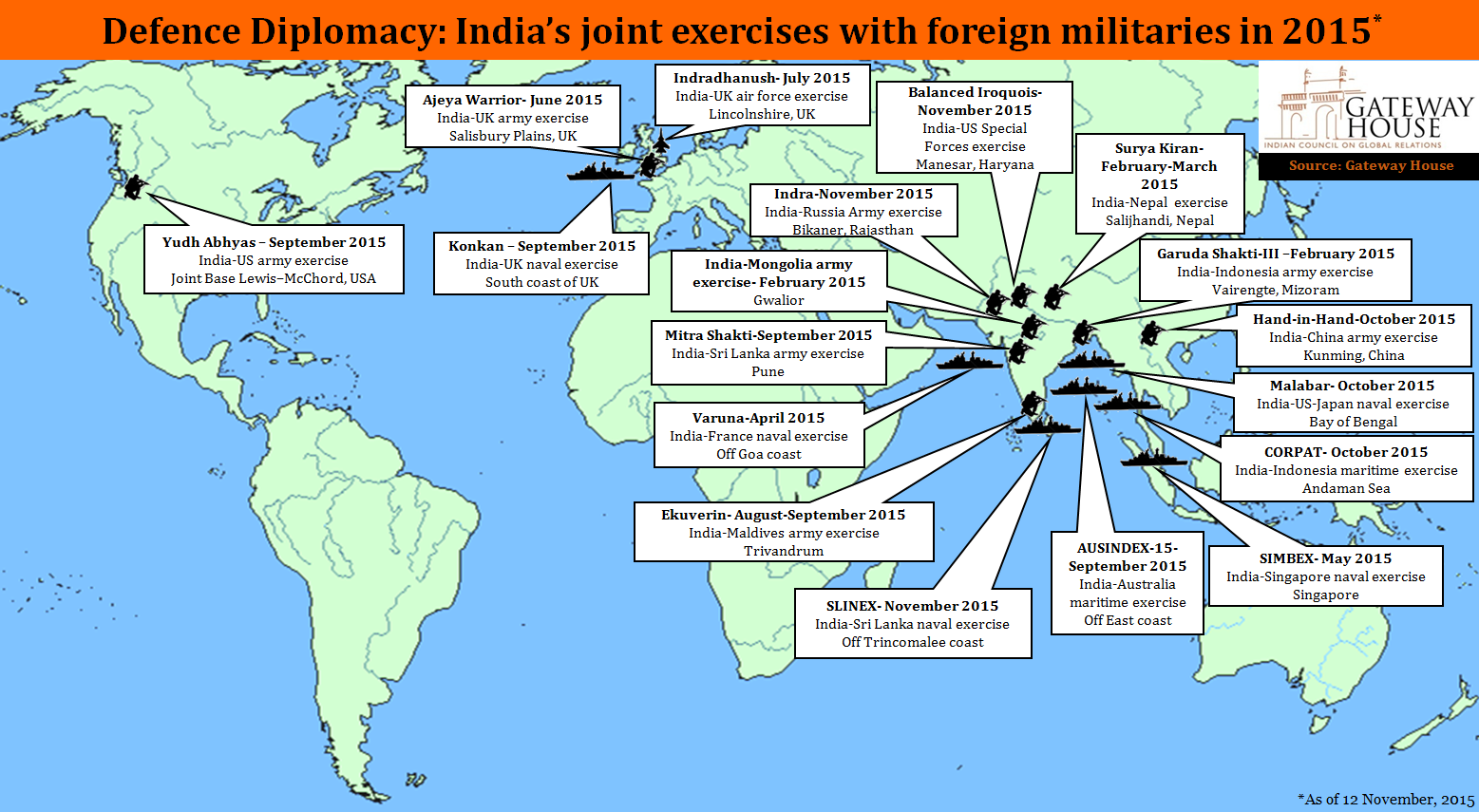
This year, India's defence diplomacy has ramped up. In 2015 alone there have been 18 military exercises- naval, army and air force- with 13 countries, among the largest engagements the country has had. Most significant is Japan joining the Malabar exercises in the Bay of Bengal and the first-ever maritime exercise with Australia. This is increasing India's presence from the Arabian Sea to the Bay of Bengal. As these exercises intensify India will be better positioned to handle regional security challenges. Courtesy:
12 November 2015

India’s defence diplomacy

This year, India's defence diplomacy has ramped up. In 2015 alone there have been 18 military exercises- naval, army and air force- with 13 countries, among the largest engagements the country has had. Most significant is Japan joining the Malabar exercises in the Bay of Bengal and the first-ever maritime exercise with Australia. This is increasing India's presence from the Arabian Sea to the Bay of Bengal. As these exercises intensify India will be better positioned to handle regional security challenges.
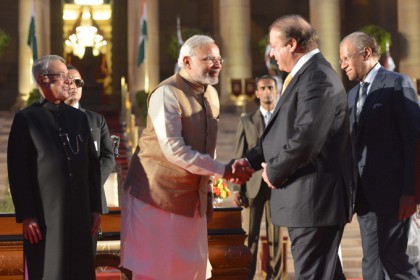
Handshake_between_Narendra_Modi_and_Nawaz_Sharif Courtesy: Wikipedia
3 September 2015

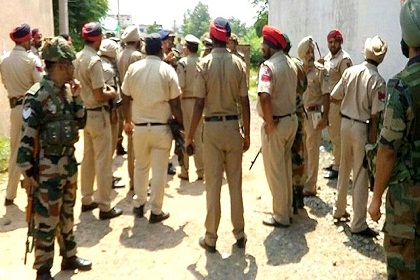
Pakistan’s denial regime

The cancellation of the August 23-24 meeting of the national security advisors of India and Pakistan follows a pattern of unrealistic expectations raised and then quickly dashed. This is compounded by Pakistan’s long history of denial on numerous issues. It may be time for both countries to abjure high-profile diplomacy and turn to small confidence-building measures.

Former_Taliban_fighters_return_arms Courtesy: Wikipedia
23 July 2015

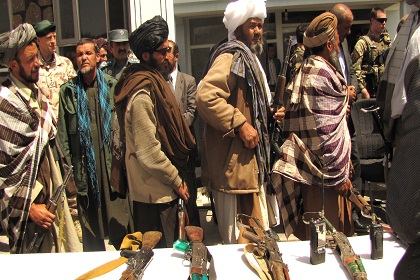
No peace in Kabul without Delhi

The recent meeting between the Taliban and the Afghan governments– brokered China– holds promise to bring peace to Afghanistan. However, the absence of India at the table notable. Given India's investments in Afghanistan and geopolitical importance, China must seek to bring India to the table, otherwise peace will remain elusive

Modi walking Courtesy: Ministry of External Affair, Flickr
11 June 2015

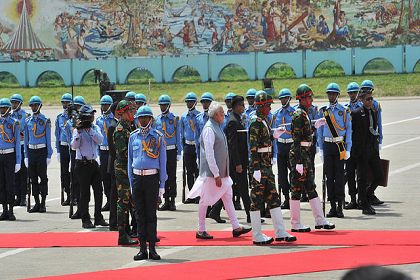
Bangladesh and beyond

Prime Minister Narendra Modi’s completion of the South Asia circuit demonstrates the importance of the neighbourhood in his government’s foreign policy. The improved perception of India in the neighbourhood, especially in Bangladesh and Sri Lanka, is a positive, but the neighbours must recognise that India’s federal structure makes decision-making slower and more difficult on issues that affect neighbouring Indian states like West Bengal and Tamil Nadu.

17111184050_a38f69f6cb_z Courtesy: MEA/Flickr
29 April 2015

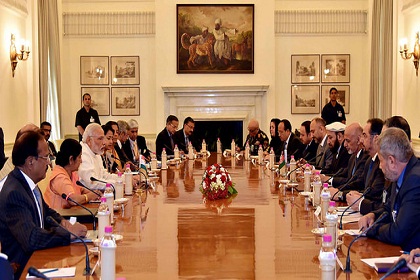
Ghani and India: circles of separation

Afghan president Ashraf Ghani visited India from April 27-29. Ghani accords a very different priority to India than his predecessors – both the timing and the outcome of his visit reflected this. He is choosing to play to Pakistan, by keeping India out of Afghanistan's security sector

mia-main Courtesy: wikimediacommons
31 October 2014

State-to-state diplomacy

After a brief a spell of bonhomie marked by Pakistani Prime Minister Nawaz Sharif attending Narendra Modi’s swearing-in ceremony, the hostilities between the two countries have resumed. Amidst the backdrop of increased tensions on the LoC, Gateway House recommends some small, realistic steps forward through state-to-state diplomacy, to mend the bilateral