India-Latin America Engagements, January 2014
In 'India-Latin America Engagements', the Latin America Desk at Gateway House presents a selection of news of India’s engagement with the region during the previous month

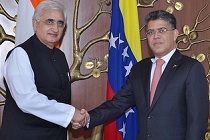 Courtesy: Ministry of External Affairs, India
In 'India-Latin America Engagements', the Latin America Desk at Gateway House presents a selection of news of India’s engagement with the region during the previous month
 Courtesy: monotrilho|/Flickr
With elections scheduled in seven Latin American countries, 2014 will be a year of significant political developments in the region. As we enter 2014, Gateway House examines the important events that defined Latin American politics and economy in 2013
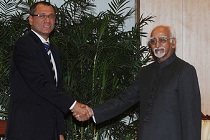 Courtesy: Ministry of External Affairs, India
In 'India-Latin America Engagements', the Latin America Desk at Gateway House presents a selection of news of India’s engagement with the region during the previous month
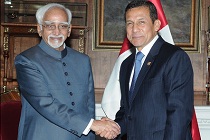 Courtesy: Ministry of External Affairs, India
In 'India-Latin America Engagements', the Latin America Desk at Gateway House presents a selection of news of India’s engagement with the region during the previous month
 Courtesy: Berardo62/Flickr
India’s oil imports from Latin America increased from 4.5% in 2003 to 11% in 2012-13. This marks a diversification in India’s energy policy. With Latin America’s surplus energy production and discoveries in off-shore oil fields, India must further consolidate its oil trade with the region
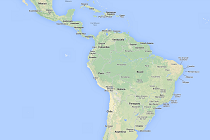 Courtesy: Google Maps
In 'Latin America Update' Gateway House lists some of the important events in Latin America over the past month
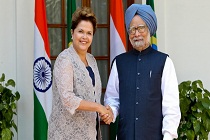 Courtesy: Roberto Stuckert Filho/Wikimedia Commons
In 'India-Latin America Engagements', the Latin America Desk at Gateway House presents a selection of news of India’s engagement with the region during the previous month
 Courtesy: Ministério da Saúde/Flickr
After revelations that the U.S.’s NSA spied on her, Brazilian President Dilma Rousseff has ordered a series of measures to ensure online independence and called for an equitable global internet infrastructure. India can follow Brazil’s lead and make its communication systems less vulnerable
 Courtesy: glaubercavalcante
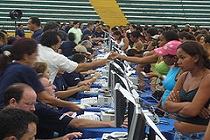
Like Brazil, many other countries in Latin America have implemented successful poverty-alleviation programmes, including cash transfers, as part of an overall strategy for reducing inequality. These programmes can be a model for other developing countries
 Courtesy: millerm217/Flickr
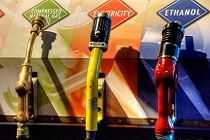
India’s extreme dependence on imported energy often renders our economy vulnerable in the face of geopolitical changes. Given the high financial viability, India, being the world’s second-largest producer of sugarcane, should emulate Brazil by replacing petrol with ethanol as fuel.