suiso frontier Courtesy: TIME
24 March 2022

Green Hydrogen in the Indo-Pacific

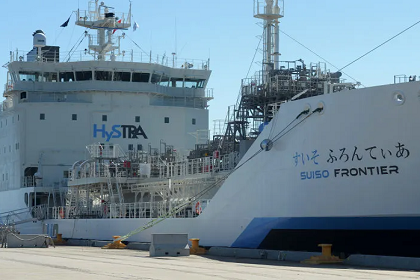
Last month, the Government of India released its Green Hydrogen Policy with the goal of boosting energy self-reliance and inspiring clean energy transitions. The time is right for the Indo-Pacific economies to finance green hydrogen projects and integrate them into supply chains.

Logistics,And,Transportation,Of,Container,Cargo,Ship,And,Cargo,Plane Courtesy: Shutterstock
10 March 2022

India in the Resilient Supply Chain Initiative

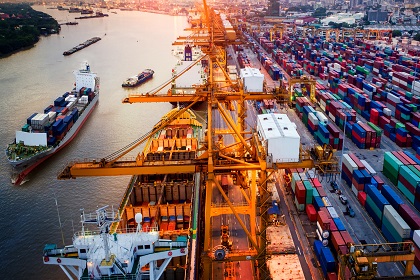
Concerns of global supply chains being overdependent on China has shifted the focus to India. This became clear in 2021 when Australia, Japan and India together launched the Resilient Supply Chain Initiative. India must now leverage its unique position in the Indo-Pacific region by incorporating well-planned industrial clusters and models.

TDB_car_151021 Courtesy: TDB
24 February 2022

Enhancing Regional Financial Intermediation in the Indo-Pacific

Financial intermediaries are critical lubricants for business, growth and development. The Indo-Pacific countries are industrializing, but smaller nations lag behind economically. The Quad countries can aid the advancement of the financial architecture in the Indo-Pacific by helping to develop an ecosystem, modelled on the examples of Japan and India.

0014 Courtesy: Gateway House
17 February 2022

Financial connectivity in the Bay of Bengal

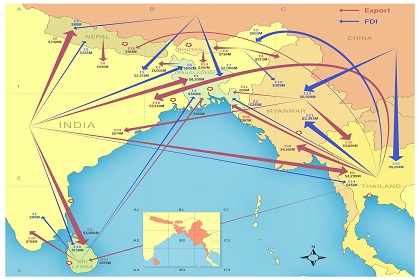
Multilateral funding can aid regional financial connectivity between the Bay of Bengal states, where financial networks are scarce. India's successful fintech can be mobilised to create a local ecosystem of startups with better access to funds and strong ties to the Indian market.

India in the Indo-Pacific cover Courtesy: Gateway House
1 February 2022

India in the Indo-Pacific: Pursuing Prosperity and Security

The Indo-Pacific has become an important part of global geopolitics in the recent past, with several great powers implementing concerted Indo-Pacific policies to create economic, social and security linkages with the region. India can use its development experience and futuristic technology to secure stability and prosperity. This compendium of essays explores the comprehensive role that India can play in the Indo-Pacific, from energy and environment, to trade, security, technology and a vibrant diaspora.

GIs Courtesy: Blaise Fernandes
14 January 2022

Indian GI: Local Goes National Goes Global

Geographical Indication (GI) tags denote a good's specific physical origin. These are potential revenue-generators for India. Combining government support with its e-commerce network, India can empower MSMEs and women-led cottage industries to compete with large companies by building a strong GI ecosystem. The Make in India initiative and GI can together provide an impetus to social and economic growth in India.

virgin spaceport Courtesy: UAE Space Agency
18 November 2021

UAE: Aerotropolis to Astropolis

After successfully developing Dubai and Abu Dhabi as aerotropoli or cities around an aviation hub the United Arab Emirates aims to become an astropolis, a hub of space tourism and human spaceflight. There is ample scope for UAE to cooperate on this with India, which is also its comprehensive strategic partner.

Leveraging China's Economy Courtesy: Twitter |@GatewayHouseIND
28 October 2021

Leveraging China’s Economy

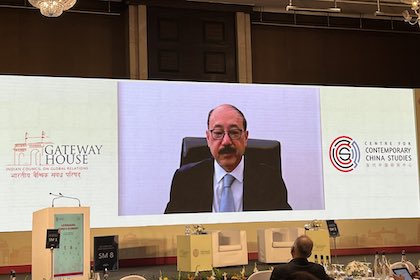
On October 21, the Foreign Secretary Harsh Vardhan Shringla inaugurated the CCCS-Gateway House conference on "Leveraging China's Economy". In his keynote address, he traced the India-China trade imbalance, explained that the disturbed border changed equilibrium and noted that the "ability of India and China to work together will determine the Asian century".

Growing Locally Courtesy: Shutterstock
7 October 2021

Growing locally

Geographical Indication (GI) tags can be ready revenue generators today, especially for India. The country's robust global e-commerce system and recent domestic drone policy can help build a strong GI ecosystem and boost India's soft power. The government must lend its support to the industry, learning from European and Chinese examples.

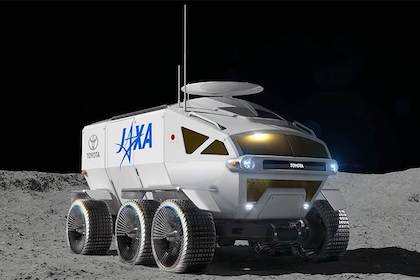
Automotive industry zooming into space Courtesy: Toyota
16 September 2021

Automotive industry zooming into space

In June this year, the Japan Aerospace Exploration Agency collaborated with Honda Research to build an energy system for surface mobility on the moon. SpaceX and Mitsubishi Heavy Industries, Tesla and Mitsubishi Motors have similar alliances, reflecting the increased participation of the automotive sector in the space economy. Tokyo wants its biggest export, automobiles, to pick up stakes in this space. India should have a similar ambition. The May 2020 space reforms recognise the significance of commercialising the space sector. But now is the time for long-term R&D investments in the domestic auto sector, to help India step into this play.