India-Canada Energy Cooperation Courtesy: Gateway House & CIGI
9 July 2020

India-Canada energy cooperation

Canada has been one of the biggest success stories in oil over the past few years. India should consider financial investments in Canadian energy assets as a means to secure its energy supplies. This paper studies the feasibility and prospects for Indian investment in Canada's petroleum sector.
shutterstock_765921106 Courtesy: Shutterstock
11 July 2019

Making India a Methane Economy

India is the second largest emitter of methane in the world. But methane-cracking has enormous economic potential. It can help India become a high-technology manufacturing powerhouse by producing a steady supply of methane-derived, advanced carbon materials and hydrogen-energized transportation

India-CanadaPaper4_Cover Courtesy: Gateway House & CIGI
15 March 2019

Preparing for Climate Intervention Decision Making in the Global South: A Role for Canada and India

The use of climate intervention technologies has not taken into sufficient account the social dimensions of climate intervention research, which includes citizen participation and pooling of knowledge resources. To fill this lacuna, Canada and India can examine what participation in climate intervention research means in the context of an African country to be able to evolve a more international view; urge both countries to conduct national policy discussions on climate intervention research; and increase public awareness of climate intervention technologies

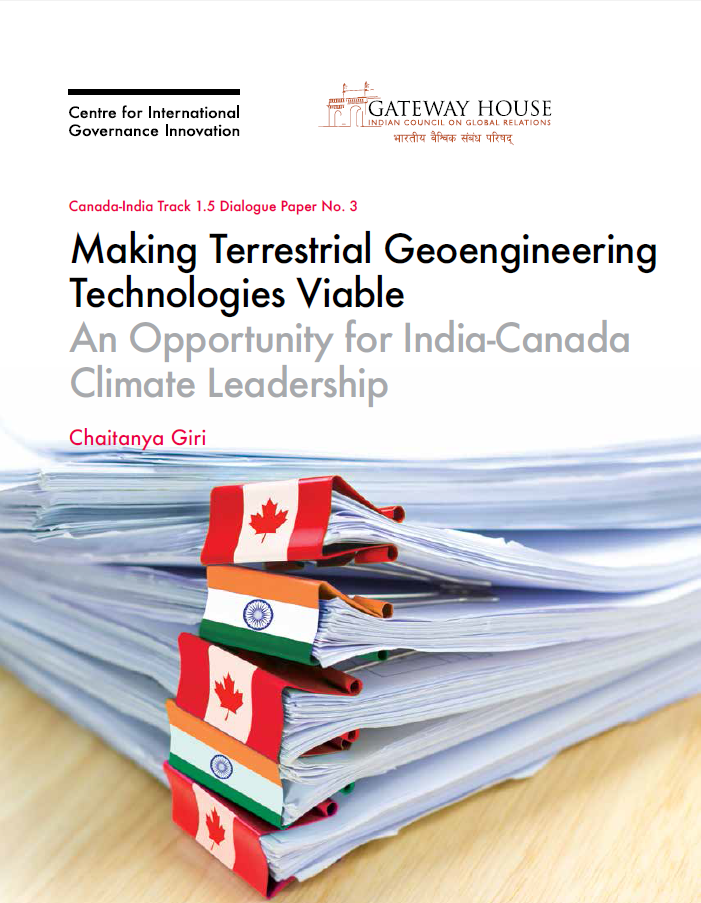
ClimateEngineering_GH_CIGI_Cover Courtesy: Gateway House & CIGI
28 February 2019

Making Terrestrial Geoengineering Technologies Viable: An Opportunity for India-Canada Climate Leadership

The use of terrestrial geoengineering techniques, such as carbon capture, is necessary to keep the rise in global temperatures below 1.5 degrees Celsius, as per the Paris Agreement’s targets. Terrestrial geoengineering is different from atmospheric climate engineering: the latter does not remove the very source of the increased greenhouse effect, which are anthropogenic greenhouse gases. India and Canada must collaborate on carbon capture and propose multilateral regulations for unethical atmospheric climate engineering

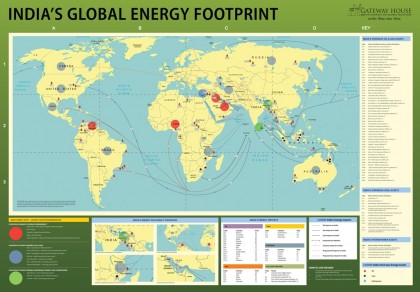
indias-global-energy-footprint Courtesy: Gateway House
14 February 2017

India’s global energy footprint

Trends in technology, geopolitics and geoeconomics have dramatically transformed the global energy scenario in the last two years. This means favourable conditions for import-dependent India, which must use the opportunities available to reduce its vulnerability to high energy prices. The jump in oil prices past the $60 mark suggests that India must act with alacrity. India’s Energy Footprint Map offers a profile of India’s global trade and investment in energy, and indicates what India can do to access cheap and reliable supplies

2903370723_e804987949_o Courtesy: Wikipedia
3 March 2016

WTO solar ruling: victim to victor

The WTO judgment on the India-U.S. dispute on solar panels shows how rules across different international regimes – climate change, trade and nuclear power – favor the countries which set those rules. India must deepen its participation in such multilateral fora to protect its interests.

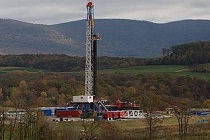
shale Courtesy: Penn State Outreach/Flickr
24 June 2013

Will shale change India’s energy equation?

The significant shale gas deposits held by several countries, including India, have implications for global energy prices, geopolitics and climate change. But India needs to develop a strong shale gas policy that can help in lowering its trade deficit while ensuring sustainable development.