Civilizational Gandhi
Gateway House's Rajni Bakshi analyses the Mahatma's civilizational vision and explains how it can guide us through contemporary economic and identity-related conflicts.

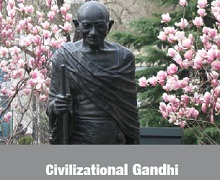 Courtesy: Gateway House
Gateway House's Rajni Bakshi analyses the Mahatma's civilizational vision and explains how it can guide us through contemporary economic and identity-related conflicts.
As India looks to diversify its sources for energy imports and grapples with food security issues, it is looking more towards Latin America. Gateway House interviews Ambassador Deepak Bhojwani to discuss India’s prospects with this increasingly significant region.
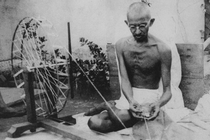 Courtesy: gandhiserve.org
Gandhi’s little-known work on what it means to be truly civilized may be crucial to the future of our species. There seems to be an absence of a moral framework that serves as the basis of our pursuit of wealth & pleasure. Can such a framework guide us through contemporary economic and identity-related conflicts?
 Courtesy:
On 28 September, Brajesh Mishra, the former Indian National Security Advisor passed away in a hospital in New Delhi. Amit Baruah, journalist and Gateway House's South Asia Fellow, blogs about the remarkable contributions of this veteran Foreign Service Officer in shaping India's foreign policy.
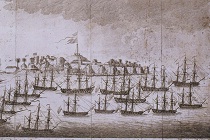 Courtesy: Columbia/WikimediaCommons
In the 1700s, one man antagonized the European powers, and insisted on the Maratha Empire’s rights to taxation and sovereignty over Maharashtra’s coast. He was Kanhoji Angre, the head of the Maratha navy. How did he, 283 years ago, set an important precedent for the Subcontinent’s local powers?
It is estimated that up to 20% of India’s power capacity lies idle due to the lack of coal available in the country. The recent $33 billion scam on the allocation of coal blocks reflects the apathy among the Indian leadership towards effective policy-making.
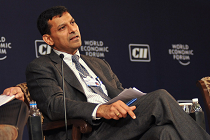 Courtesy: World Economic Forum/Flickr
A short analysis by Gateway House on what you can expect from Raghuram Rajan, the new Chief Economic Advisor to the Government of India.
This October, China’s 18th Party Congress will usher in a new leadership in the Chinese Communist Party (CCP) and the People's Liberation Army, amidst increased turmoil in its neighbourhood. What consequences will this have on Indo-China relations, and on the policies of the Party?
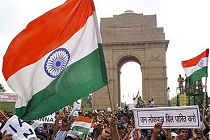 Courtesy: Mission Against Corruption/Wikimedia Commons
The promise of an egalitarian democratic system in India and abroad, has been tarnished by the entrenchment of dynastic leadership and by an inordinate concentration of power and wealth in the hands of a few. It is imperative to find ways to confront the shortcomings that have crept into our cherished democracies.
 Courtesy: Sandstein/WikimediaCommons
If the creation and consolidation of small enterprises is supported, the resultant growth in employment and incomes will further India’s development. This will increase the vibrancy and sustainability of our democracy.