China’s attempt to discipline Japan over Japanese Prime Minister Takaichi’s statement on a Chinese attack on Taiwan threatening Japan’s security, may instead strengthen the very alliances Beijing hoped to fracture. By using symbolic economic instruments, invoking the UNSC, and amplifying nationalist messaging while avoiding mass public mobilisation, China signals displeasure without risking internal instability. Yet these same measures push Japan ever deeper into U.S.-aligned networks.
The rise of Sanae Takaichi, Japan’s first female prime minister with firm conservative credentials, carries both symbolic weight and political controversy. Her early decisions suggest clarity of intention but also highlight the structural weaknesses and diplomatic sensitivities that will shape her tenure. To keep her ratings high, she has to stabilise her minority government at home, and manage the China, U.S. and ASEAN relationships with tact.
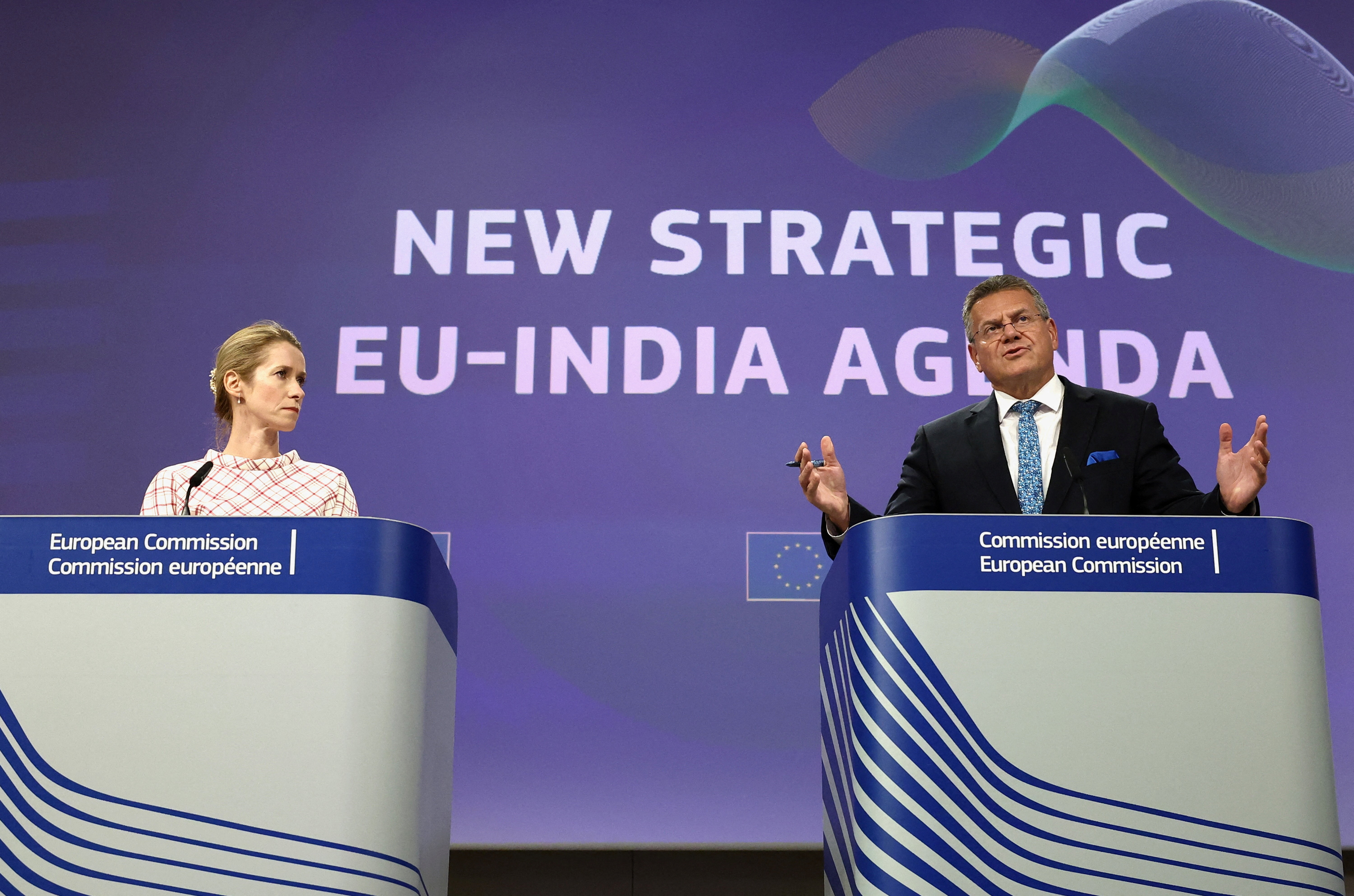
Despite over a decade of negotiations, the EU-India FTA remains stalled. The New Strategic EU–India Agenda released in October 2025 seeks to elevate ties, positioning India as central to Europe’s multipolar vision. Yet contradictions persist: Europe’s normative approach and India’s multi-alignment strategy diverge. Connectivity and infrastructure remain conceptual. Now, success depends on the EU’s ability to match rhetoric with resources, flexibility, and strategic patience.
The year 2025 is often compared to the Bandung moment of 1955, and for good reason. With the U.S. reordering traditional relationships, the opportunity for greater emphasis on the Global South is now. It is therefore time for India, Africa and ASEAN among others to re-burnish their Global South credentials and use that identity as a platform to engage each other more deeply.
The recent election for Japan’s Upper House of Councillors is a pivotal moment for Japanese politics, revealing fractures within the ruling coalition and a simultaneous rise of the political right. Economic discontent, cultural anxieties, and effective digital mobilisation are converging. Is this a fleeting moment for Japan, or the start of a deeper, more profound change in its political landscape?
The political setback by the ruling coalition in Japan in the July 20 Upper House elections reflects growing frustration with the mainstream political parties. Young people frustrated with high costs have resulted in a fragmentation of Japan’s political landscape, and the rise of the right. The “Trump effect” has found fertile ground in Japan’s political soil.
Macron’s 2025 tour of Southeast Asia was intended to reinforce France’s strategic commitment to the Indo-Pacific. By engaging with three key ASEAN members - Vietnam, Indonesia, and Singapore - France wants to forge partnerships beyond its traditional transatlantic ties. Its Indo-Pacific vision is based on its territorial presence, economic interests, and diplomacy values, which it hopes will be an alternative to the binary logic of U.S.-China rivalry.
New German Chancellor Friedrich Merz’s early decisions suggest that foreign and security policy will be defining features of his chancellorship. The coalition agreement reflects a conservative yet pragmatic response to changing global dynamics.
The recent visit of the European Commission President Ursula von der Leyen, and the EU College of Commissioners to India, is a testament to its view of India as a key voice in the Global South and a stabilising force amidst a rapidly changing global dynamic. However, a strong push is required to elevate their transactional relationship into something more meaningful for both parties.
Malaysia’s chairmanship of ASEAN in 2025 is pivotal. It will have to steer ASEAN toward regional peace, stability, and prosperity while reinforcing its centrality. All this during a time of heightened geostrategic rivalry, economic deglobalisation, rising protectionism, and nationalist trends.