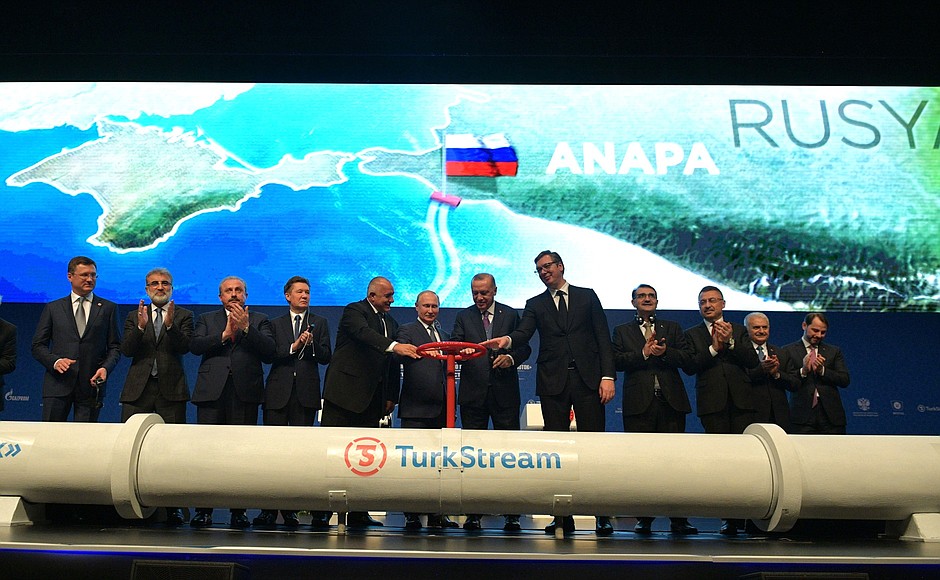
Turkstreampipe Courtesy: President of Russia-Events website
30 January 2025

LNG: winners and victims

Europe has reduced its reliance on Russian gas following the war in Ukraine, and its chief supplier Russia is mired in western sanctions. What does it mean for Russia? It has certainly changed the fortunes for American gas to be sold to Europe: as of 2023, the US had become the world’s top exporter of gas.
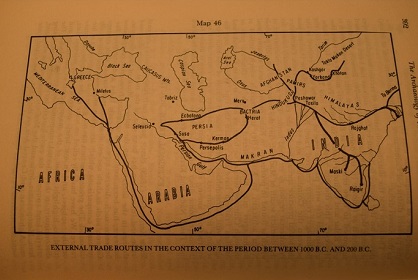
Map-2-International-Trade Courtesy: Oxford University Press
23 January 2025

The ancient precursor to IMEC

The India Middle-East Europe Economic Corridor (IMEC) announced during India’s G20 leaders’ summit in September 2023 aims at security and ease of connectivity by multi-modal physical, digital and energy corridors connecting India, UAE, Saudi Arabia, Israel, and Europe. Like many of the connectivity projects created around the world today, IMEC’s origins are 2,300 years old, ancient routes that connected the Indian Ocean to the Mediterranean Sea

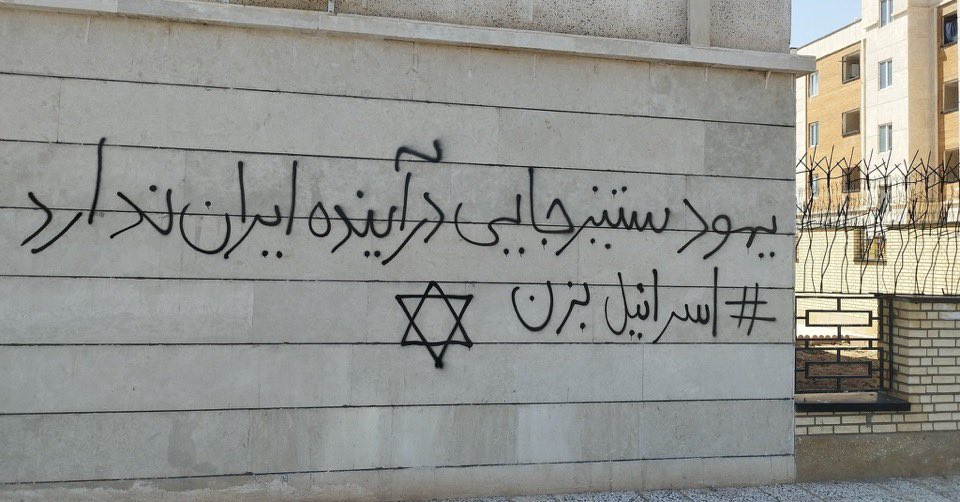
Graffiti in Tehran: “Antisemitism has no place in the future of Iran.” (Source: X / Jaime Kirzner-Roberts) Courtesy: X / Jaime Kirzner-Roberts
2 January 2025

Iran’s Jews in the crosshairs

Iran has the largest Jewish diaspora in the Middle East outside of Israel. Since the 7 October 2023 attack on Israel by Hamas, a proxy of Iran, the Iranian Jews have been publicly denouncing Israel’s actions in Gaza and Lebanon. Is this a sign of a loyal community or one under pressure from Iran’s ruling regime?

354545 Courtesy:
12 December 2024

Saudi Arabia’s rising regional positioning

At a time of high geo-political tensions, the Kingdom of Saudi Arabia can play a calming role as it mediates between the U.S., Israel, and Iran. It is enabled by its own diplomacy, moving to strengthen ties with Iran, with the Gulf nations slowly coalescing on issues. For the first time, it is being done without the U.S. as interlocutor.

trump mideast Courtesy:
5 December 2024

A new U.S.-Middle East diplomatic landscape

Donald Trump has re-entered Washington with the backing of a solid political base, a redefined Republican Party, and a more seasoned presence on the international stage, including in the Middle East. Since his last imprint on that region in 2016, 2024 presents significant shifts: alliances redefined, regional power dynamics realigned, trade networks transformed, and urgent security challenges restructured. These changes demand strategic recalibration from all stakeholders.

Screenshot 2024-11-13 at 9.36.20 AM Courtesy:
14 November 2024

Israel once again in Beirut

The Israel-Hezbollah war has become the dominant event in the Middle East. The Israeli army has entered southern Lebanon, and Israel’s air force is targeting selected Hezbollah strongholds in Beirut. The year-long Israel-Hamas war is now a regional conflict, with international actors from the Gulf monarchies to Iran, the U.S., Europe, and the UN, trying to influence the course of events towards a ceasefire.

F241028YS201 Courtesy:
31 October 2024

Netanyahu the political survivor 

Israeli Prime Minister Benjamin Netanyahu has secured his political survival since October 7 by managing his key constituencies – domestic and in the U.S. – and doubling down on his war strategy. Now he is making another calculated risk – to ensure a non-nuclear Iran, and thereby his continued political positioning.

106335094-1578987923215gettyimages-1079998172 Courtesy:
10 October 2024

Energy cost of Iran-Israel Conflict

A potential escalation of the Iran-Israel conflict will affect energy supplies globally. Tempering the conflict will help the U.S. keep petrol prices down before its election, protect the oil and gas export traffic in the Persian Gulf, keep the surreptitious Iran-Malaysia-China oil sales going, and prevent a major headache for India, which imports over 80% of its oil.

Biden-Middle-East-peace-deal-Israel-Palestine-GettyImages-1731160260 Courtesy:
27 June 2024

The hanging Hamas Deal

The May 31 ceasefire deal proposed by U.S. President Joe Biden is the best on offer for Hamas and Israel. Hamas has delayed its response to the deal, demanding Israeli withdrawal from Gaza first. This absolutist and maximalist position allows Israeli Prime Minister Benjamin Netanyahu to conveniently evade his responsibility towards the U.S., a ceasefire deal, and his own people.