china-map-of-obor-1 Courtesy: The Wire
6 February 2017

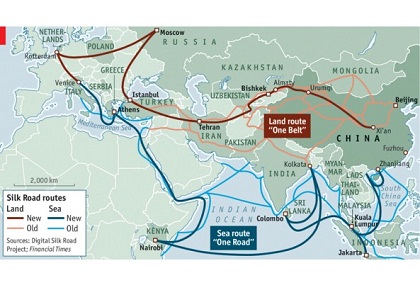
OBOR: in search of private financing

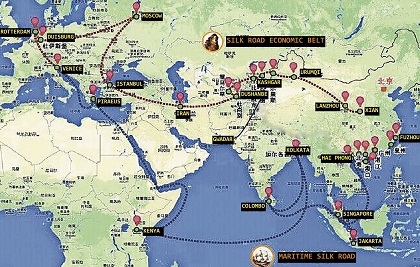
China has launched the One Belt, One Road (OBOR) Initiative in an attempt to rebuild the ancient Silk Road with proposed land and sea routes to promote infrastructure, trade, and investment in the regions that it will thus connect. The challenge will be to attract private financing to support the official and multilateral ones
uae prince india Courtesy: MEA/Flickr
25 January 2017

India-UAE: time to foster mutual interests

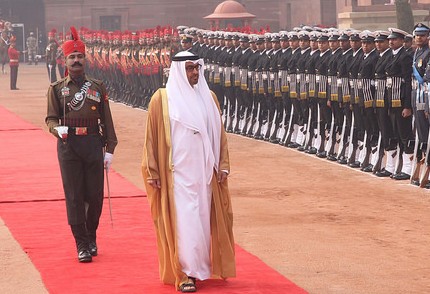
The West Asian monarchies are being forced to ‘look East’ due to a range of factors: the rise of the Islamic State, their need to boost falling oil revenues and doubts about the United States continuing to remain a guarantor of regional stability. Quite coterminously, India is looking towards the Gulf for energy security besides fulfilling other geostrategic goals: this is an ‘East’ and ‘West’ where the ‘twain will meet

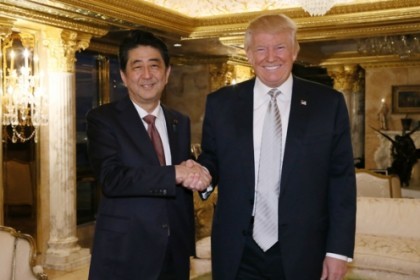
Shinzō_Abe_and_Donald_Trump_(1) Courtesy: Wikipedia
16 January 2017

A more robust Asia policy expected?

Trump’s cabinet has a preponderance of China hardliners, which has wider implications for the Asia Pacific region while some of its members view Narendra Modi as Reaganesque and a man of the times

Afghan Taliban Courtesy: Flickr/ResoluteSupportMedia
5 January 2017

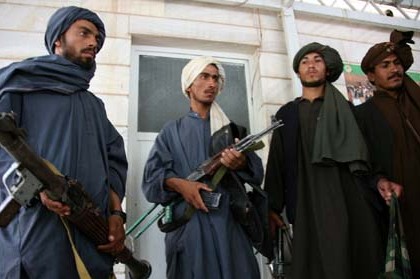
Moscow shifts Afghan stance: what next?

The Russians have concluded that the Afghan Taliban offer a better shield against the Islamic State than the old Northern Alliance. A negotiated settlement in Afghanistan could be achieved if Washington and New Delhi join Moscow, Beijing, Islamabad and Tehran in a joint effort.

28909667344_cad7ec10cc_k Courtesy: MEA/flickr
4 January 2017

Acting East: what does 2017 hold in store?

The year 2017 may change some equations in the East Asian region. Will the near parity that the U.S. and China currently share turn into a keener contest? Will strained relations between India and China persist? Donald Trump’s election as the next U.S. president casts the spotlight squarely on these inter-state relationships

IMG_9941 Courtesy: The Economist
6 December 2016

Geoeconomic dilemma in realigning Asia

India may be less dependent on the Chinese market than some other countries in the region, but it too wants Chinese investment—and this ambivalence has been evident in India’s varying approach to the AIIB and OBOR. To balance this dilemma in an increasingly complex Asia, India must work with others, in particular with European countries

China-SriLanka-Title Card Courtesy: Gateway House
1 December 2016

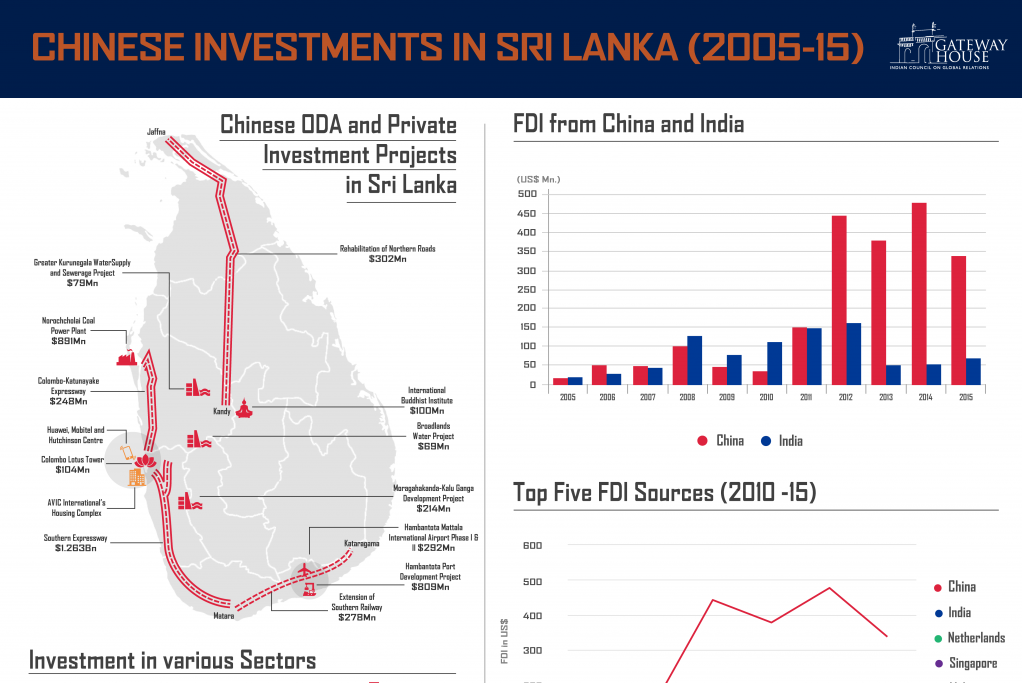
Chinese investments in Sri Lanka

China is the largest investor in Sri Lanka today, with funding and investment of nearly $15 billion. Gateway House tracks the Chinese money trail to Sri Lanka-- where it lands, where it stays--and assesses its depth. This is the second in the Gateway House Series on Chinese investments in South Asia.

tpp-map Courtesy: United States Trade Representative
23 November 2016

A world divided by trade deals?

Amid the debate of a U.S.-centric TPP template or a China-led RCEP model, it is important to consider if such trade agreements are building blocks or stumbling blocks to global free trade. With the passage of the TPP still uncertain in the U.S. Congress, and the RCEP unlikely to be acceptable to the U.S., the more likely global trade scenario will be fragmentation

U.S. Navy photo by Mass Communication Specialist Seaman Apprentice Carla Ocampo/Released Courtesy: U.S. Navy / Wikipedia
17 November 2016

South China Sea: more trouble

Philippine President Rodrigo Duterte has sought to sever ties with the United States, a declaration that has elicited much skepticism. The West Pacific is in for some realigning of relationships if he makes good on this threat.

510896-16pti-pti10162016000263a Courtesy: MEA India / Flickr
27 October 2016

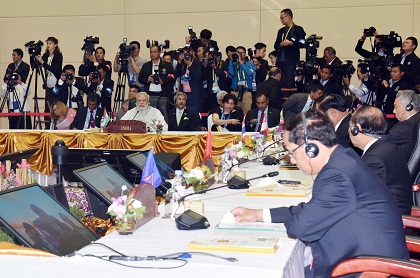
BRICS/BIMSTEC: activity or achievement?

Perhaps South Block did not gain as much as it had hoped to: there was a gulf in member states’ perceptions. One takeaway, therefore, for policy makers was that while noise has its uses, it is now time for some quiet diplomacy