India: Unloveable at 64
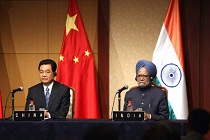
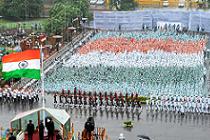
India’s 64th Independence day is the unhappiest, as it is confronted by corruption, governance and a host of other national and state issues. The lack of attention to our selves has made us less loveable to others.

 Courtesy: PIB
India’s 64th Independence day is the unhappiest, as it is confronted by corruption, governance and a host of other national and state issues. The lack of attention to our selves has made us less loveable to others.
 Courtesy: EmbassyofIndia,WashingtonDC
The job of forging partnerships while sustaining India’s interests is done by its ambassadors –and New Delhi has the unique distinction of sending two women ambassadors in a row to the US. A study of Indian envoy Meera Shankar’s tenure, and what awaits her successor –and former foreign secretary–Nirupama Rao.
 Courtesy: AndyArmstrong/Flickr
Explanations for the riots in England must go deeper than the easy targets of race, consumerist greed, and the socio-economic environment. It is necessary to understand the way socially-wired youth approached the riots as an opportunity for consequence-free action.
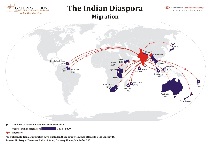
This decade records a new trend for the Indian Diaspora: as the Indian economy registers strong growth, thousands return to India amidst growing employment and investment opportunities. But does India have the ability to effectively reintegrate them into society?
 Courtesy: Gateway House
This decade records a new trend for the Indian Diaspora: as the Indian economy registers strong growth, thousands return to India amidst growing employment and investment opportunities. But does India have the ability to effectively reintegrate them into society?
As India's engagement with countries in China's periphery increases, fora like the Shanghai Cooperation Organisation, spear-headed by China, have also cropped up. Gateway House's Madhura Joshi speaks to former Ambassador Vinod C. Khanna, to understand the Indo-Chinese paradigm and examine current policies.
 Courtesy: Pragati
Both Tokyo and New Delhi see each other as reliable partners, and continue to do so after the Japanese earthquake and nuclear disaster. The Japan-India relations in the post-disaster environment must be understood in terms of humanitarian, economic and strategic dimensions.

While India’s foreign policy has gone a long way in earning global goodwill, there remains a vital element in its periphery that is absent from its diplomatic reach: Indian business. What can be done to bridge this gap between India’s foreign policy-makers and its business leaders?
 Courtesy: Yann/WikimediaCommons
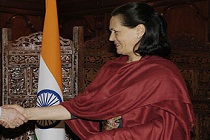
As Sonia Gandhi receives medical treatment in the U.S., foreign - and not Indian - media reported about the leader of the Congress Party. Can Indians hope that the party will have the maturity to elect one from amongst itself or will the limp Indian opposition cohere into a credible force?
 Courtesy: Gateway House
Gateway House’s Shloka Nath examines the causes of disagreements between India and Bangladesh, and makes recommendations to resolve them – which can lead to an intelligent management and protection of the Sunderbans.