Getting to Yes With Iran
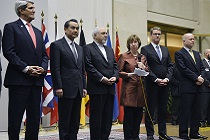
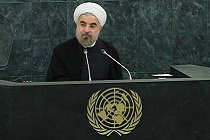
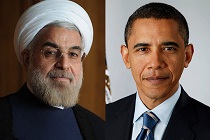
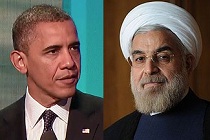
The U.S. has continually been trying to coerce Iran into giving up its nuclear program for years now, but with little success. What should Washington do to avoid both military action, and deterrence?
Courtesy: Foreign Affairs
The U.S. has continually been trying to coerce Iran into giving up its nuclear program for years now, but with little success. What should Washington do to avoid both military action, and deterrence?
Courtesy:
India’s relations with Islamic nations, many of which are members of the Organisation of Islamic Cooperation (OIC), have become even more prolific over the last decade. While India does not visualise becoming a member of a religious international body, many reasons militate against our formally joining the OIC.
Courtesy: U.S. Department of Defense
The nomination of Chuck Hagel for the post of the U.S. Defense Secretary has garnered severe criticism from Israel and the Jewish lobby. Given the geopolitical changes unfolding in the Middle East and the rest of Asia, what will Hagel’s assumption of office mean for Israel, India and the rest of the world?
Courtesy: BotMultiChillT/WikimediaCommons
The Speaker of the Iranian Parliament, Ali Larijani, will soon visit India. Given that he enjoys Iran's Supreme Leader's confidence, and is Mahmoud Ahmedinejad’s rival, he’s likely to be visiting India not just as a Speaker, but also as a key strategist of the Islamic Republic, and a messenger of Khamenei.
Courtesy: takver/WikimediaCommons
India is tied to West Asia by economic, religious and political threads. The ongoing social and political flux in the region can have adverse consequences for India and requires a serious rethink of its foreign policy priorities. How can India insert itself usefully into this geopolitical cauldron?
Courtesy: Dragonfire and Georgethewriter/WikimediaCommons
Rivals Iran and Egypt have become the two most important powers in today’s West Asia. Yet, Iran is looking for neither a smooth victory nor a quick failure for Egypt’s rise. Tehran will remain the key regional player, while it’s too early to tell if Cairo is capable of overcoming Iran’s influence.
Courtesy: U.S. Navy
U.S. President Barack Obama will certainly have the benefit of continuity in his second term, but he has a range of impending crises to address immediately - be it to avert the so-called fiscal cliff before the end of the year when automatic cuts kick in or plan for the military drawdown from Afghanistan.
Courtesy: Isafmedia/Flickr
As the NATO troops prepare to pull out of Afghanistan in 2014, India is already positioned to take on a larger, pro-active role, which can radically alter the balance of power in South Asia. However, what will determine the future of security in the region, is how India and Afghanistan deal with Pakistan.
Courtesy: VOA/WikimediaCommons
In a recent speech, U.S. Presidential candidate Mitt Romney criticised incumbent President Barack Obama's foreign policies, and called for U.S. supremacy. However, it seems apparent that Romney wouldn’t usher in a foreign policy revolution if elected.
Courtesy: Patrick Gruban/WikimediaCommons
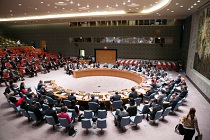
Is a focus on a nuclear Iran in international forums such as the UN General Assembly necessary and appropriate? At a time when other crises – including Syria and Palestine – require the world’s undivided attention, this inordinate focus raises major concerns.