China in IOR: ‘peaceful rise’ no more
China has expanded its presence in the Indian Ocean Region. President Xi Jinping has abandoned Deng Xiaoping’s conciliatory posture for an aggressive, money-fuelled search for super power status

 Courtesy: Western Naval Command
China has expanded its presence in the Indian Ocean Region. President Xi Jinping has abandoned Deng Xiaoping’s conciliatory posture for an aggressive, money-fuelled search for super power status
 Courtesy: Gateway House
The two decade-old Indian Ocean Rim Association holds its first ever summit next week. Maritime safety and security in the region is a paramount concern as also enhanced trade, but will the Blue Economy be included as a priority? Another area of concern is devising modalities for cooperation with dialogue partners, such as the United States, China and Japan
 Courtesy: Wikipedia
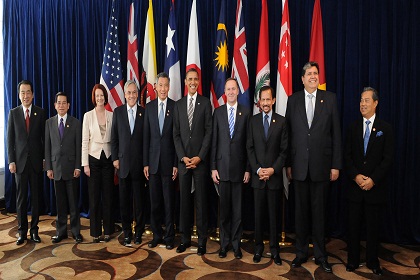
The Trans-Pacific Partnership might soon be concluded if the U.S. Congress fast-tracks it, as recently announced, while the Regional Comprehensive Economic Partnership Agreement remains on slow-track. But the TPP, although ambitious, follows an outdated template, and it is the dynamic RCEP that can be a model for a new global rules-based framework
 Courtesy: Spike Call U.S Navy/Wikimedia Commons
The Indian Navy, through multi-lateral exercises, is increasing its sphere of influence and becoming a regional force. Yet, it needs to be supported by policy decisions that enable it to achieve its potential as a state-of-the-art establishment and a powerful tool in India’s diplomatic repertoire
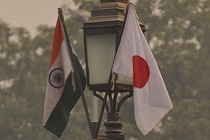 Courtesy: generalising/Flickr
The India-Japan alliance needs to be viewed through a prism broader than that of "containing" China, and by treating the Indian and Pacific oceans as a single entity. Such an alliance has the potential to strengthen the geopolitical security of India and Japan, along with that of all their allies and associates
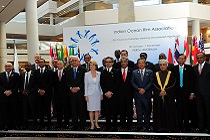 Courtesy: Ministry of External Affairs, India
In the coming years, India’s greatest strategic challenge in the Indian Ocean region may not be the development of power projection but the quality of the strategic relationships that it can build in the region. The extents to which India will be recognised as a regional leader depend on these relationships.
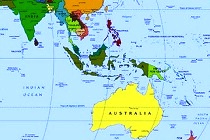 Courtesy: Martyn Wright/Flickr
The two leading maritime powers among Indian Ocean states, India and Australia – which will take over from India as Chair of the IOR-ARC at its ongoing meeting in Perth – can consolidate a strategic partnership that spans the Indo-Pacific
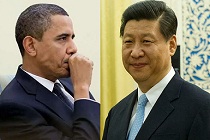 Courtesy: Systemman, Erin A. Kirk-Cuomo/Wikimedia Commons
The U.S. government shutdown and President Obama’s absence gave China immense diplomatic and political space at the APEC and East Asia Summit meetings. China’s declaration of a “de-Americanised” world may be premature but the crumbling old order is doing little to dispel this notion
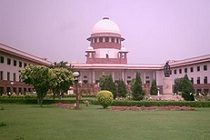 Courtesy: Legaleagle86/Wikimedia Commons
Policy Perspectives from Gateway House give an overview of a global issue that has implications for India’s policy-making and business community. This edition focuses on the global IPR framework and the need for new business models that can cater to public health concerns
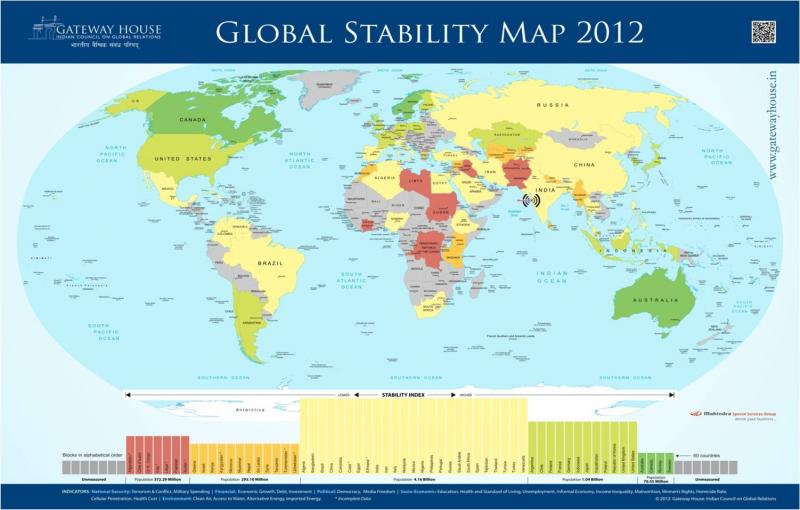 Courtesy: Gateway House
Gateway House prepared a Global Stability Map, using 20 differing indicators, to analyze the stability of 60 countries around the world. Using criteria that are important to the emerging economies of the world, the map provides an Indian perspective of the world today.