Indira Lyndon Jerchel wikimediacommons Courtesy: Jerchel/WikimediaCommons
24 September 2013

The case for India-Alignment

India often finds itself in the right place at the wrong time or vice versa, as our dogma of non-alignment trumps honest calculations of self-interest in policy-making – rendering it unfavourable. The national interest, hence, calls for selective alignment on some issues with Washington and on others with Beijing
Global Stability Map Courtesy: Gateway House
1 August 2012

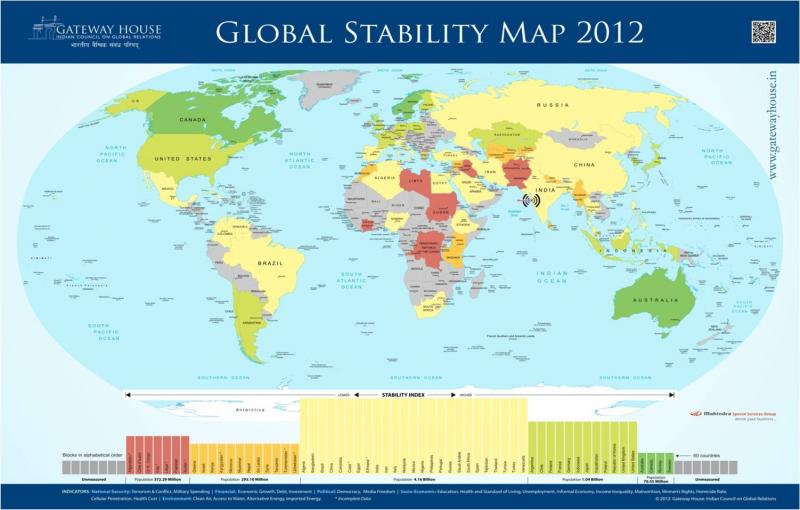
Global Stability Map 2012

Gateway House prepared a Global Stability Map, using 20 differing indicators, to analyze the stability of 60 countries around the world. Using criteria that are important to the emerging economies of the world, the map provides an Indian perspective of the world today.

NATO afghan Courtesy: Open Democracy
18 June 2012

The return of the Pashtun problem and NATO withdrawal from Afghanistan in 2014

The NATO withdrawal from Afghanistan in 2014 should be done tactically so that it doesn't destabilize Pakistan. Despite having accepted Pakistani help in the past, the Taliban might empathize with Pakistani Pashtuns and spread the very secessionist tendencies which Pakistan’s Afghan policy was designed to prevent.

anna hazare 2 Courtesy: nazeah/Wikimediacommons - Ramesh Lalwani/Flickr
30 December 2011

2011’s Top Foreign Policy Cheers and Jeers

The year 2011 saw various events - the Arab Spring, anti- corruption protests, Europe's sovereign debt crisis - transform countries and reshape the world order. Gateway House takes a look at what these events mean for India, and presents India's top foreign policy cheers and jeers for the year.