uk's irregular indian migrants: a colonial redux Courtesy: Wikimedia Commons
2 June 2021

UK’s irregular Indians: Colonial carry-over

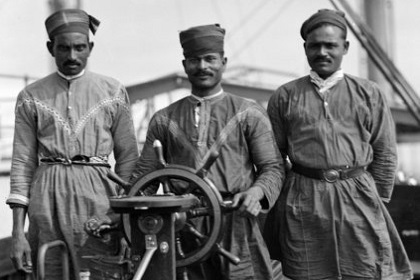
The early roots of the Indian diaspora in the UK are not about the storied success of the Hinduja brothers or celebrated economist Lord Meghnad Desai. Rather it lies in Indian sailors – the lascars – and the soldiers – faujis – of the World Wars, and the many hardworking labourers attracted to jobs in post-war Britain. These are very much the profile of most irregular Indian migrants in the UK today, many of them Sikh youth.
irregular indians in the UK: a conflicted issue Courtesy: Twitter | @DrSJaishankar
27 May 2021

Indian immigration to the UK: still conflicted

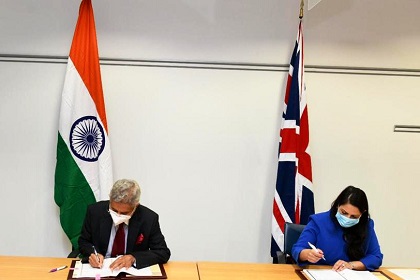
UK Prime Minister Boris Johnson is in India, seeking a trade deal, and promising immigrant visas. The UK wants more Rishi Sunaks but the simmering issue is about irregular migrants from India, low-skilled labour whose numbers are still disputed by both countries. While a free trade agreement may still be signed, it will likely not address this problem, leaving thousands of Indians undocumented in the UK.

shutterstock_1091235845 Courtesy: Shutterstock
15 October 2020

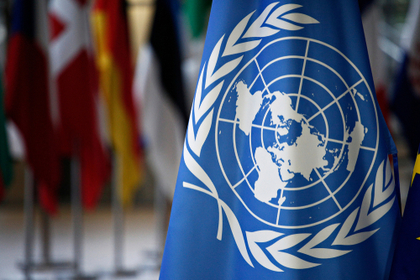
UN: Necessary but reformed

The UN turned 75 this year but instead of grand celebrations, the world witnessed an empty UNGA with world leaders addressing it via video screening because of the pandemic. The UN is under unprecedented stress and being shown up for its inability to tackle the challenges of today like the pandemics, climate change, terrorism or global peace and security. The institution's key governing structures, especially the UN Security Council, are inadequate and demand reform. India must now use gritty resolve to ensure its place in these governing structures.

modi-768x432 Courtesy: CNBC TV18
28 May 2019

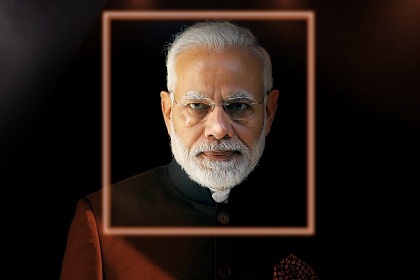
PM Modi’s foreign policy 2.0

India's foreign policy under the second Modi government will take account of a turbulent world in which the old verities are disappearing and domestic political compulsions exert overwhelming influence on external postures

ibc-center-oil-gaz-4-696x392 Courtesy: ibctrain.com
2 April 2019

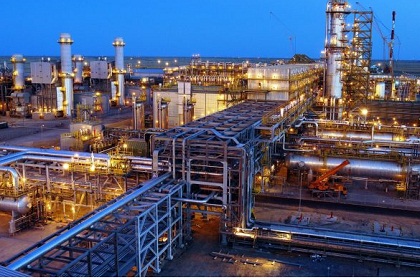
India & the influential SCO Energy Club

The main objective of the Shanghai Cooperation Organisation’s (SCO) Energy Club, when Russia formed it, was to market its member states’ substantial oil and natural gas reserves. This map shows some of the important natural gas pipelines, originating from Russia and its neighbouring countries that are not members of the SCO. What can India do to secure supplies from these abundant but currently inaccessible natural gas reserves?

CableMap-web Courtesy: Gateway House
5 April 2018

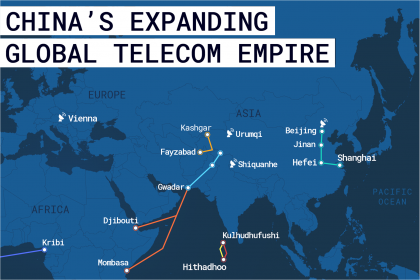
Version 1: China’s strategic edge in covert communications

China is steadily deploying state-of-the-art communications systems to connect its strategic and economic assets in Asia. It is then linkingthe Asian mainland to Africa, and Africa to South America. The investment spree is rapidly making Beijing a major player in global telecommunications – and ‘informationisation warfare’.

old photos bombay Courtesy: Live Mint
15 August 2017

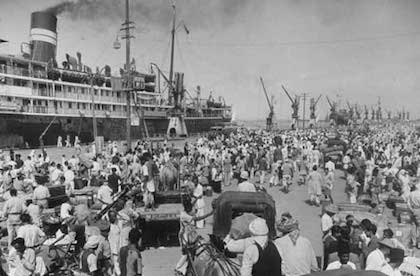
Bombay, Karachi, linked by sea and refuge

The 70th Independence Day for India and Pakistan – August 15 and 14 respectively – is a reminder of how Partition displaced 15 million people, causing untold hardship. What is less known is that the cities of Karachi and Bombay have had a shared colonial history and economy: the parting of ways left one bereft of a host of spirited citizens, who went on to rebuild their lives in the other

GH_GeoeconomicPushback Courtesy: Gateway House
10 August 2017

Geoeconomic pushback to China

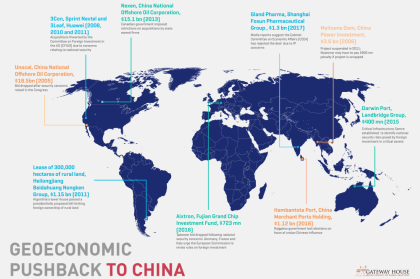
The Indian government may block the acquisition of Gland Pharma by Shanghai Fosun Pharmaceuticals, a move that offers further confirmation of how China’s opaque business model is causing concern worldwide. This infographic shows some high-profile cases of acquisitions by Chinese companies that ran into local opposition

Untitled Courtesy: Center for American Progress Action Fund/Flickr
21 June 2013

Kerry: Stepping onto an Asian merry-go-round

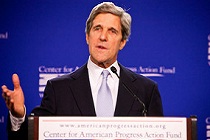
The U.S. Secretary of State’s visit to India comes at a time when India is witnessing significant realignments in its domestic politics while the U.S. is busy tackling its cyber-spying allegations. Amidst these preoccupations, will the upcoming India-U.S. talks churn out substantive outcomes?