Peaceful dissent was the original animus for the formation of the Forum 2000 Foundation. Started by the late Czech dissident Vaclav Havel, the conference, held in Prague every September, offers a platform to experts and activists from around the world to revisit ideas about pacifism and protest
The main objective of the Shanghai Cooperation Organisation’s (SCO) Energy Club, when Russia formed it, was to market its member states’ substantial oil and natural gas reserves. This map shows some of the important natural gas pipelines, originating from Russia and its neighbouring countries that are not members of the SCO. What can India do to secure supplies from these abundant but currently inaccessible natural gas reserves?
The world order that came about in the aftermath of World War II was a western-oriented construct that has become obsolete in many ways. The changes underway offer India an opportunity to participate in the crafting of political and economic institutions that are more pertinent to the emerging geopolitical equations
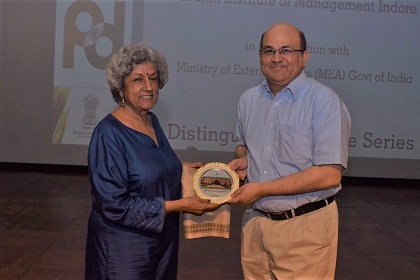
This speech was delivered at ‘Industry Meet 2018’, organised by the Indian Institute of Management, Indore, in collaboration with the Ministry of External Affairs, Government of India, on 7 July 2018
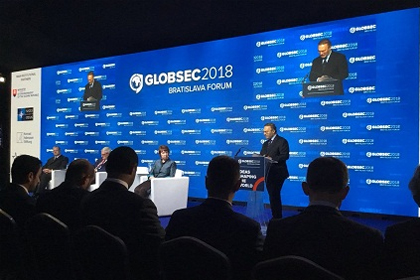
The GLOBSEC Bratislava Forum’s annual conference this year saw discussions on technology take precedence over geopolitics. Experts pointed out the gap between the adoption of digital technology and managing its risks
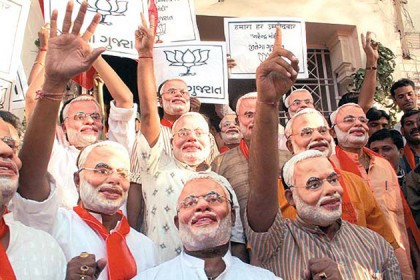
Narendra Modi’s landslide victory in India's 2014 general elections, despite his hardline nationalist image, was viewed as a localised phenomenon. But two years later, voters across the world from Europe to Philippines seem to be tilting towards leaders with the same nationalist tag.
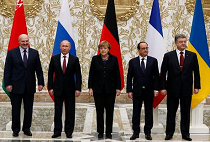
With the crisis in Ukraine worsening, Europe seems to have realised that the solution is not military, though the U.S may push to send in arms. Although no country wants a war with Russia, the conflict over Ukraine between the West and Russia could escalate. What are the future scenarios for the region and with what global implications?
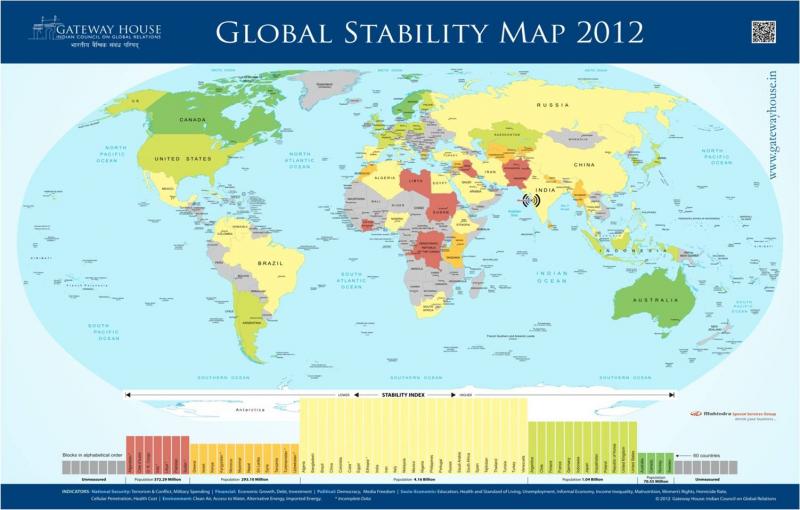
Gateway House prepared a Global Stability Map, using 20 differing indicators, to analyze the stability of 60 countries around the world. Using criteria that are important to the emerging economies of the world, the map provides an Indian perspective of the world today.
The year 2011 saw various events - the Arab Spring, anti- corruption protests, Europe's sovereign debt crisis - transform countries and reshape the world order. Gateway House takes a look at what these events mean for India, and presents India's top foreign policy cheers and jeers for the year.
Gateway House’s Hari Seshasayee interviewed Nicolas Krul. A stout defender of European unity, Krul discussed the origins of the crisis, the lessons learned, possible solutions and the opportunities for the emerging world.