U.S.-Taliban deal: India in strategic role
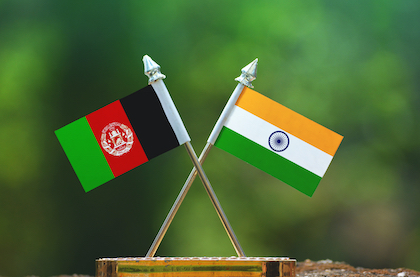
India should stop looking at Afghanistan through the Pakistan prism and be a major contributor in the development of peace and prosperity in the country

 Courtesy: Shutterstock
India should stop looking at Afghanistan through the Pakistan prism and be a major contributor in the development of peace and prosperity in the country
 Courtesy: Shutterstock
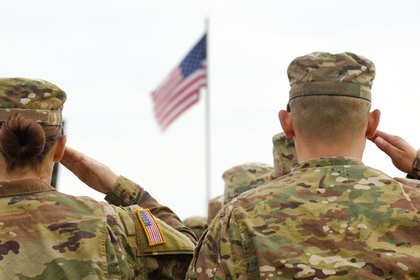
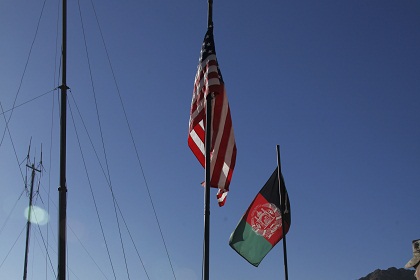
The signing of an agreement between the U.S. and the Taliban on February 29 may result in the withdrawal of U.S. troops from Afghanistan, which is contingent upon the Taliban’s adherence to certain conditions. The end of the West’s 19-year-long Afghan campaign – if Pakistan does not turn spoiler – is of vital interest to India
 Courtesy: MEA/Flickr
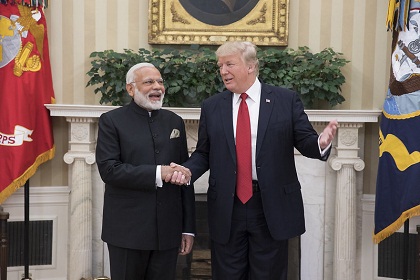
In the run-up to President Trump’s visit to India on 24-25 February 2020, Ambassador Neelam Deo, Director and Co-founder of Gateway House, discusses in this interview how he has made balanced trade a global issue, but given substance to the India-U.S. defence bilateral, sharpening the concept of the Indo-Pacific and the Quad’s profile
 Courtesy: Shutterstock
The upcoming Financial Action Task Force (FATF) plenary session 16-21 February will be crucial for both Pakistan and Iran as the anti-money laundering and anti-terrorist financing measures undertaken by the two countries will be reviewed by the 39 member states of the FATF. Decisions will be taken on their retention or removal from the grey list and black list respectively
 Courtesy: Shutterstock
The United States’ decision to rebuild Afghanistan’s ring road was a change of strategy from its earlier focus on countering terrorism. But the road remains in a state of disrepair because the U.S.’ commitment to the cause has wilted
 Courtesy: Forum 2000
Peaceful dissent was the original animus for the formation of the Forum 2000 Foundation. Started by the late Czech dissident Vaclav Havel, the conference, held in Prague every September, offers a platform to experts and activists from around the world to revisit ideas about pacifism and protest
 Courtesy: Shutterstock
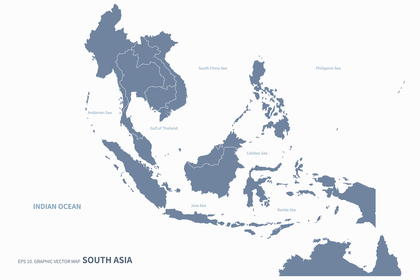
The foreign ministers of the Quad countries meet for the first time in New York today even as the Indo-Pacific has turned into a keenly contested geopolitical arena. Some countries are offering to play a mediatory role while other triangular equations are also undergoing change. An analysis of some of the relationships at work here
 Courtesy: Penguin
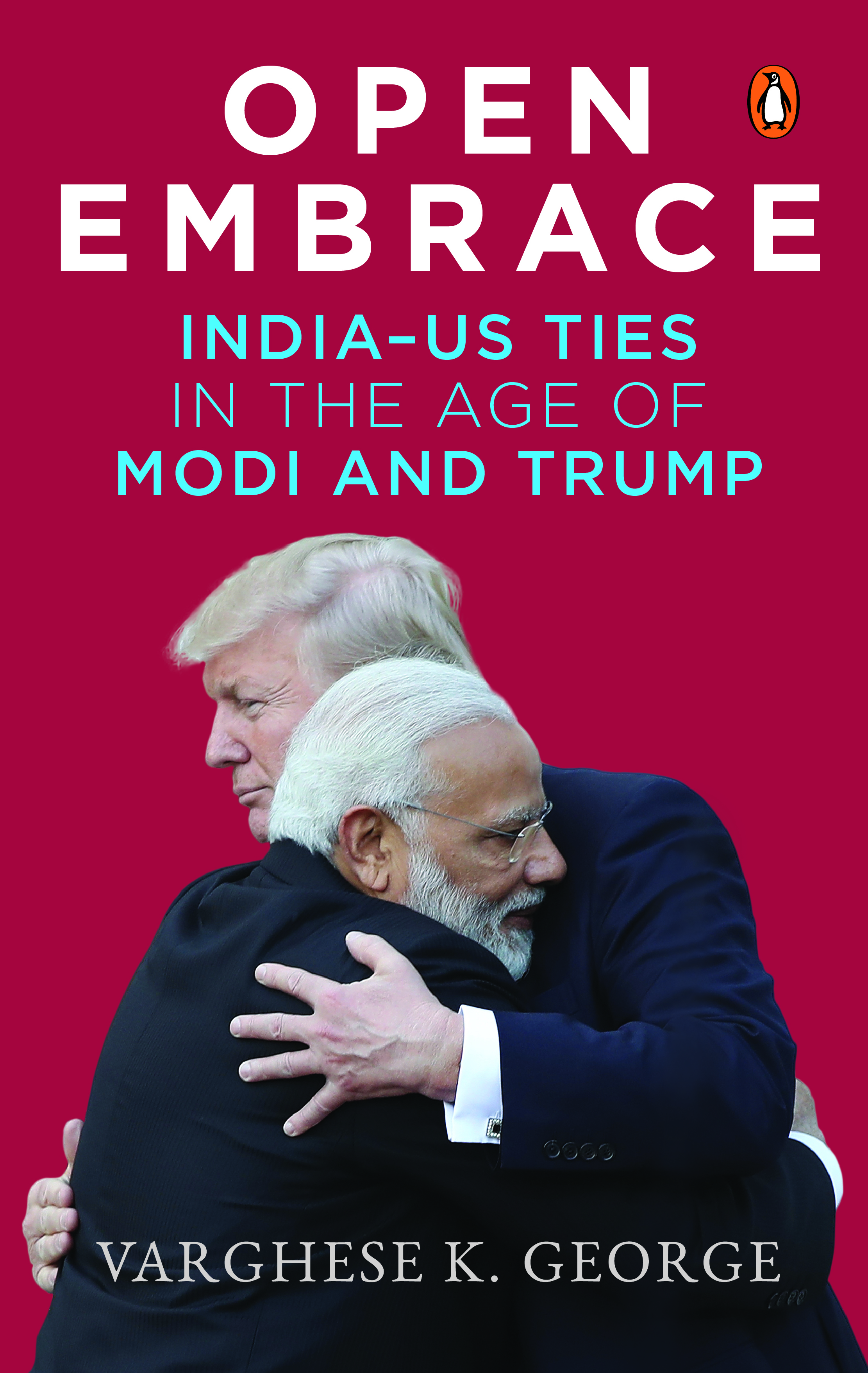
This book offers a ringside view of evolving Indo-U.S. ties under two conservative leaders, both engaged in mixing nationalism, religion and populism to advance the global capitalist order. The title points to an interesting departure from the more orthodox view of the bilateral relationship, which is usually from the prism of discord or estrangement

This vivid portrait of socialist India, by giving primacy to the political background that determined Indira Gandhi’s responses, is different from the yearly ritualistic denunciations of her and the Emergency. It also has a story-teller’s flair, making it accessible to readers born well after 1975
 Courtesy: MEA Flickr
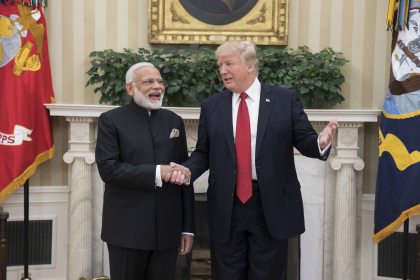
The imperative for India to move away from its non-aligned posture is now, especially if it wants to be consequential in the global reordering underway. This will play out in the contention between the U.S. on one side, and China and Russia on the other.