India-Latin America Engagements, October 2013
In 'India-Latin America Engagements', the Latin America Desk at Gateway House presents a selection of news of India’s engagement with the region during the previous month

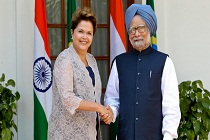 Courtesy: Roberto Stuckert Filho/Wikimedia Commons
In 'India-Latin America Engagements', the Latin America Desk at Gateway House presents a selection of news of India’s engagement with the region during the previous month
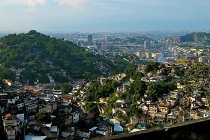 Courtesy: @Doug88888
Gateway House’s Akshay Mathur recently visited Brazil to attend a BRICS-themed conference, organised by the National Association of Research and Graduate Programs in the Social Sciences. In this blog, he writes about his first impressions of the country and the similarities between India and Brazil that he observed.
 Courtesy: millerm217/Flickr
India’s extreme dependence on imported energy often renders our economy vulnerable in the face of geopolitical changes. Given the high financial viability, India, being the world’s second-largest producer of sugarcane, should emulate Brazil by replacing petrol with ethanol as fuel.
 Courtesy: Aditya Birla Group/Wikimedia Commons
The Aditya Birla Group has emerged as the Indian company with the largest annual business turnover in Latin America. Having made significant investments in the manufacture of aluminium, carbon black and viscose yarn, the Group is now exploring newer areas for investment
 Courtesy:
In 'India-Latin America Engagements', the Latin America Desk at Gateway House presents a selection of news of India’s engagement with the region during the previous month
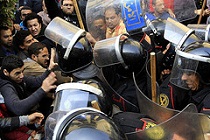 Courtesy: oxfamnovib/Flickr
Elections are meant to be a suitable recourse in democracies if citizens feel that the government does not represent them. However, the recent protests in Brazil, Turkey and India show that people feel political classes are too far removed from their every day realities to address their grievances
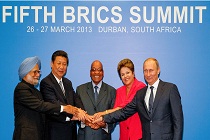 Courtesy: Blog do Planalto
The launch of the BRICS Universities League in Shanghai is an important effort for the five nations to understand each other and define their place in global governance
 Courtesy: Jacques Delarue/Wikimedia Commons
The leaderless protests are upending traditional definitions of leadership and forms of hierarchy. Instead, the protestors are seeking some form of direct democracy and dignity.
 Courtesy: Semilla Luz/ Flickr
The protests in Brazil, Turkey, Egypt and India are bound by a common thread of grievances against misuse of government power and corruption. These modern protests show a marked decline in government trust, even though may not always have clear objectives
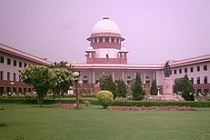 Courtesy: Legaleagle86/Wikimedia Commons
Policy Perspectives from Gateway House give an overview of a global issue that has implications for India’s policy-making and business community. This edition focuses on the global IPR framework and the need for new business models that can cater to public health concerns