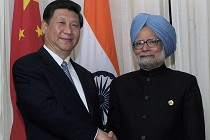
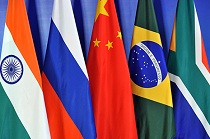
Indian foreign policy has not yet addressed the ramifications of Chinese economic dominance in BRICS. Nor have we matched China’s engagement within the group to ensure that the BRICS vision of a new international order for emerging economies actually works in their favour.
At the 5th BRICS Summit that begins in South Africa today, the heads of state of Brazil, Russia, India, China and South Africa are expected to ratify the creation of the BRICS Bank. After discussion and study for over a year by the respective governments, the bank will be launched with seed money estimated at between $50 billion to $100 billion, and most likely an equal share of voting rights for the management of the bank. What remains
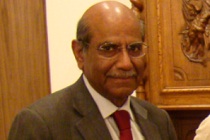
The establishment of a BRICS Development Bank will be among the prime topics of discussion at the BRICS Summit on March 26. Gateway House’s Akshay Mathur interviews former Indian Ambassador and Foreign Secretary, Shyam Saran, on the prospects and viability of alternate financial architectures.
The announcement of the Pacific pivot by the U.S. in 2001 has led to several nations making bold political moves. However, the U.S. isn’t yet ready to be a regional protector against China. What does Washington have to do to prepare itself for the Pivot?
Overall, the U.S.-Pakistan alliance hasn't been pleasant. Despite their growing mutual distrust for each other, which has become evident in the past few years, the alliance still continues. Is it worth all the troubles it comes with?
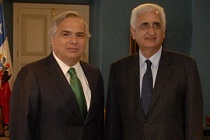
Indian Foreign Minister Salman Khurshid’s February 5 visit to Chile and Argentina is emblematic of the new era in Indo-Latin America relations. What does this increased engagement mean for India and Chile, two rapidly growing economies of the Global South?
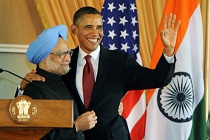
Although the India-U.S. relationship has seen steady improvement over the past few years, it hasn’t garnered the amount of high-level attention necessary to actualise the massive potential of this liaison. What are the key areas both the nations need to focus on, to achieve outputs for maximum mutual benefit?
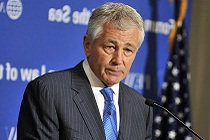
The nomination of Chuck Hagel for the post of the U.S. Defense Secretary has garnered severe criticism from Israel and the Jewish lobby. Given the geopolitical changes unfolding in the Middle East and the rest of Asia, what will Hagel’s assumption of office mean for Israel, India and the rest of the world?
U.S. Senator John Kerry will officially take office as the Secretary of State, later this month, replacing Hillary Clinton. Given his background of foreign policy, and his proven competency in related matters, what can India and South Asia look forward to, during his term in his new office?
The year 2012 has been a busy one for foreign policy: from escalating disputes in the South China Sea to alternate financial instruments from the emerging world. India’s foreign policy too has its shown strengths and weaknesses. We present our top foreign policy Hotspots, Sweet spots and Blind spots for 2012.