TPP Courtesy: ustr.gov
3 March 2016

A fine line: TPP and India

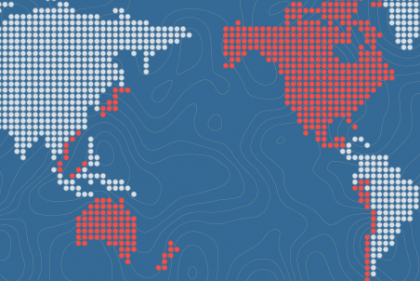
The Trans-Pacific Partnership has dropped strong Intellectual Property Rights regulations on India’s doorstep. The implications of these regulations could affect India’s own policies, as well as her global aspirations towards the potential Regional Comprehensive Economic Partnership.

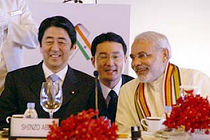
Modi-AbeMEAFlickr Courtesy: MEA/Flickr
17 December 2015

India balances Asian security with Japan

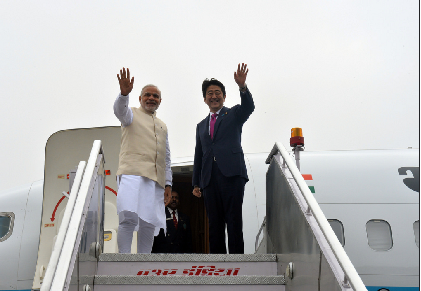
During Japanese PM Shinzo Abe’s recent visit to India, both countries made important progress in strengthening their security engagement focused on maritime security, defence purchases and counter-terrorism. Nonetheless, Indian policymakers are conscious of regional concerns about Japan’s renewed nationalism and of balancing this relationship with that of China

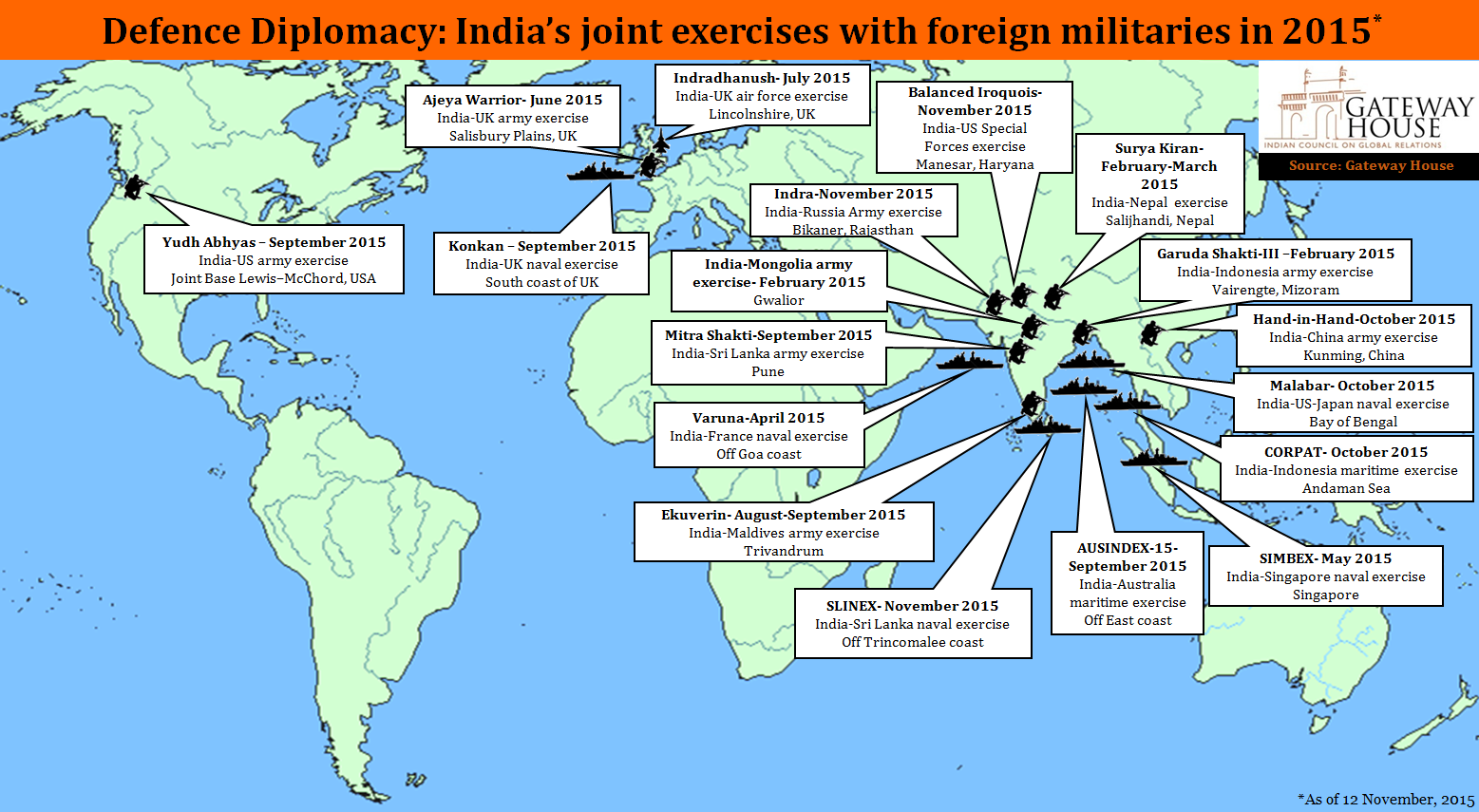
This year, India's defence diplomacy has ramped up. In 2015 alone there have been 18 military exercises- naval, army and air force- with 13 countries, among the largest engagements the country has had. Most significant is Japan joining the Malabar exercises in the Bay of Bengal and the first-ever maritime exercise with Australia. This is increasing India's presence from the Arabian Sea to the Bay of Bengal. As these exercises intensify India will be better positioned to handle regional security challenges. Courtesy:
12 November 2015

India’s defence diplomacy

This year, India's defence diplomacy has ramped up. In 2015 alone there have been 18 military exercises- naval, army and air force- with 13 countries, among the largest engagements the country has had. Most significant is Japan joining the Malabar exercises in the Bay of Bengal and the first-ever maritime exercise with Australia. This is increasing India's presence from the Arabian Sea to the Bay of Bengal. As these exercises intensify India will be better positioned to handle regional security challenges.

Middle Powers Courtesy: Wikimedia Commons
2 July 2015

Why middle powers matter to India

Narendra Modi, who spent nearly two months abroad in his first year as prime minister, helped India cultivate a wide range of bilateral and multilateral relationships. But of these, it will be the middle powers that hold the key, economically and geopolitically to India’s growth and security, and Modi must continue to widen his middle powers arc

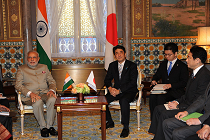
Modi with Abe_3 Courtesy: MEA/Government of India
4 September 2014

India-Japan: potential still unrealised

Prime Minister Modi’s visit to Tokyo had raised expectations at home, especially due to the equation between him and his Japanese counterpart Shinzo Abe and the immense potential for Japanese investment in India. However, while the visit showcased warmth and friendliness, it fell short on the strategic and economic front

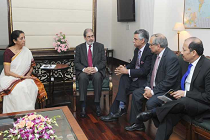
Nirmala Sitharaman with joint IPJF Courtesy: IANS/PIB
27 August 2014

India’s move towards economic diplomacy

For long the Indian administration has separated the domains of strategic diplomacy and trade facilitation. However, the new government is actively working to bring the two under one umbrella knowing well that ‘economic diplomacy’ is crucial to regaining India’s growth story

japan_india_flag Courtesy: Gateway House
26 August 2014

Modi in Japan: great expectations

A lot has been written about the Modi-Abe equation and expectations are high from the upcoming Tokyo summit. Despite the bonhomie shared by the two leaders much work needs to be done on the civil nuclear deal as well as defence cooperation to arrive at a substantive and fruitful relationship