041005-N-0021M-001 Courtesy: U.S. Navy photo/Journalist 1st Class Todd Macdonald
29 July 2014

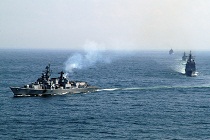
Malabar 2014: a good beginning

India’s invitation and the subsequent participation of the Japanese navy in the Malabar 2014 exercise is a sign of the deepening of the political-security relationship between India and Japan. However, an actual fruition of the potential requires both the administrations to be more flexible, especially on the nuclear deal and defence purchases
Modi at BRICS_210x140 Courtesy: MEA/Government of India
18 July 2014

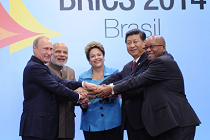
Incubating a non-dollar architecture

The launch of the BRICS bank can now give the member countries confidence to experiment with other geoeconomic ambitions. Incubating a non-dollar financial architecture can be the next goal. There are existing models to build upon but India will need smart economic diplomacy to secure its interests

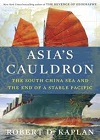
asias cauldron Courtesy: Random House
18 July 2014

Book review: the rise of China

‘Asia’s Cauldron: The South China Sea and the End of a Stable Pacific’ is a pragmatic narrative by Robert D. Kaplan of the receding power of the U.S. and China’s growing dominance

IBSA Courtesy: Gateway House
15 July 2014

Time to revive the IBSA Dialogue Forum

Prime Minister Narendra Modi’s visit to Brazil for the BRICS summit is an opportunity for India to intensify its engagement with South America and reactivate the long-dormant IBSA (India, Brazil and South Africa) grouping. This grouping is a promising partnership comprising of different models of democracies spread over three continents

brics Courtesy: wikimedia/commons
4 July 2014

Mandate for BRICS Bank

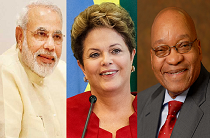
Brazil is all set to host the 6th BRICS Summit from July 15. In light of the fact that most developing nations have concerns over the pro-western bent of the World Bank and the IMF, the BRICS initiative of setting up of a Development Bank needs to gain momentum and the nations should finalise the mandate on a priority basis

Modi departure_Bhutan Courtesy: MEA/Indian Embassy Thimphu
18 June 2014

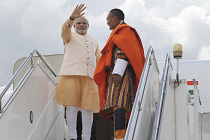
Modi: charting a new foreign policy course

Narendra Modi’s first month in office has seen him deftly handle India’s neighbours, accept an invitation to visit Washington, enhance relations with Bhutan and accord due importance to China. In the same manner, Modi will also have to move quickly and firmly to reassure foreign investors of the dependability of India’s fiscal environment

Shangri La Dialogue Courtesy: Department of National Defence, Republic of Philippines
5 June 2014

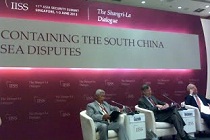
Rethinking India’s role in Asia

The recently held Shangri-La Dialogue, an annual security forum of Asia’s defence establishments, highlighted the growing anxieties over China’s belligerent pursuit of territories under dispute in the South China Sea. The U.S. and Japan have made it clear that they will strongly challenge China’s claims. It’s a tussle that will throw up new security dilemmas for India in the future

120904-N-NX070-023 Courtesy: Mass Communication Specialist 1st Class RJ Stratchko
14 May 2014

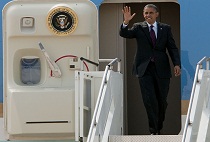
Obama in Asia: a reassuring visit?

In the wake of an ambitious and aggressive China, American President Barack Obama’s recent visits to various Asian countries were meant to assure allies old and new. At the same time, he trod a fine line, ensuring that he does not displease Beijing. And that may embolden China

southblock Courtesy: rajkumari1220/Flickr
18 April 2014

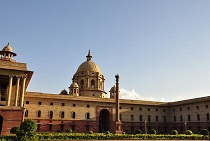
Circles & Corridors of Economic Diplomacy

India’s political and economic future will be determined over the next few weeks. Gateway House recommends a priority diplomacy agenda for the next government – one which puts economics at the heart of our foreign policy