China in IOR: ‘peaceful rise’ no more
China has expanded its presence in the Indian Ocean Region. President Xi Jinping has abandoned Deng Xiaoping’s conciliatory posture for an aggressive, money-fuelled search for super power status

 Courtesy: Western Naval Command
China has expanded its presence in the Indian Ocean Region. President Xi Jinping has abandoned Deng Xiaoping’s conciliatory posture for an aggressive, money-fuelled search for super power status
 Courtesy: Gateway House
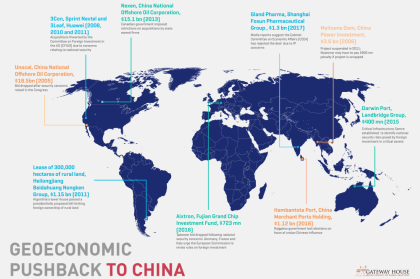
The Indian government may block the acquisition of Gland Pharma by Shanghai Fosun Pharmaceuticals, a move that offers further confirmation of how China’s opaque business model is causing concern worldwide. This infographic shows some high-profile cases of acquisitions by Chinese companies that ran into local opposition
 Courtesy: PTI
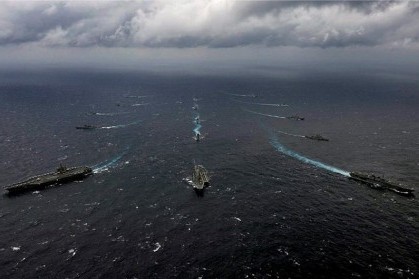
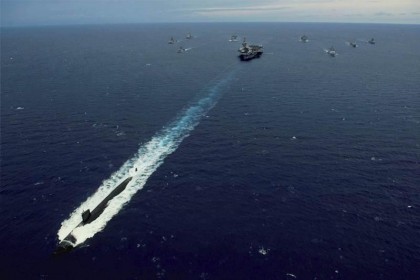
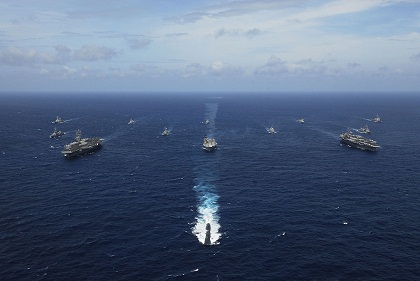
The historical evolution of the Malabar Exercise and the currently fraught relations between the participating countries and China created a much sharper context for the event, with the Chinese evincing a heightened interest in it
 Courtesy: PTI
In a special podcast, Vice Admiral (retd.) Anil Chopra, Distinguished Fellow for International Security and Maritime Studies at Gateway House, shares his insights into this years recently concluded Malabar Exercise, examining the inclusion of Japan and potentially Australia, while detailing the geopolitical implications of these exercises.
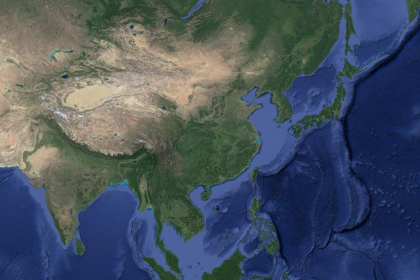 Courtesy: Google Maps
Hopes of a close partnership between the U.S. and India, as expressed at the Modi-Trump Summit, will have repercussions on East Asia. Will the region see peace or exacerbated conflict between China and all the nations opposed to its domination?
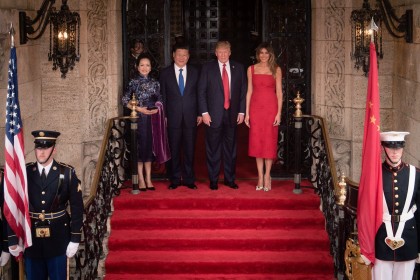 Courtesy: Wikimedia
China is coming in from a position of strength to challenge American primacy in the Asia-Pacific, and the Trump administration needs to abjure the hopeful, hesitant approach of its predecessors
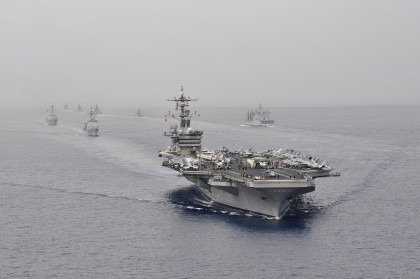 Courtesy: Wikimedia
As the United States considers its policy options towards North Korea it must understand that Pyongyang has been thinking about military conflict for decades. It too will have military plans and they could pose major challenges for the U.S. This is why China and South Korea–and U.S. regional experts too–prefer the diplomatic route
 Courtesy: Channel News Asia
Allegations of corruption brought down erstwhile South Korean president Park Geun-Hye. Now, there are many changes afoot: the new president who will be elected in May will face some crucial dilemmas that may affect the country’s relations with China and North Korea, besides the U.S.
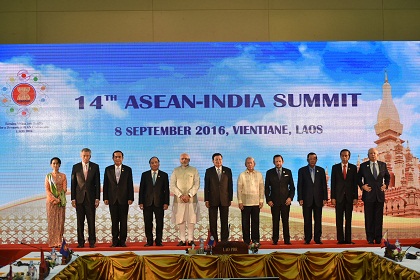 Courtesy: MEA/ Flickr
The Indo-Pacific region is home to some of the largest and most rapidly growing economies as also powerful military forces. Nuclear threats, international terrorism and climate change are some of the issues that define the region. Uncertainty dogs relations among the four nations in the top league—U.S., China, India and Japan—but what is emerging is a hawkish, policy stance from the U.S. as opposed to an isolationist outlook apprehended earlier
 Courtesy: Wikipedia
A strategic coming together of the U.S., Japan, Australia, and India was close to fruition some years ago, impelled initially by the tsunami of 2004. The spirit of the enterprise remains alive even now, and there are many merits in India joining the quad, but such an arrangement can skew existing Asian equations, jeopardising the Act East policy