Bandung conference  (3) Courtesy: PTI
24 April 2025

Bandung Principles and the path ahead

Amid polycrises, from pandemics to wars and trade wars, the global order is in flux, with the contours of the new order still unclear. As the world marks the 70th anniversary of the historic Bandung Conference, this article analyses how its Ten Principles still resonate in today's fractured geopolitical landscape and offer a roadmap for equity, inclusivity, and balance.
World Leaders Courtesy: East Asia Forum
17 April 2025

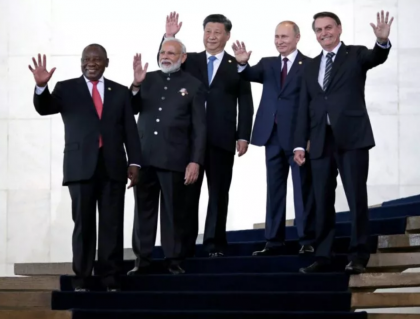
Multipolarity is gaining ground

The traditional power structures of ‘unipolarity’ or ‘bipolarity’ prevalent over the past 80 years are no longer appropriate to describe the current global order, with more countries increasingly supporting the evolving multipolar world. With the old ‘rules-based’ order becoming less relevant, emerging powers like India have an opportunity to draft more equitable rules to match their multipolar intentions.

Myanmar TPS Courtesy: Reuters
4 April 2024

U.S.’ Temporary Protected Status for Myanmar

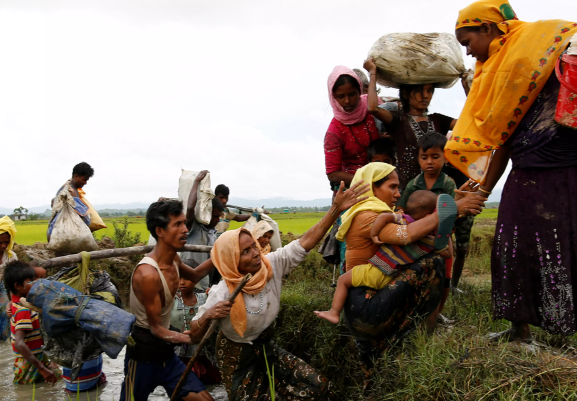
In March, the U.S. announced an extension of Myanmar’s Temporary Protected Status (TPS), in light of the deteriorating situation. TPS provides legal status in the U.S., as an alternative to refugee status, to all nationals of a designated country fleeing instability. TPS shares similarities and key differences with refugee status, which are worth understanding in order to build strong protective legal framework for forcibly displaced communities.

task force cover 420 Courtesy: Gateway House
16 February 2023

G20 Energy Transitions and Climate Finance Task Force Report

Significant progress has been made globally in adopting green energy. Technological advances, easier availability of capital and regulatory measures have helped. But progress is likely to slow due to the shocks caused by Covid-19 and the Ukraine crisis. How to continue the green transition whilst ensuring that lower-income countries have access to affordable energy? This Task Force offers recommendations for India’s G20 Presidency.

GH in the G20 & T20 Courtesy: Gateway House
16 December 2022

Gateway House in G20 & T20

Gateway House is the only institution in India that has hosted official and independent meetings under the annual G20 process since 2015. In October 2022, Gateway House initiated an independent G20 Task Force on Energy Transitions and Climate Finance, the first task force of India's G20 Presidency of 2023. In this compendium of reports, Gateway House assesses and includes its engagement with this influential multilateral through task forces, research and meetings of the last nine G20 Presidencies.

twitterCPR Courtesy: Juggernaut
20 July 2022

How China Sees India and the World

In his new book, former Foreign Secretary Shyam Saran demystifies China's imagined belief of itself as the Middle Kingdom. Contemporary China's propensity to cut and paste history has resulted in China's resentment of India based on a limited understanding of Indian history and of China's past recognition of India as an advanced civilisation which impacted Chinese culture. Today the West recognises India's potential to match China, with depth and skills, over the long term.

G7GS Courtesy: telegraphindia.com
13 July 2022

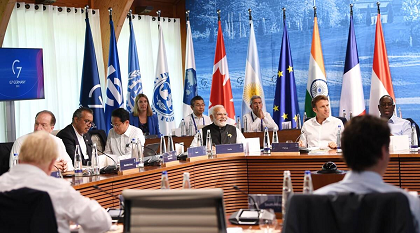
The G7 woos the global south

The G7 has reached out to emerging economies which have, of late, been facing challenges on the economic front, brought on by the lingering pandemic and the mismanagement of the Ukraine crisis. They are also seeking, from the global south, a broader acceptance of their world view. Will it be forthcoming?

G7s1 Courtesy: The Print
4 July 2022

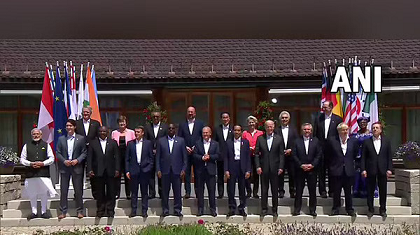
What did the G7 achieve?

The shadow of the Ukrainian war was visible at the G7 summit. Anti-Russian formations were expected, but the extensive reference to China drew attention. The leaders did their part by extensively discussing challenges relating to climate, energy, environment, health, and food security. It is now for the G7 governments to deliver, to be taken seriously.

ISRO satellite Courtesy: ISRO
26 May 2022

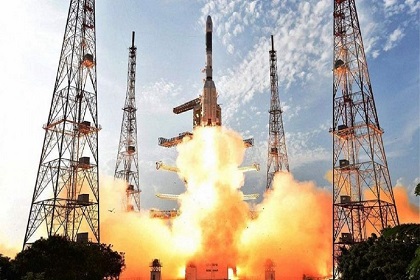
India’s EO satellites in the Indo-Pacific

The Quad has agreed to launch a satellite-based maritime security initiative to curb illegal fishing by China. India is a global leader in satellite launches, especially in Earth Observation (EO) satellites. The Indo-Pacific nations are looking at the Indian model because it is applicable, economical, and sustainable.

Narendra-Modi-Silicon-Valley-684x420 Courtesy: Twitter: Digital India Archives
19 May 2022

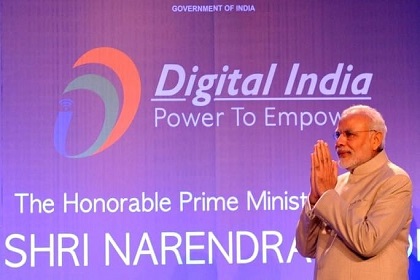
Digital public goods for the Indo-Pacific

With mass digitisation, India has proved that technology is not just for the educated, privileged, and wealthy. The country's open and secure digital public platforms can be significant for the Indo-Pacific, the world's most data-rich region. The Indian model is applicable because it is open-source, interoperable, auditable, and enshrines individual rights, ownership, and empowerment.