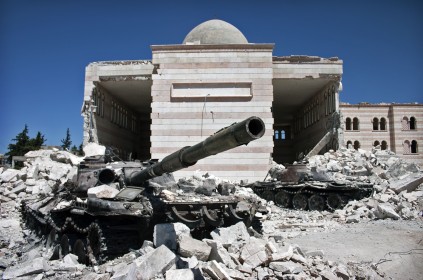
Azaz,_Syria Courtesy: Wikipedia
9 March 2016

India and the Syrian quagmire

With a cessation of hostilities been brokered by Russia and the United States, the conflict in Syria has entered a tense pause. India has had a bystander attitude to the conflict in Syria. However, with the truce expected to be short, does India have the incentive or the option to depart from its current position, and deepen its engagement in Syria?

2903370723_e804987949_o Courtesy: Wikipedia
3 March 2016

WTO solar ruling: victim to victor

The WTO judgment on the India-U.S. dispute on solar panels shows how rules across different international regimes – climate change, trade and nuclear power – favor the countries which set those rules. India must deepen its participation in such multilateral fora to protect its interests.

TPP Courtesy: ustr.gov
3 March 2016

A fine line: TPP and India

The Trans-Pacific Partnership has dropped strong Intellectual Property Rights regulations on India’s doorstep. The implications of these regulations could affect India’s own policies, as well as her global aspirations towards the potential Regional Comprehensive Economic Partnership.

maxresdefault Courtesy: Youtube
4 February 2016

The world in 2016

The world has witnessed a number of upheavals in the past few years, precipitating widespread global political turbulence stemming from geo-economic instability. Over the next couple of months, Gateway House experts will attempt to deconstruct these events and how India and its foreign policy can work to take advantage of these trends.

DSC_0211[1] Courtesy: Gateway House
14 January 2016

U.S.-Iran: overcoming brief setbacks?

Former United States Ambassador Frank Wisner talks to Gateway House about the progress of U.S.-Iran relations in the aftermath of the P5+1 nuclear deal with Iran, including the U.S. response to Iran’s testing of a missile. He also discusses the U.S. perspective on India’s prospective APEC membership.

Conférence des Nations Unies sur les changements climatiques - COP21 (Paris, Le Bourget) Courtesy: COP Paris / Flickr
16 December 2015

Cop-out at COP21

COP21 is a reality check for those who like to believe that geopolitical power is shifting from West to East. The just-concluded Paris Climate Summit was essentially about the early-to-develop Western powers continuing to exercise almost complete control over global governance structures, largely through the dominance of markets.

India US energy war Courtesy: MEA India / Flickr
9 December 2015

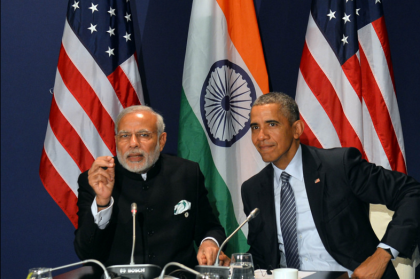
COP21: unspoken India-U.S. war

An unspoken war has been waged between India and the U.S. at the COP21 Summit in Paris. If the West wants India to opt for more expensive energy options, then they must also reciprocate by sharing technology.

Baka-charging-station_cropped Courtesy: Sass Peress / Wikipedia
3 December 2015

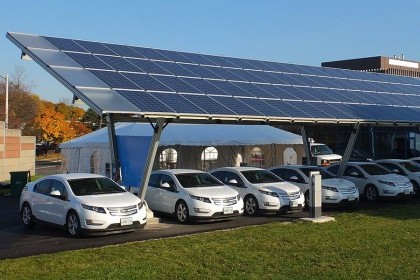
Cheap finance for climate change

The Climate Conference in Paris offers the globe a chance to arrive at a firm action plan—and underpinning this chance are advances in solar and electric vehicles technology. If the Paris talks focus on making such technology and related finance available to countries like India, we can move closer to achieving climate goals