IMG-1679 Courtesy: Gateway House
31 May 2022

Resilient, dependable globalisation

In 2021-22, the U.S. overtook China as India’s largest trading partner. This is a significant milestone, and one that Atul Keshap as President of the US-India Business Council, intends to enhance. Keshap is a former ambassador and was the popular U.S. Chargé d’Affaires for India in 2021. He is also the optimist-in-chief for the India-U.S. bilateral. In this interview, Keshap speaks to Gateway House’s Manjeet Kripalani about the changed definition of globalisation, and the unique opportunities for India and the U.S. in a transforming world order.
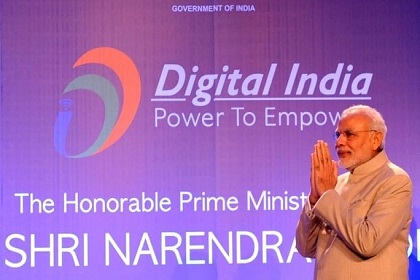
Narendra-Modi-Silicon-Valley-684x420 Courtesy: Twitter: Digital India Archives
19 May 2022

Digital public goods for the Indo-Pacific

With mass digitisation, India has proved that technology is not just for the educated, privileged, and wealthy. The country's open and secure digital public platforms can be significant for the Indo-Pacific, the world's most data-rich region. The Indian model is applicable because it is open-source, interoperable, auditable, and enshrines individual rights, ownership, and empowerment.

Bhatia article image Courtesy: Gateway House
17 February 2022

Has global geopolitics turned multipolar?

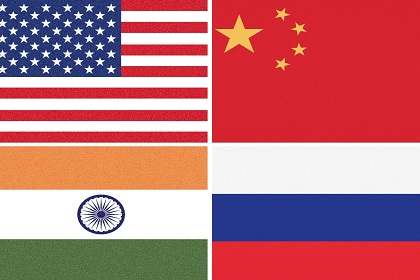
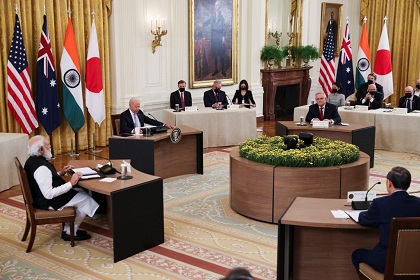
The Quad Foreign Ministers' meeting held on February 11 is the latest example of growing geopolitical cooperation. Several loci of power have emerged, indicating the end of the post-Cold War western hegemony. China's rise and alliance with Russia hints at a bipolar tendency in this nascent global multipolarity. India must ensure power distribution in Asia by sharpening its diplomacy to achieve its own interest - true multipolarity in Asia.

Untitled design (6) Courtesy: Gateway House
10 February 2022

Panel Discussion on India in the Indo-Pacific

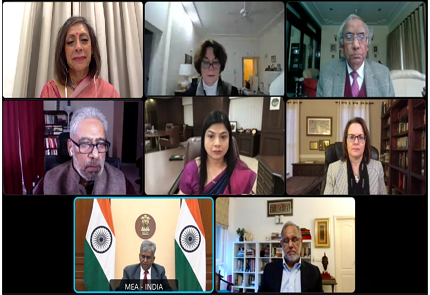
On 1 February 2022, Gateway House and the U.S. Embassy, New Delhi, co-hosted a panel discussion on India in the Indo-Pacific: Pursuing Prosperity and Security. The panelists explored the comprehensive role that India can play in the Indo-Pacific from the perspective of business, think tanks, academia and diplomacy.

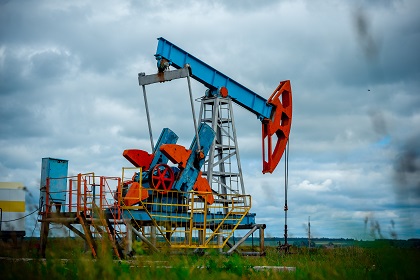
Oil,Field,With,Pump,Jack,,Profiled,On,Blue,Sky,With Courtesy: Shutterstock
10 February 2022

A sovereign wealth fund for oil security

Renewable energy is trendy, but still unreliable at this early stage. Countries will find it necessary to fall back on traditional energy sources like coal and oil for their needs, and this can lead to energy price spikes. To protect itself from this scenario, now is the time for energy-dependent India to set up a wealth fund that invests in listed oil companies around the world, to reduce the risk of energy insecurity.

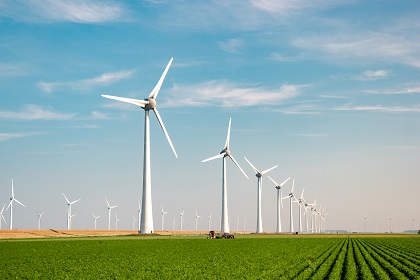
Offshore,Windmill,Park,With,Stormy,Clouds,And,A,Blue,Sky, Courtesy: Shutterstock
27 January 2022

Green push too far

Since August 2021, Western Europe has faced a problem with renewable energy, causing it to turn to natural gas as an emergency alternative. This has led to a significant increase in gas prices and has serious implications for fertiliser and food prices. If this trend continues, it will be likely to cause food insecurity especially in poorer nations which do not have the monetary cushion of the West.

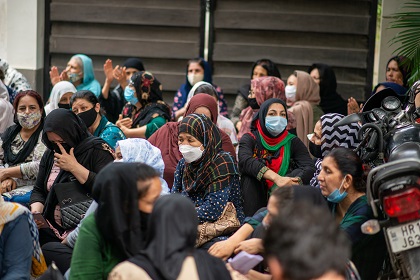
New,Delhi,,India-aug,24,2021:,Group,Of,Afghan,Women,Sitting Courtesy: Shutterstock
27 January 2022

Developing a balanced Indian refugee policy

India has seen a recent influx of refugees from Afghanistan and Myanmar. This has highlighted the absence of a concrete refugee policy in India. India must formalise its approach towards refugees. The Citizen Amendment Act of 2019, is a start. India can move this forward by learning from the examples of other democracies like the U.S., Kenya and South Korea, on how to balance international law with its national security interests.